21 Small Space Organization Ideas That Actually Work
Introduction
Living in a compact home often feels like a constant puzzle, especially when everyday clutter quickly takes over your limited living areas. Finding practical small space organization ideas that truly work can instantly transform your home from feeling chaotic and cramped into a peaceful, functional sanctuary. Over the years, I’ve noticed that the secret isn’t about tossing out belongings you love; it’s about using smart visual tricks and underutilized vertical areas. Whether you are navigating a tiny apartment or simply trying to optimize a crowded room, this guide offers practical inspiration to maximize your space. Get ready to discover clever, stress-free storage solutions you will want to save, share, and try today!
Floating Wall Shelves
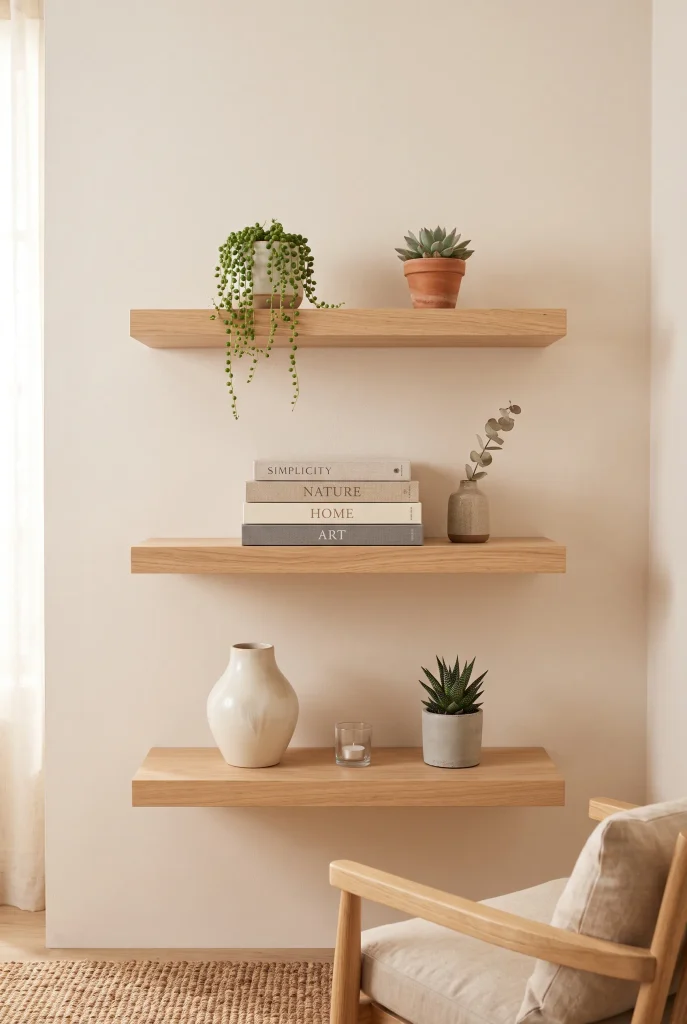
- Maximize unused vertical wall area without taking up precious floor space.
- Keep everyday essentials organized while creating an intentional decorative display.
- Create a lighter, more open feel in compact rooms compared to bulky bookcases.
Floating shelves are a absolute game-changer when you need smart small space organization ideas that keep your home feeling airy and clutter-free. By shifting storage upward onto your walls, you instantly liberate floor space while building a beautifully functional feature area. I’ve noticed that mounting light wood or crisp white shelves against neutral walls prevents a room from feeling crowded or heavy. You can easily showcase decorative items, store favorite books, or hold daily essentials within arm’s reach. The seamless design blends smoothly into any decor style, effortlessly turning plain, empty vertical surfaces into stylish, organized hubs.
When installing wall-mounted shelving, placing them at eye level creates an immediate visual anchor that naturally draws the perspective upward. This clever design trick tricks the eye into perceiving higher ceilings and a much larger room footprint overall. In my experience, keeping the styling minimal—using a balanced mix of textured ceramics, green plants, and neatly stacked books—prevents visual clutter from building up over time. You gain practical everyday utility without sacrificing design aesthetics, making this simple wall addition one of the most effective methods to transform tight apartments into open, welcoming living areas.
Under-Bed Storage Drawers
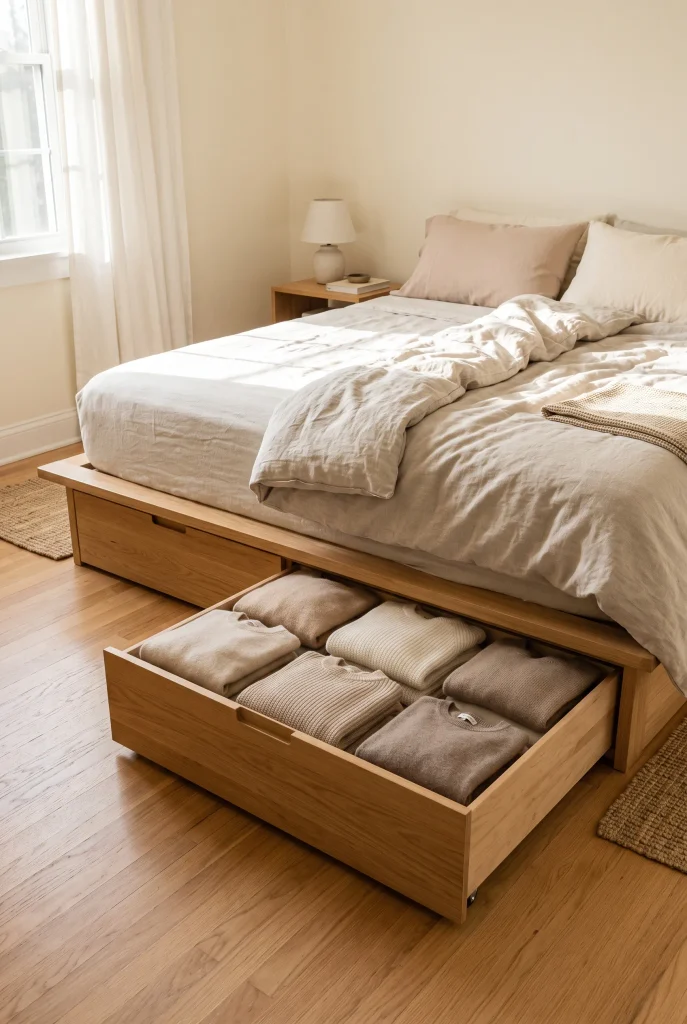
- Utilize the massive, often-wasted footprint directly beneath your bed frame.
- Keep off-season clothing, extra linens, and bulky items completely hidden away.
- Preserve a completely clutter-free bedroom aesthetic while maximizing storage capacity.
Tucking sliding bins or built-in wooden drawers under your sleeping area unlocks massive amounts of hidden storage space right beneath your feet. It is easily one of the most practical small space organization ideas for keeping bedrooms tidy and serene. Instead of letting that wide footprint collect dust, you can neatly store bulky winter blankets, extra bed linens, or out-of-season wardrobe pieces out of direct sight. Opting for low-profile containers with smooth rolling wheels ensures quick, effortless access whenever you need something, keeping your living environment feeling completely light, open, and visually relaxed every day.
Using hidden under-bed storage completely eliminates the need for extra bulky dressers or oversized floor chests that quickly crowd compact bedrooms. I’ve seen this work exceptionally well in micro-apartments where every square foot of floor space truly counts toward daily comfort. Choosing clear lids or breathable fabric containers keeps your stored belongings well-protected from dust while making items easy to identify at a glance. By effectively hiding substantial storage within an existing furniture footprint, you maintain a clean, peaceful sleeping sanctuary while dramatically boosting your bedroom’s overall storage capacity without adding visual weight.
Over-the-Door Organizers
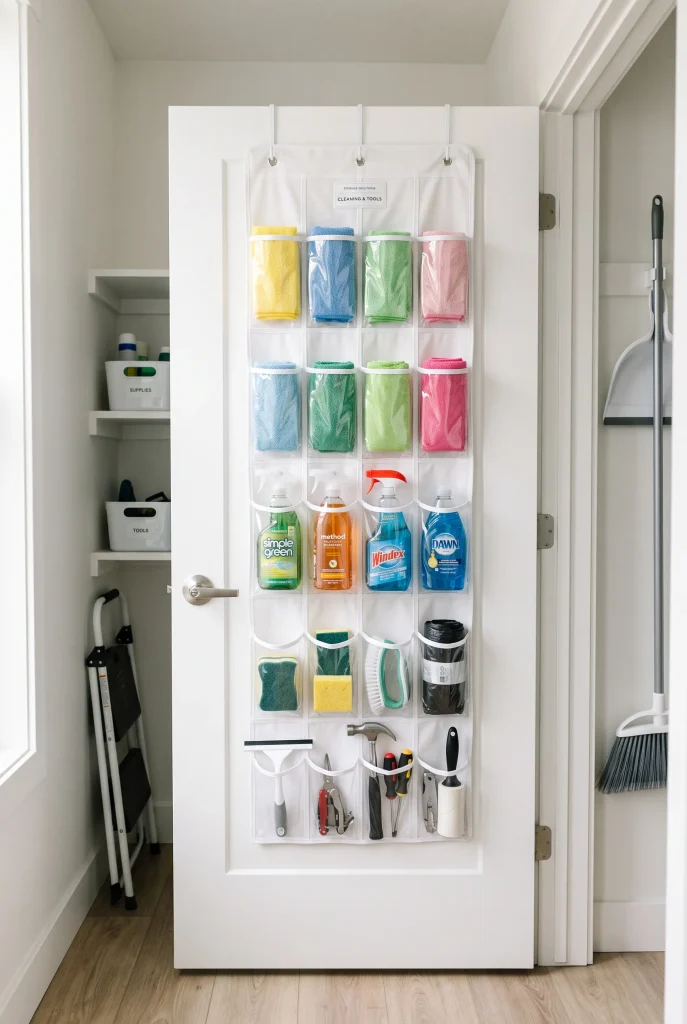
- Capitalize on empty door surfaces to store small accessories and daily items.
- Clear off valuable counter, cabinet, and shelf space across your entire home.
- Provide instant, highly accessible storage without drilling holes into your walls.
Harnessing the back of interior doors offers an instant storage upgrade without requiring tools, drilling, or permanent home modifications. Hanging sturdy fabric pockets or clear mesh organizers on pantry, bedroom, or bathroom doors instantly turns blank surfaces into organized storage zones. I’ve noticed how effortlessly this simple adjustment clears off crowded countertops and packed cabinet shelves. You can systematically organize shoes, cleaning supplies, toiletries, or kitchen spices into dedicated compartments, keeping everything visible, neatly sorted, and within effortless reach whenever you need them throughout your busy daily routine.
This smart organizational tactic works wonders because it takes full advantage of completely idle, underutilized vertical real estate. That’s why many designers recommend over-the-door hanging systems for renters who want to maximize utility without sacrificing security deposits or damaging walls. Selecting clear or breathable canvas pockets allows you to identify contents instantly, saving precious time during busy morning routines. By smartly organizing small, loose everyday items on the back of doors, you preserve spacious open surfaces throughout your living areas, instantly making your cozy home feel considerably larger and more structured.
Pegboard Wall Systems
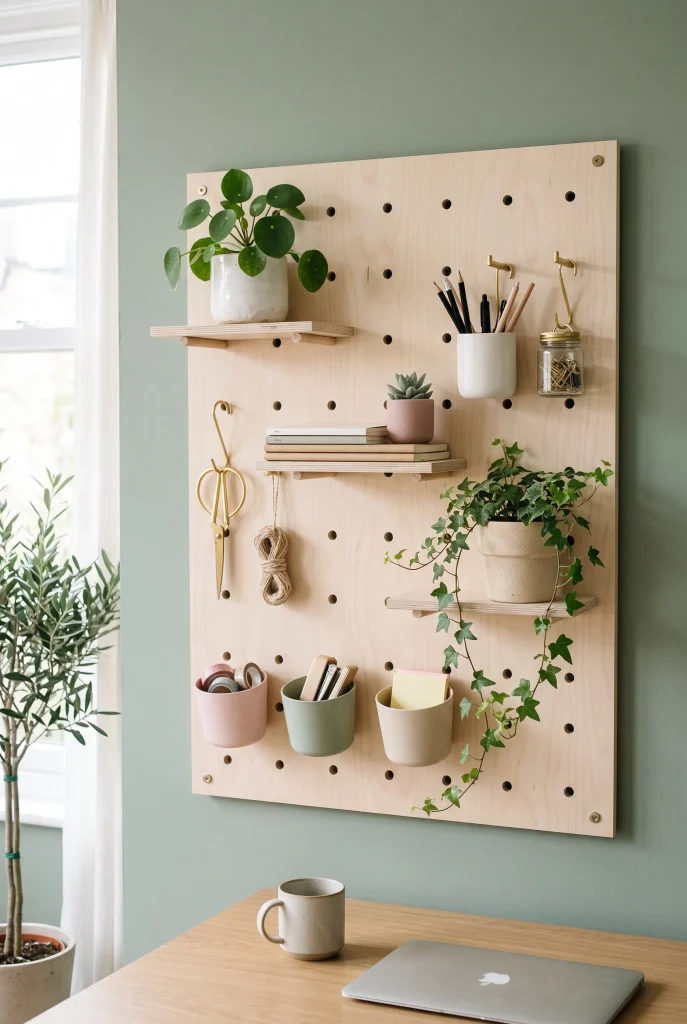
- Convert blank walls into fully custom, adaptable storage networks tailored to your needs.
- Easily reposition hooks, racks, and floating ledges as your storage demands evolve.
- Keep everyday essentials clearly visible and organized while adding a modern decorative element.
Installing a flexible pegboard system is a brilliantly adaptive method for organizing tight spaces without committing to rigid, permanent furniture layouts. By anchoring a durable board to a home office, kitchen, or craft room wall, you create a customizable grid that holds everything from tools to desk accessories. I’ve noticed that open grid storage instantly eliminates drawer chaos because every item earns a dedicated, visible spot. You can effortlessly adjust wooden pegs, hanging wire baskets, and small clip-on shelves whenever your daily needs shift, maintaining a completely personalized, orderly workspace that feels creative rather than cluttered.
Using vertical pegboards prevents small household goods from piling up on your desks, countertops, and craft tables. That’s why many designers recommend grid walls for multifunctional apartments where surface space comes at a premium. The open, modular layout keeps your essential tools clearly visible and instantly accessible, which streamlines daily routines and cuts down on search time. By raising your daily belongings off active working surfaces and displaying them systematically, you maintain an inspiring, spacious atmosphere that keeps compact rooms feeling wonderfully open, functional, and visually clean every single day.
Vertical Tiered Racks
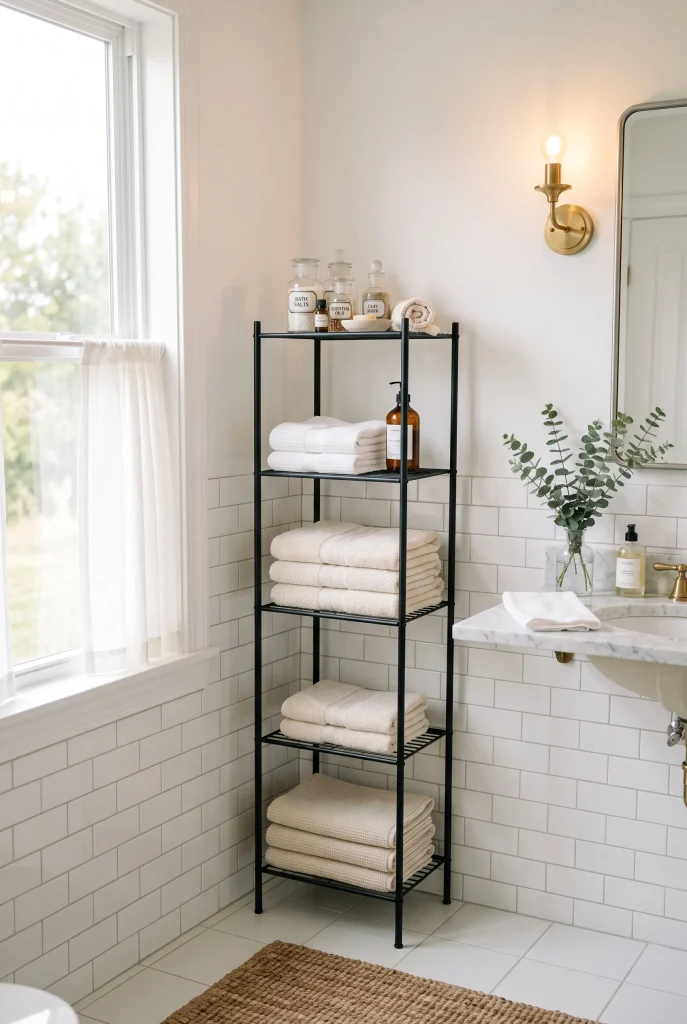
- Expand storage capacity vertically using an exceptionally small floor footprint.
- Keep towels, toiletries, or kitchen spices neatly organized in stacked tiers.
- Move lightweight mobile racks easily between tight corners and small rooms.
Slender tiered racks offer a remarkable way to stack your daily necessities vertically when available floor area is extremely limited. Positioning a tall, narrow multi-shelf rack inside a tight bathroom corner or compact kitchen pantry instantly multiplies your storage options without crowding walkways. In my experience, tiered rolling carts and freestanding wire towers work exceptionally well for holding folded towels, pantry jars, or bath products. Their slim design glides seamlessly into tight gaps, transforming awkward, underutilized nooks into clean, organized hubs that keep your home running smoothly and looking completely serene.
Integrating vertical tiered storage allows you to take advantage of underused height rather than taking up precious horizontal floor room. The open wire or slatted shelf construction allows light to pass through freely, keeping small spaces looking airy, open, and lightweight. You can categorize items by frequency of use, placing daily essentials on middle shelves for effortless access while reserving upper tiers for less-frequently used items. This simple structural addition brings immediate visual order to busy, tight corners, proving that even tiny alcoves can provide substantial, beautifully organized functional storage.
Nested Stacking Tables
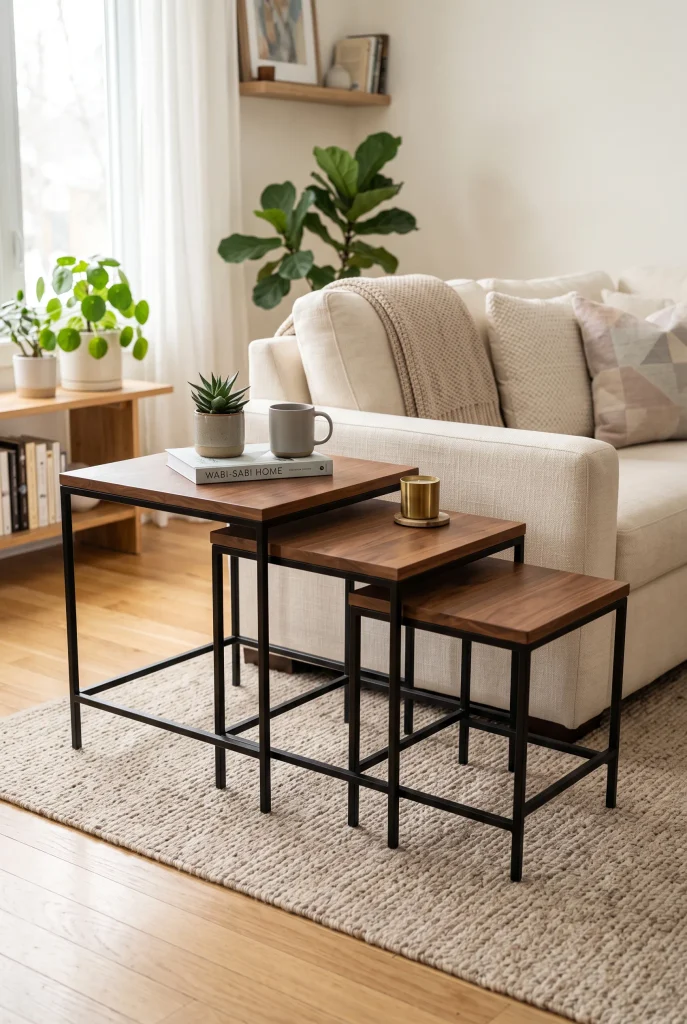
- Expand available surface area instantly when entertaining guests or working.
- Tuck smaller accent tables completely underneath the main table when unused.
- Maintain an open, uncluttered living room floor plan without sacrificing utility.
Nesting table sets are the ultimate chameleon solution for compact living rooms that demand flexible surface areas. These clever accent tables slide neatly over one another, occupying the footprint of a single piece of furniture until extra space is required. I’ve seen this work incredibly well when hosting friends, as you can quickly pull the smaller tables outward to hold coffee cups, snacks, or laptops. Once your guests leave, simply slide them back together to immediately open up your living room floor, keeping your layout feeling remarkably spacious and completely clutter-free.
Choosing multi-tiered nesting furniture provides complete functional flexibility while keeping visual clutter down to an absolute minimum. Their slender bases and open leg designs allow natural light to filter through, which helps small living rooms feel much larger than they actually are. In my experience, opting for light woods, clear glass, or refined metal frames prevents the grouping from feeling heavy or dense. By expanding surface area only when necessary, you enjoy maximum daily functionality while preserving the valuable, open floor space needed to keep small rooms feeling relaxed and comfortable.
Corner Floating Shelves
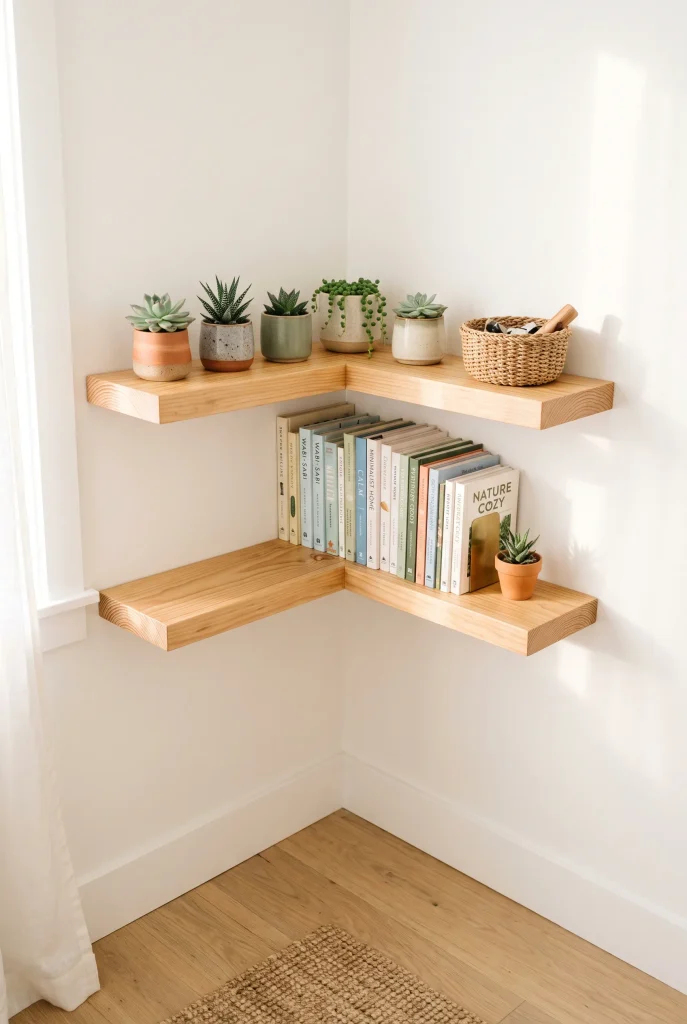
- Transform overlooked 90-degree room corners into stylish, functional storage spots.
- Keep floor space entirely open while adding dedicated display surfaces.
- Blend seamlessly into existing wall architecture to create a custom built-in look.
Unlocking empty wall corners is one of the smartest ways to find hidden square footage in compact homes. Fitting custom L-shaped shelves into unused 90-degree nooks instantly converts blank architectural intersections into practical, attractive display zones. I’ve noticed that people often overlook corners, leaving valuable wall area entirely untapped while floor spaces become crowded. Installing sleek floating platforms directly into these tight spots allows you to store books, display framed photos, or hold daily accessories high off the ground, keeping your overall room layout feeling spacious, organized, and remarkably well-balanced.
Maximizing corner areas helps draw the eye outward toward the perimeter of the room, creating an optical illusion that makes small spaces seem considerably wider. In my experience, painted shelves that match your wall color blend smoothly into the background, maintaining a light and airy environment. You get all the organizational benefits of a standard bookcase without taking up any actual floor real estate. By utilizing these naturally quiet architectural areas, you easily elevate your home’s functionality while keeping main walkways completely clear and comfortable for daily living.
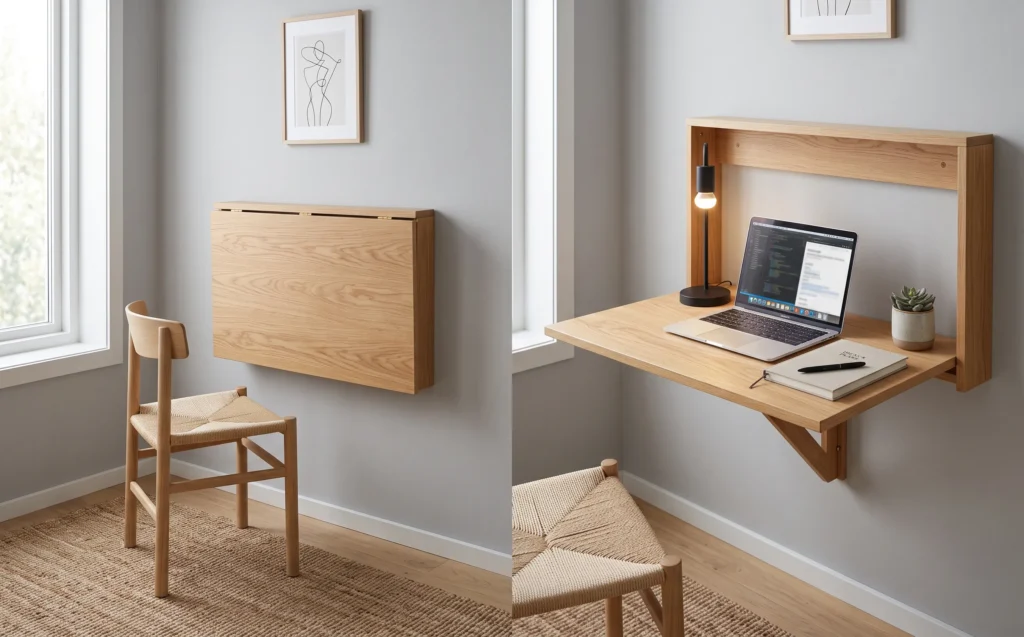
Folding Wall Desks
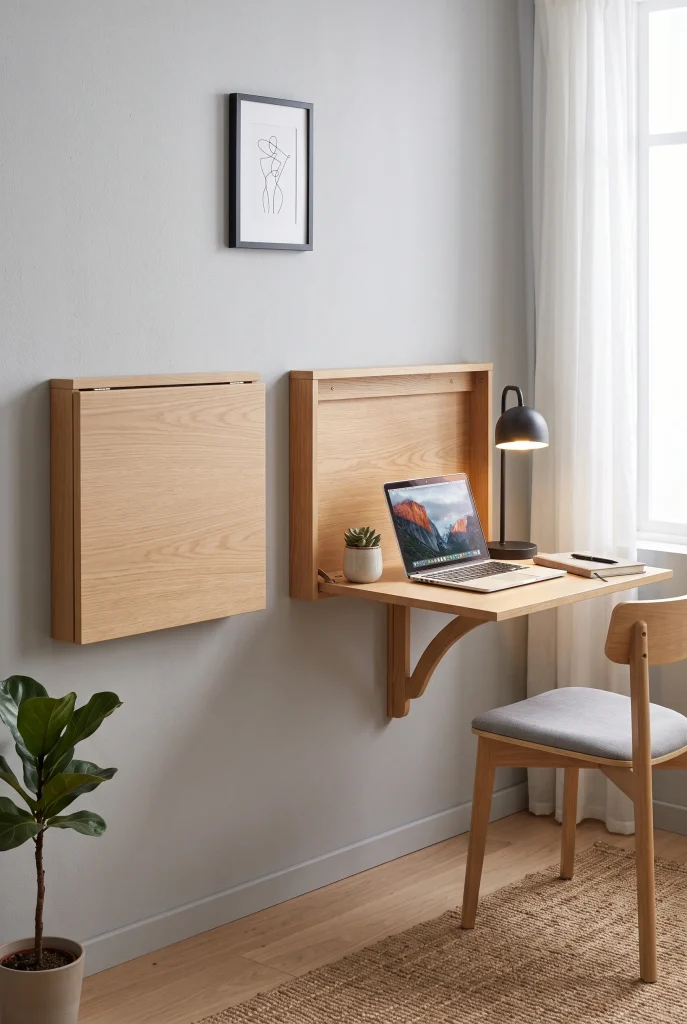
- Provide a full working surface that tucks flat against the wall when finished.
- Eliminate the need for bulky, permanent office furniture in small rooms.
- Create a dedicated, highly productive work-from-home setup anywhere.
A wall-mounted fold-down desk is a brilliant addition for micro-apartments and multifunctional guest bedrooms that require a flexible workstation. When lowered, it provides a sturdy, generous surface for typing, writing, or studying; once your workday ends, it folds completely flat against the wall. That’s why many designers recommend drop-leaf furniture for remote workers living in cozy homes. It allows you to maintain a dedicated, organized office spot during the day without sacrificing valuable living room floor area or creating permanent visual clutter during your evening relaxation hours.
Integrating convertible furniture into your home layout keeps active living zones completely fluid and adaptable to your changing needs. When folded up, the streamlined wooden profile looks like a sleek wall panel or shallow cabinet, preserving an open and spacious atmosphere. In my experience, pairing a drop-down table with a lightweight, stackable chair makes setting up and tearing down your daily workspace effortless. You enjoy a comfortable, highly functional desk during work hours while instantly regaining open floor space the moment you shut your laptop for the night.
Magnetic Knife Bars
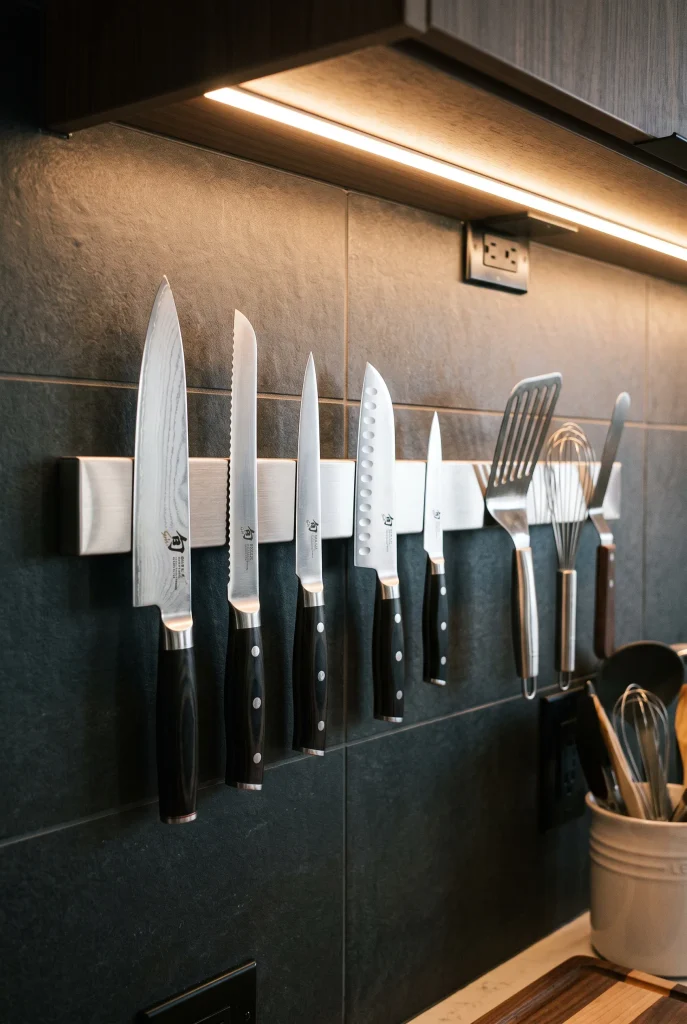
- Clear off crowded kitchen counters by mounting stainless cutlery vertically.
- Keep cooking knives instantly accessible, visible, and safely secured.
- Add a sleek, professional culinary aesthetic to compact kitchen spaces.
Mounting a magnetic strip on your kitchen backsplash instantly clears precious counter space typically occupied by bulky wooden knife blocks. Suspended magnetic knife holders keep your primary cooking blades securely stored, fully visible, and ready to grab at a moment’s notice. I’ve seen this work exceptionally well in tiny apartment kitchens where every inch of preparation space matters during meal prep. Elevating your culinary tools onto the wall preserves open, clean counter surfaces, making slicing, chopping, and cooking feel far less cramped, chaotic, and disorganized in tight cooking areas.
Vertical magnetic storage isn’t just limited to chef knives—it also works wonderfully for metal measuring spoons, whisks, and kitchen shears. Hanging tools vertically on idle backsplash tiles prevents drawers from jamming with loose utensils, keeping your entire kitchen organized and easy to navigate. The exposed metal blades create a crisp, professional aesthetic that elevates your kitchen design while improving daily kitchen safety. By moving sharp tools off counters and out of crowded drawers, you gain a cleaner, more efficient workspace that makes preparing daily meals a breeze.
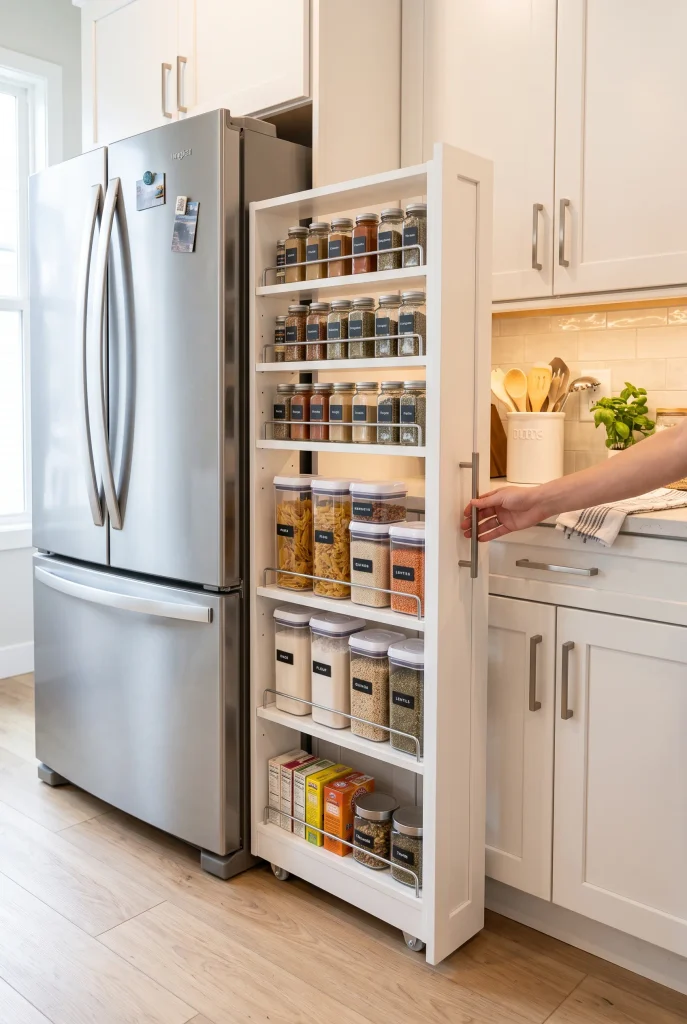
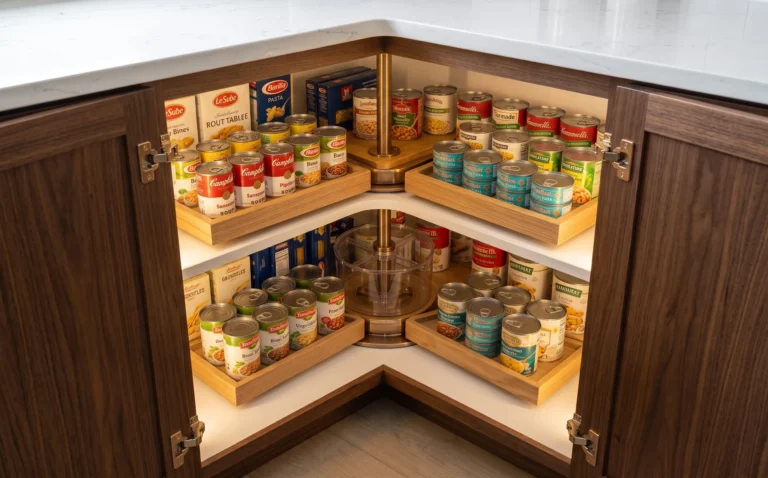
- Utilize narrow, hidden gaps between major appliances and kitchen cabinetry.
- Keep canned goods, jars, and spices organized in a smooth pull-out system.
- Eliminate clutter while maximizing every inch of available kitchen storage.
Unlocking the hidden vertical gap beside your refrigerator or washing machine is a brilliant strategy for gaining valuable pantry space in tight kitchens. Slender rolling towers glide smoothly in and out of tight alcoves, instantly converting empty gaps into high-capacity storage zones. I’ve noticed that these narrow organizers are perfect for storing canned goods, oils, spice jars, and boxed dry ingredients that typically overcrowd main cabinets. By utilizing these forgotten architectural crevices, you instantly expand your kitchen’s total storage capacity without expanding its original floor plan or sacrificing open counter space.
Installing a slide-out tower keeps everyday pantry items neatly organized, fully visible, and within quick reach while cooking meals. The deep vertical shelves prevent items from getting lost behind one another, drastically reducing kitchen search time during busy prep hours. In my experience, choosing models with smooth-rolling caster wheels and high guardrails prevents items from tipping over when pulled outward. By taking advantage of dead space between appliances, you achieve a sleek, custom-built look that makes small cooking spaces feel remarkably organized, high-performing, and completely functional.
Hanging Wire Baskets
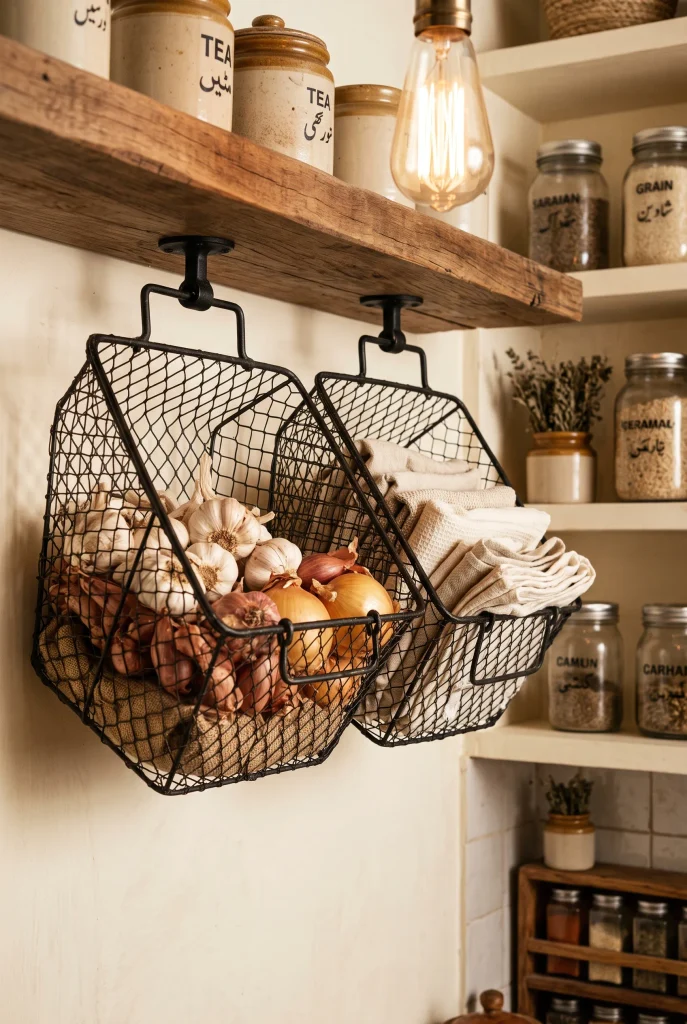
- Maximize unused air space directly beneath existing solid wooden shelves.
- Store produce, dish towels, or small accessories cleanly and efficiently.
- Slide easily onto shelves without requiring tools, hardware, or mounting tape.
Under-shelf wire baskets offer an instant way to double your storage capacity inside crowded kitchen pantries, linen closets, and wardrobes. These clever metal organizers slide directly onto existing shelves, taking immediate advantage of empty vertical air space that typically goes unused. I’ve seen this work exceptionally well for holding lightweight items like bread loaves, linen napkins, coffee pods, or small accessories. By adding an extra tier of storage beneath solid surfaces, you keep delicate items safe from getting crushed while maintaining an exceptionally neat, well-structured cabinet interior.
Using open wire hanging baskets allows air to circulate freely around stored goods, making them especially ideal for keeping fresh produce like onions and potatoes fresh. Their open-grid design lets you see contents instantly at a glance, eliminating the need to rummage through stacked boxes or deep shelves. That’s why many designers recommend wire under-shelf attachments for renters looking for non-permanent organizational upgrades. By elevating small daily items into previously dead air space, you keep main shelf surfaces clear, organized, and effortlessly accessible every single day.
Recessed Bathroom Cabinets
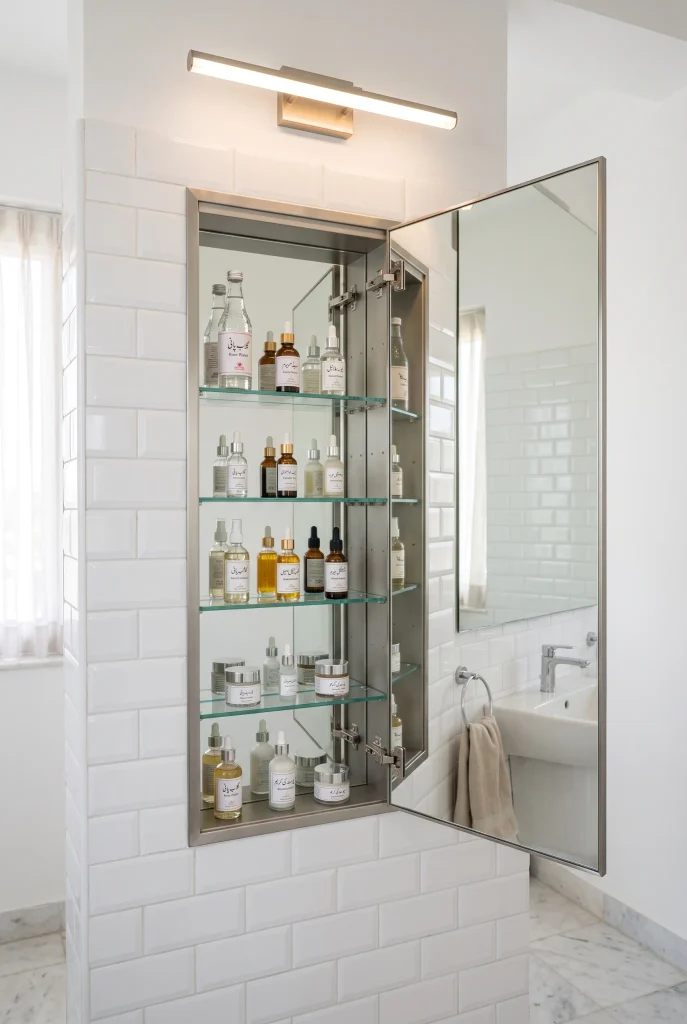
- Install storage directly inside wall cavities to preserve precious bathroom space.
- Keep mirrors and cosmetics flush with walls for a seamless design.
- Create a clean, open vanity environment by eliminating protruding wall cabinets.
Recessing storage medicine cabinets directly into interior wall studs is a brilliant architectural trick for small bathrooms where every inch counts. Instead of mounting a bulky cabinet that projects into your personal space, flush-mounted units sit level with the drywall surface. In my experience, this simple adjustment prevents small bathrooms from feeling tight or claustrophobic above the sink. You gain extensive multi-shelf storage for skincare, medications, and grooming supplies while preserving a sleek, modern visual aesthetic that seamlessly blends into your room’s existing architecture.
Choosing a mirrored recessed cabinet delivers dual functionality by combining essential grooming mirrors with extensive hidden storage capacity. The clean, flush surface reflects natural light across the room, instantly making compact bathrooms appear much wider, brighter, and more spacious. Elevating daily toiletries off vanity counters and hiding them behind sleek mirrored doors creates an effortlessly tidy environment free from daily clutter. By taking advantage of empty space inside wall framing, you achieve a high-end luxury feel while maximizing utility in tight quarters.
Under-Sink Stacking Bins
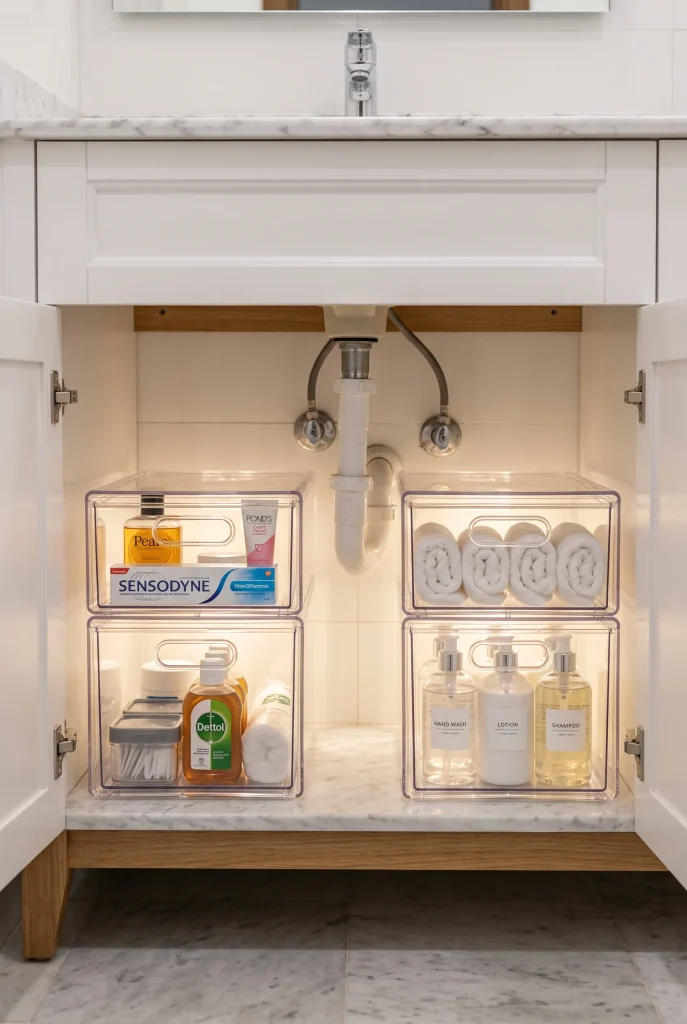
- Navigate awkward plumbing pipes effortlessly to unlock hidden cabinet space.
- Keep cleaning products and personal toiletries neatly separated and visible.
- Pull sliding drawers out easily to access items stored in back.
Navigating tricky plumbing pipes beneath sinks is a constant challenge, but adding modular stacking bins transforms this chaotic cabinet into functional storage. Clear acrylic drawers or adjustable wire racks fit neatly around drain pipes, turning awkward empty space into an organized hub. I’ve noticed that using pull-out sliding drawers prevents items from disappearing into dark cabinet corners. Stacking organizers vertically allows you to categorize cleaning sprays, extra sponges, and daily toiletries into clear tiers, making under-sink storage exceptionally tidy, accessible, and simple to maintain.
Utilizing stackable modular drawers maximizes vertical space while keeping cabinet floors clear of loose bottles and messy spills. That’s why many designers recommend transparent acrylic bins for under-sink organization, as you can identify items instantly without pulling everything out. In my experience, grouping similar items together in dedicated pull-out compartments saves time during daily routines and keeps supplies neatly organized. By transforming a notoriously chaotic area into a structured storage system, you make your kitchen or bathroom feel noticeably cleaner and far more functional.
Vertical Plate Racks
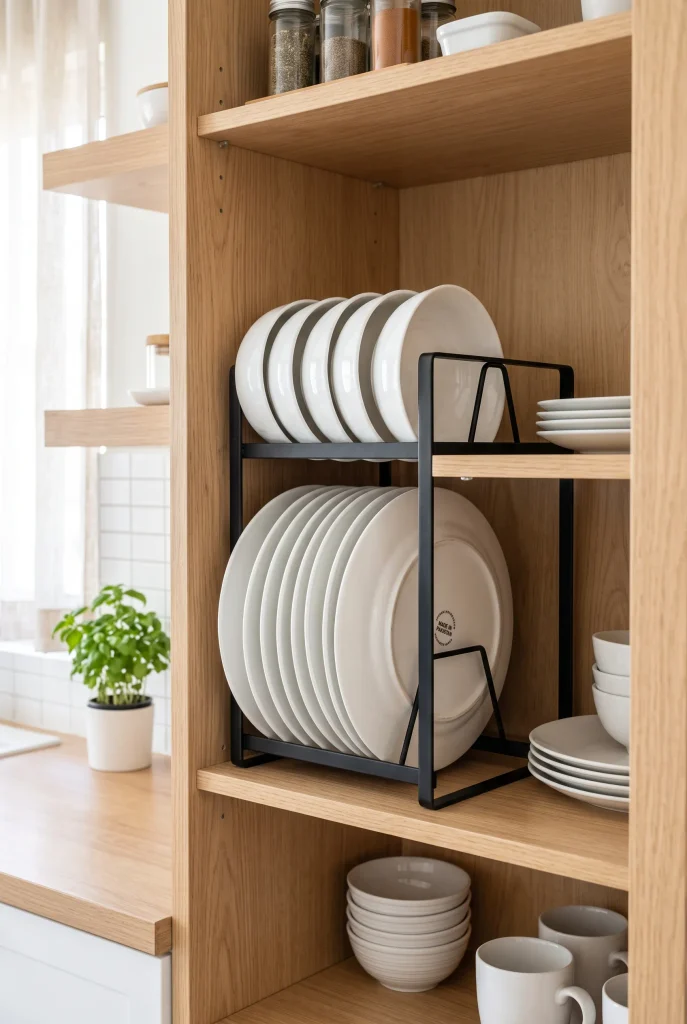
- Store ceramic plates upright to maximize cabinet shelf height efficiently.
- Eliminate risky stacking to make pulling out individual plates safe.
- Protect delicate tableware edges from chips, scratches, and unwanted friction.
Storing dinner plates vertically instead of in heavy horizontal stacks is an incredible space saver that protects your favorite dinnerware. Slotting ceramic dishes upright into slotted wooden or wire dividers takes full advantage of vertical shelf height while keeping every piece individually accessible. I’ve seen this work wonderfully in compact kitchen cabinets, where lifting heavy stacks to reach bottom plates often leads to accidental chips. Vertical organizing racks keep your cupboards looking immaculate while streamlining meal setup and dishwashing routines every single day.
Adopting vertical dish storage instantly converts overcrowded kitchen cabinets into clean, efficient spaces that feel like custom cabinetry. Organizers with removable dividers allow you to adjust slot widths for thick serving platters, shallow bowls, or delicate salad plates. In my experience, standing plates upright frees up substantial horizontal shelf space for drinking glasses, mugs, and serving bowls. By organizing tableware vertically, you improve daily kitchen functionality, protect delicate ceramic finishes, and create an aesthetically pleasing cupboard layout that makes everyday cooking far smoother.
Tiered Closet Hanging
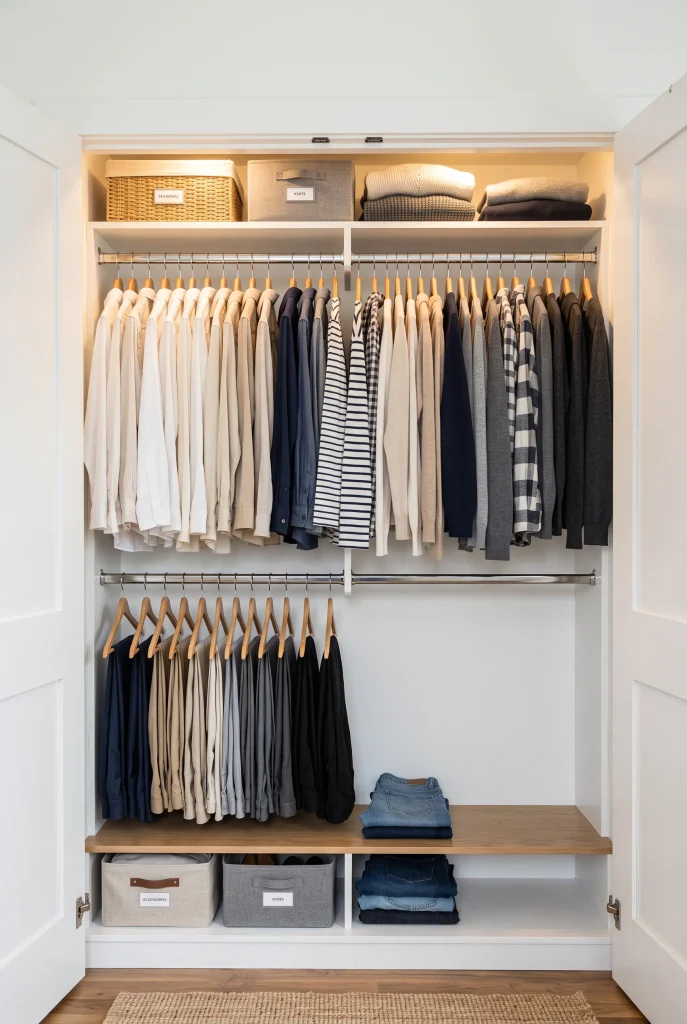
- Double your available closet hanging capacity using a secondary lower rod.
- Separate upper tops from lower garments to keep outfits visibly organized.
- Maximize empty vertical space beneath short hanging shirts and blouses.
Hanging a secondary adjustable tension rod beneath your primary closet rail instantly doubles your clothing storage without expanding closet dimensions. Vertical tiered hanging systems allow you to store short items like button-down shirts, blouses, and folded pants on two separate levels. I’ve noticed that standard closets leave vast amounts of empty air space below hung garments, which quickly becomes cluttered with shoes or laundry piles. Adding a lower hanging bar organizes clothes effectively, keeping wardrobes neat, visible, and fully optimized.
Doubling hanger capacity keeps clothes neatly separated, preventing tight packing that causes unwanted fabric wrinkles. That’s why many designers recommend double-hang closet extenders for small bedroom wardrobes, as they maximize vertical layout efficiency instantly without tools. Categorizing tops on the upper level and bottoms on the lower rail makes choosing daily outfits quick and enjoyable. By utilizing full vertical wall height inside your closet, you double garment storage capacity while keeping your bedroom environment visual, structured, and delightfully organized.
Foldable Wall Drying Racks
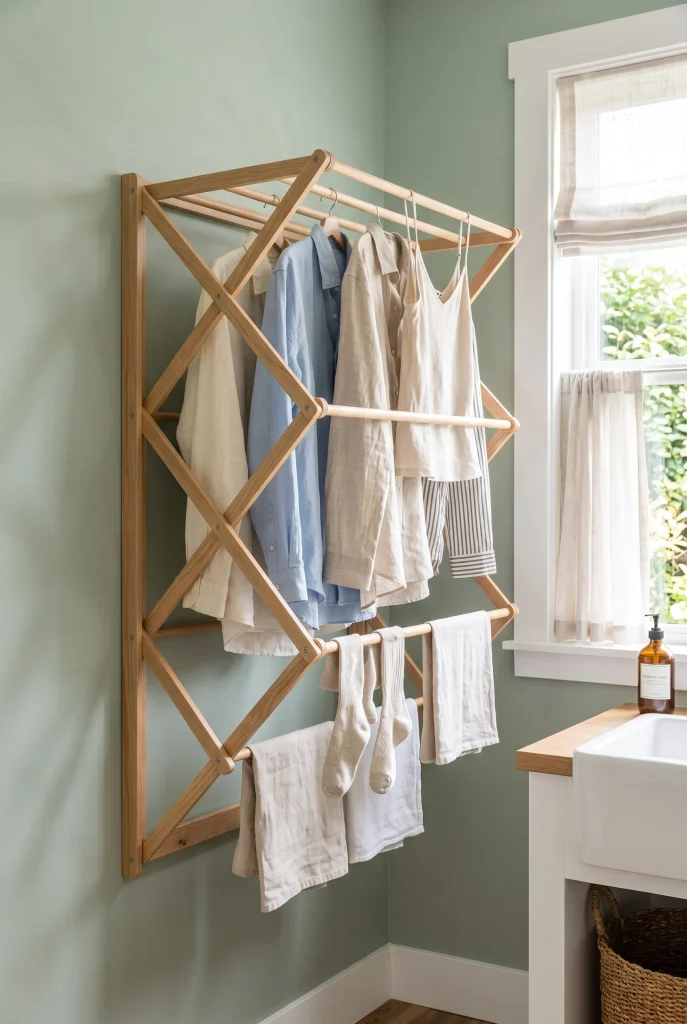
- Extend sturdy drying rungs outward only when doing active laundry loads.
- Collapse completely flat against walls to maintain open, clear walkways.
- Eliminate bulky, free-standing laundry racks that clutter up floor space.
Installing an accordion-style accordion rack on a laundry room wall is a clever way to dry clothes without sacrificing floor area. When expanded, these collapsible units provide ample line space for delicate garments; once dry, the frame folds flat against your wall surface. I’ve noticed that traditional floor-standing drying racks constantly block high-traffic areas in small apartments. Moving your drying setup onto an unused wall area keeps your floor plan entirely open, transforming tight utility rooms into highly organized, multi-functional spaces that feel spacious and effortless to work in.
Mounting collapsible drying systems above laundry appliances or behind utility doors takes full advantage of naturally idle vertical space. That’s why many designers recommend wall-mounted drying units for micro-apartments where dedicated laundry space is extremely limited. The open-slat wood or metal construction promotes excellent airflow, helping garments dry faster while looking like intentional, modern wall decor when closed. By keeping your laundry organization elevated off the floor, you maintain clear movement paths through your home while handling daily housework with total efficiency.
Over-the-Sink Cutting Boards
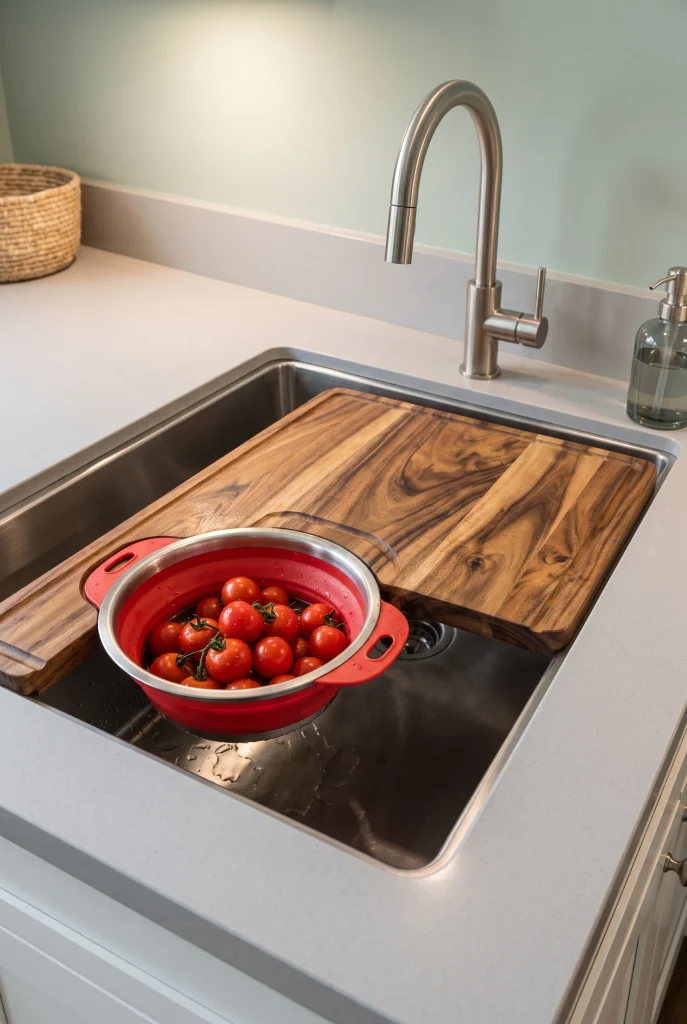
- Span over empty sink basins to create instant extra counter space.
- Wash and chop fruits or vegetables directly over integrated colanders.
- Slide board away easily when sink access is needed for washing.
Extending your active kitchen prep zone directly over your sink basin is one of the fastest ways to expand usable counter space in tight kitchens. Specially designed over-the-sink cutting boards rest securely across sink edges, turning empty air space into a functional chopping station. In my experience, limited counter space often creates unnecessary friction while preparing daily meals. Utilizing this clever bridge design allows you to slice, chop, and prep ingredients comfortably without crowding stove areas or taking up precious counter real estate.
Many over-the-sink prep boards feature integrated collapsible colanders or side slots, allowing you to wash produce and strain juices directly into the drain below. This streamlined prep process keeps your surrounding counter surfaces completely dry and free from unnecessary food mess or prep clutter. Choosing durable hardwoods like acacia or silicone-rimmed composite materials adds a luxurious, built-in look to standard kitchen sinks. By converting an open sink basin into active workspace, you make small-footprint kitchens feel significantly larger, cleaner, and more enjoyable to cook in.
Corner Tension Caddies
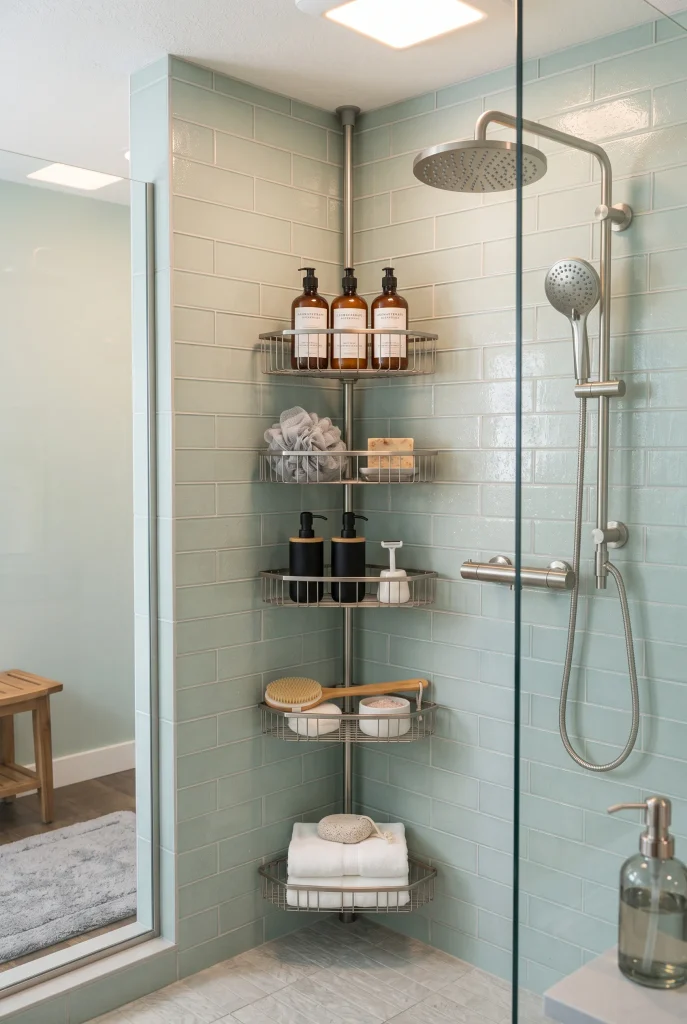
- Stack shower supplies vertically using spring-loaded tension poles without tools.
- Keep shampoo bottles, soaps, and razors organized off shower floors.
- Adjust basket heights easily to accommodate tall bottles and bath accessories.
Securing a multi-tier tension pole in your shower corner utilizes tall vertical space that usually goes completely unused. Spring-loaded caddies expand securely between floor tiles and ceilings, anchoring deep wire baskets without requiring drills, adhesives, or permanent hardware. I’ve seen this work exceptionally well in rental bathrooms where mounting permanent shelves isn’t an option. Stacking body washes, soaps, and loofahs neatly in corner tiers keeps tub ledges and shower floors clean, organized, and free from cluttered soap bottles.
Positioning shower essentials vertically prevents water from pooling around bottle bases, drastically reducing soap scum build-up and mold growth in corners. Open wire basket designs allow water to drain away freely, keeping bath products dry and easy to sanitize. In my experience, adjusting basket heights along the central pole makes storing oversized bottle pumps effortless for the whole household. By organizing shower supplies inside idle corner boundaries, you transform tight bath enclosures into open, relaxing, spa-like spaces that remain effortlessly tidy.
Rolling Utility Carts
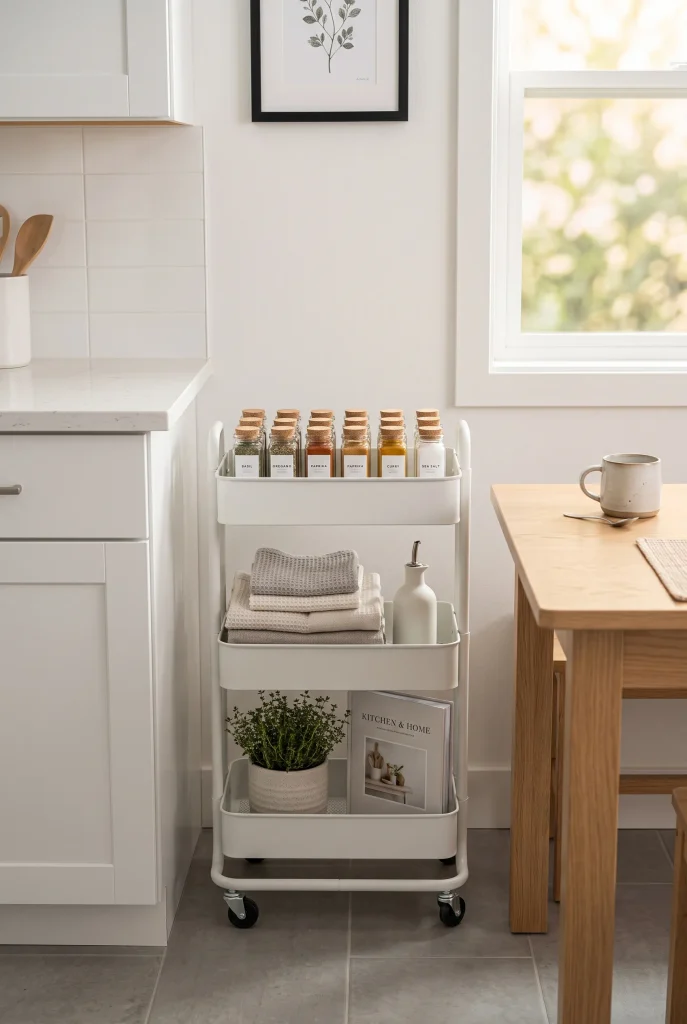
- Gain multi-tiered mobile storage that glides effortlessly wherever you need extra capacity.
- Slide compact carts into tight gaps between appliances, desks, or bathroom vanities.
- Reorganize supplies easily by rolling the cart directly to your active workspace.
A multi-tiered metal rolling cart provides dynamic, moveable storage that instantly adapts to whatever task you are working on. Whether holding kitchen spices, craft supplies, or daily office paperwork, these slender units move smoothly on caster wheels to bring supplies right to your fingertips. I’ve noticed that mobile carts excel in tight living quarters because they can be tucked into small gaps when idle and pulled out during active use. They offer an adaptable storage system that grows alongside your changing household demands without requiring fixed wall mounting or bulky permanent furniture installation.
Using rolling utility storage helps prevent loose items from accumulating across dining tables, kitchen counters, and working desks. That’s why many designers recommend mobile carts for flexible, open-plan apartments where rooms serve multiple daily purposes. Stacking items vertically across three spacious tiers keeps everything organized while maintaining a tiny floor footprint. In my experience, designating each shelf for specific supply categories keeps daily routines structured and efficient. By rolling your stored items away when finished, you instantly restore open floor space and maintain a pristine, peaceful living environment every day.
Adhesive Cable Clips
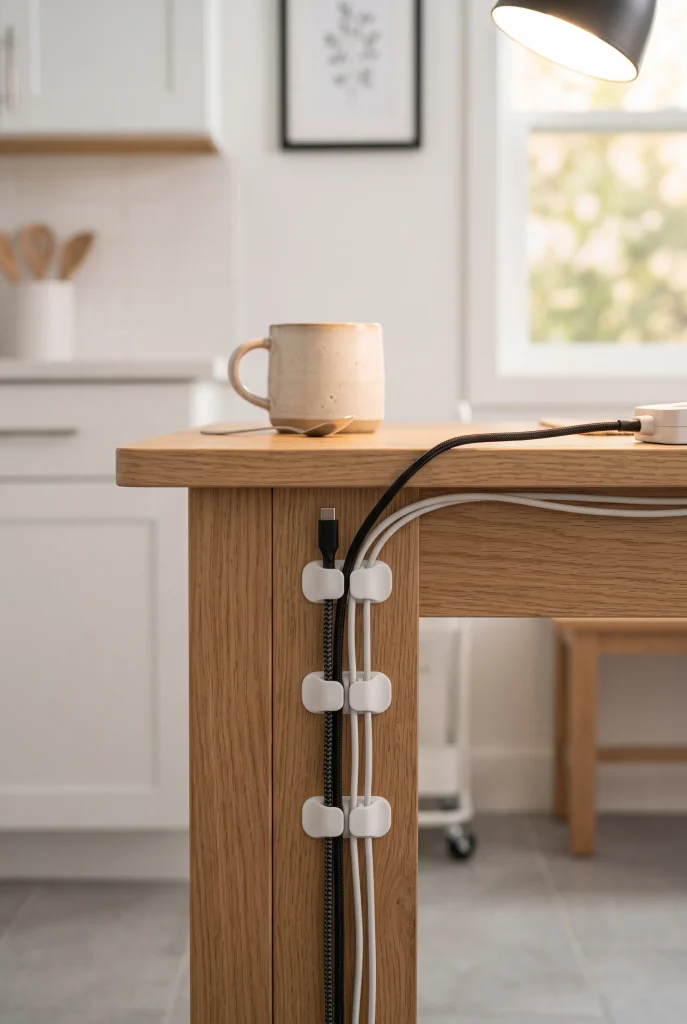
- Secure tangling cords along desk edges and walls to eliminate visual cable chaos.
- Prevent charging cables from slipping off furniture onto dirty floors.
- Install instantly using strong, non-damaging adhesive backing without tools or screws.
Managing tangled electronic power cords is an essential yet often overlooked strategy for making small workspaces look clean and structured. Sticking small silicone cable managers along desk edges, nightstands, or baseboards keeps charging cords organized and pinned neatly in place. I’ve seen this work wonders for home offices where loose wires trail across floors and gather dust behind furniture. Securing cables in organized channels prevents workspace clutter, protects delicate wire connectors from damage, and gives your entire working setup a polished, highly intentional visual appearance.
Taming cord clutter frees up valuable surface real estate on compact desks that would otherwise be occupied by chaotic wiring mess. Adhesive cable organizers stick firmly to wood, metal, or painted walls without leaving sticky residue or causing surface damage upon removal. In my experience, routing cords down rear desk legs creates an open, minimalist environment that significantly enhances focus and productivity. By eliminating messy wire tangles from view, you turn busy working spaces into sleek, orderly, and highly efficient zones that feel wonderfully spacious and clean.
Hanging Shoe Organizers
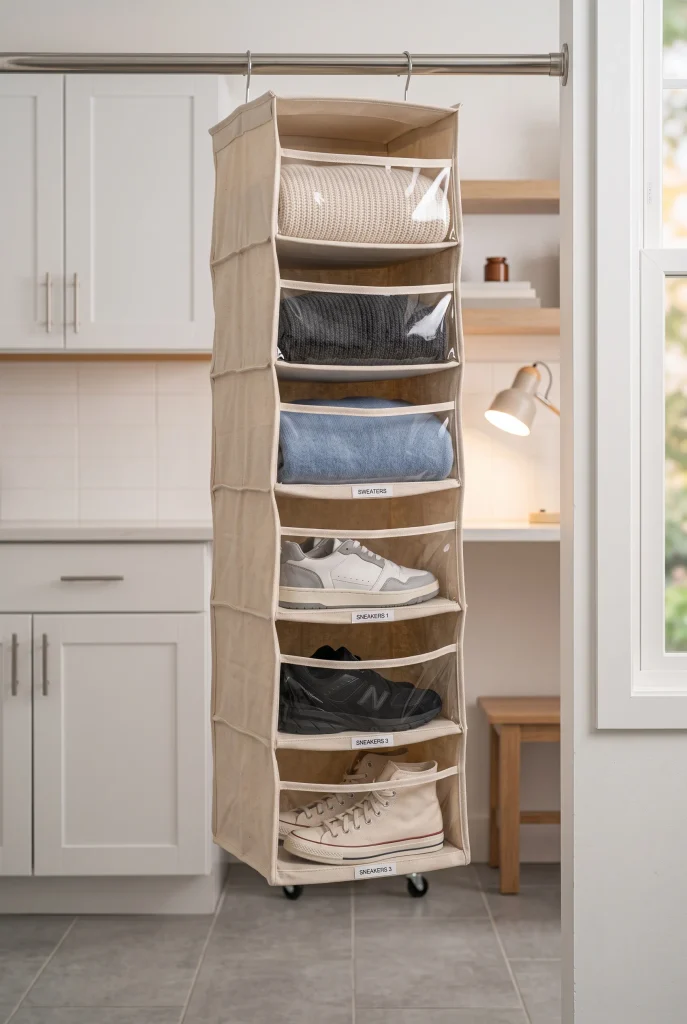
- Expand vertical closet capacity by organizing footwear or accessories in soft fabric slots.
- Keep shoe pairs off closet floors to maintain clean, unobstructed floor space.
- Store sweaters, scarves, and small accessories in clear, easy-to-see cubbies.
Suspending a fabric shoe cubby from your closet rod utilizes open vertical space to keep footwear organized and off the floor. These fabric towers feature multi-tiered compartments that store shoes, folded t-shirts, scarves, or rolled towels in clear view. In my experience, floor-level shoe piles make wardrobes look cramped and chaotic, making morning outfit selection unnecessarily stressful. Elevating your shoes into structured hanging cubbies keeps pairs organized and accessible while preserving floor space below for extra storage bins or luggage.
Using hanging fabric organizers brings visual structure to compact wardrobes, allowing you to categorize items by color, season, or daily function. Their soft construction fits comfortably alongside standard clothes hangers, making them an ideal, non-permanent addition for apartment closets. That’s why many designers recommend hanging cubbies for renters needing immediate organization without assembling wood shelving. By shifting footwear and accessories into vertical fabric slots, you eliminate floor clutter and transform your closet into a beautifully organized dressing space that feels open and effortless to navigate.
Conclusion
Transforming your home doesn’t require a massive budget or extra square footage—just a few intentional adjustments. Implementing these creative small space organization ideas will instantly elevate your daily routine, bringing long-lasting calm, order, and visual beauty to your living areas. In my experience, even taking on just one small project this weekend can completely shift how your home feels and functions. Be sure to pin this post to your favorite Pinterest boards so you always have fresh inspiration ready when you need it. Pick your favorite setup, share these helpful tips with a friend, and start creating a beautifully organized space you genuinely love coming home to!