12 Fall Shelf Decor Ideas (Styling Tips That Actually Work)
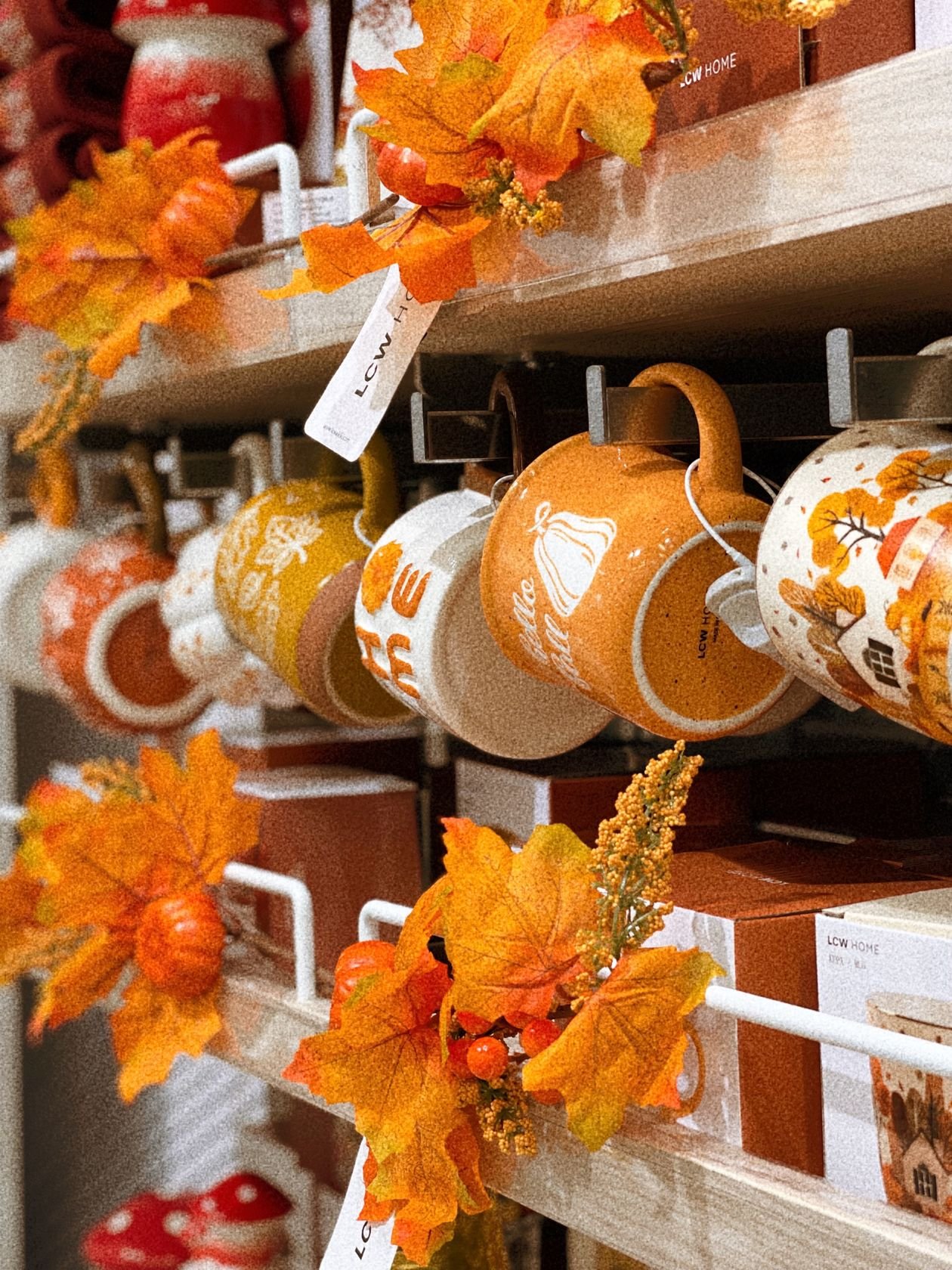
Shelf styling — the beloved “shelfie” — is where fall decorating gets personal. Unlike the tree or the mantel, shelves hold your books, your photos, your collected things, which means fall styling here is about weaving the season into a life already on display, not starting from scratch.
The difference between a shelf that looks styled and one that looks cluttered comes down to a few repeatable moves: layering, odd numbers, breathing room, and one seasonal swap per shelf. These twelve ideas are the moves, applied for fall.
1. The Rule of Thirds, Fall Edition
Divide each shelf mentally into thirds and style two of them, leaving one third open. The empty space is what makes the styled two-thirds look intentional — a shelf packed edge to edge reads as storage no matter how pretty the objects.
Apply it vertically too: tall objects on one side, medium in the middle, breathing room on the other. Fall’s textures — wood, wool, dried botanicals — need that air around them to register; cram them and they blur into brown noise.
2. Layer Frames Behind Pumpkins
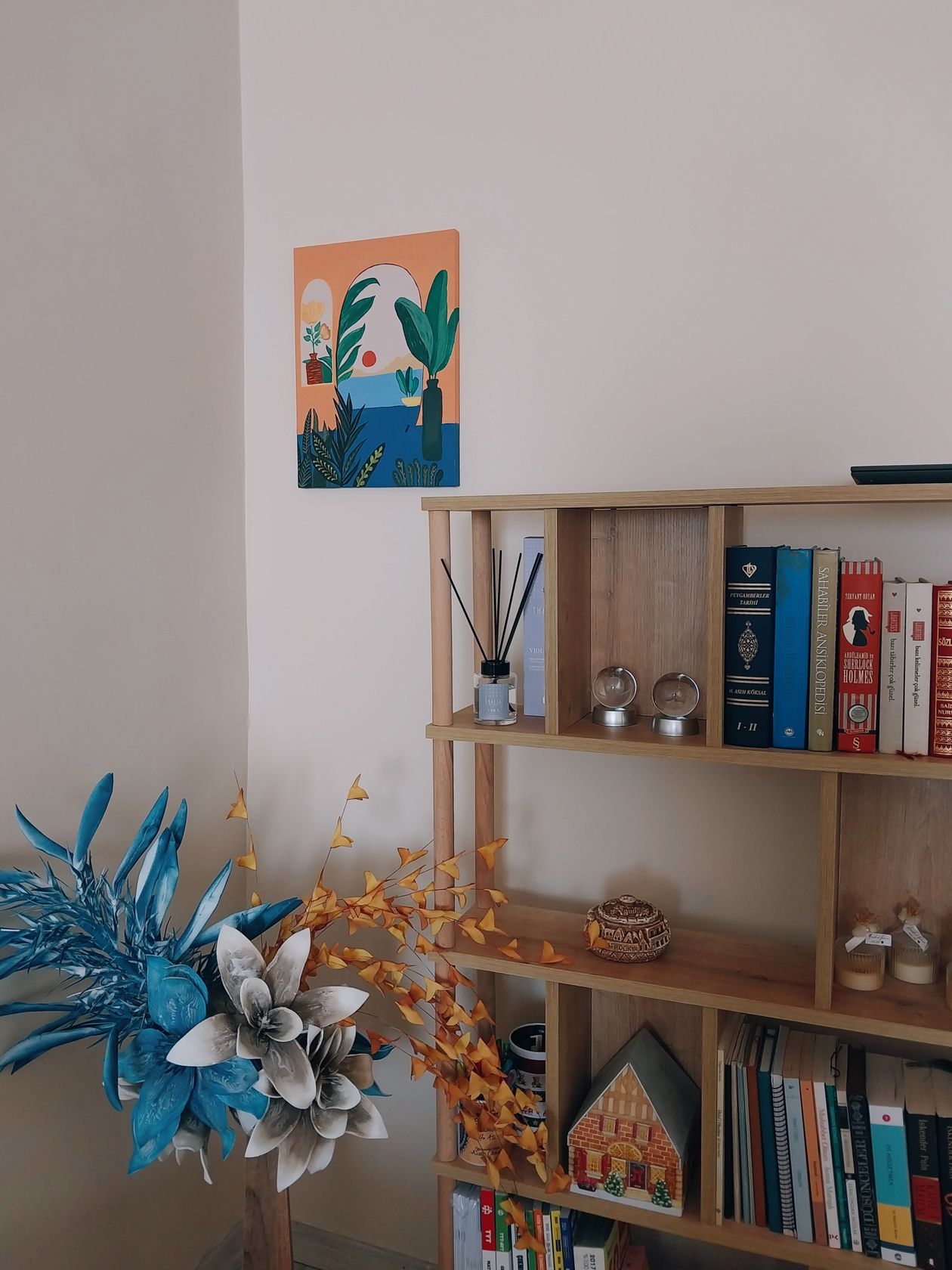
Lean a framed print or photo against the back of the shelf, then place a small pumpkin or candle in front of it. The layering creates depth — the single most important quality in shelf styling — and the frame gives the pumpkin a backdrop that makes it pop.
Use frames you already own; just swap the art for something seasonal. A landscape print, a botanical illustration, even a fall quote printed at home — at shelf scale, anything reads as intentional behind a pumpkin.
3. Books as Risers
A stack of two or three books is the shelf stylist’s secret riser: it lifts a small pumpkin or candle to a new height for free, and the book spines add color and texture. Choose books with covers in your fall palette, or turn them spine-in for a neutral linen look.
Vary the stack heights across shelves — two books here, four there — so the risers themselves create rhythm. Coffee-table books work best; paperbacks disappear at shelf scale.
4. A Eucalyptus Garland Drape
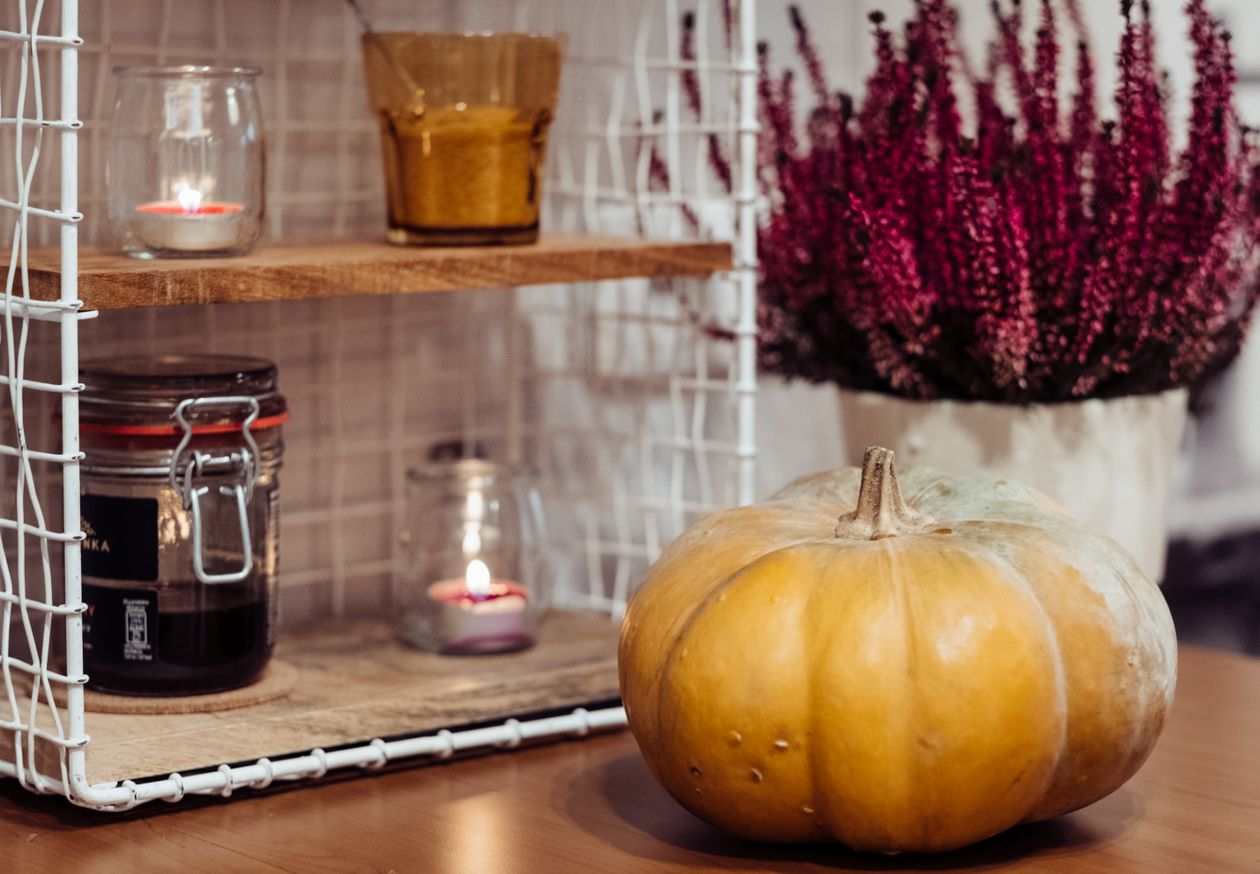
Drape a short faux eucalyptus garland along one shelf’s front edge, letting it spill over slightly. The trailing greenery breaks the shelf’s hard horizontal line and adds the organic movement that styled shelves need.
Keep it to one shelf per bookcase — garland on every shelf is a jungle. Tuck the ends behind books so it looks grown rather than placed, and let a few sprigs hang a few inches below the shelf edge.
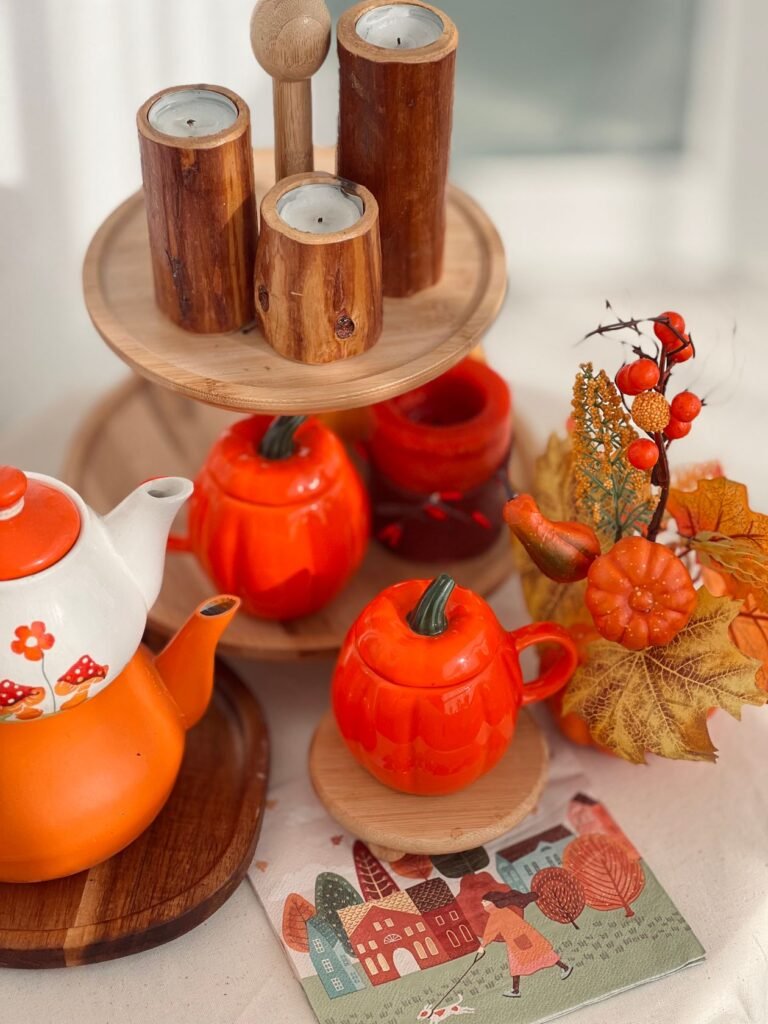
5. Candle Groupings in Odd Numbers
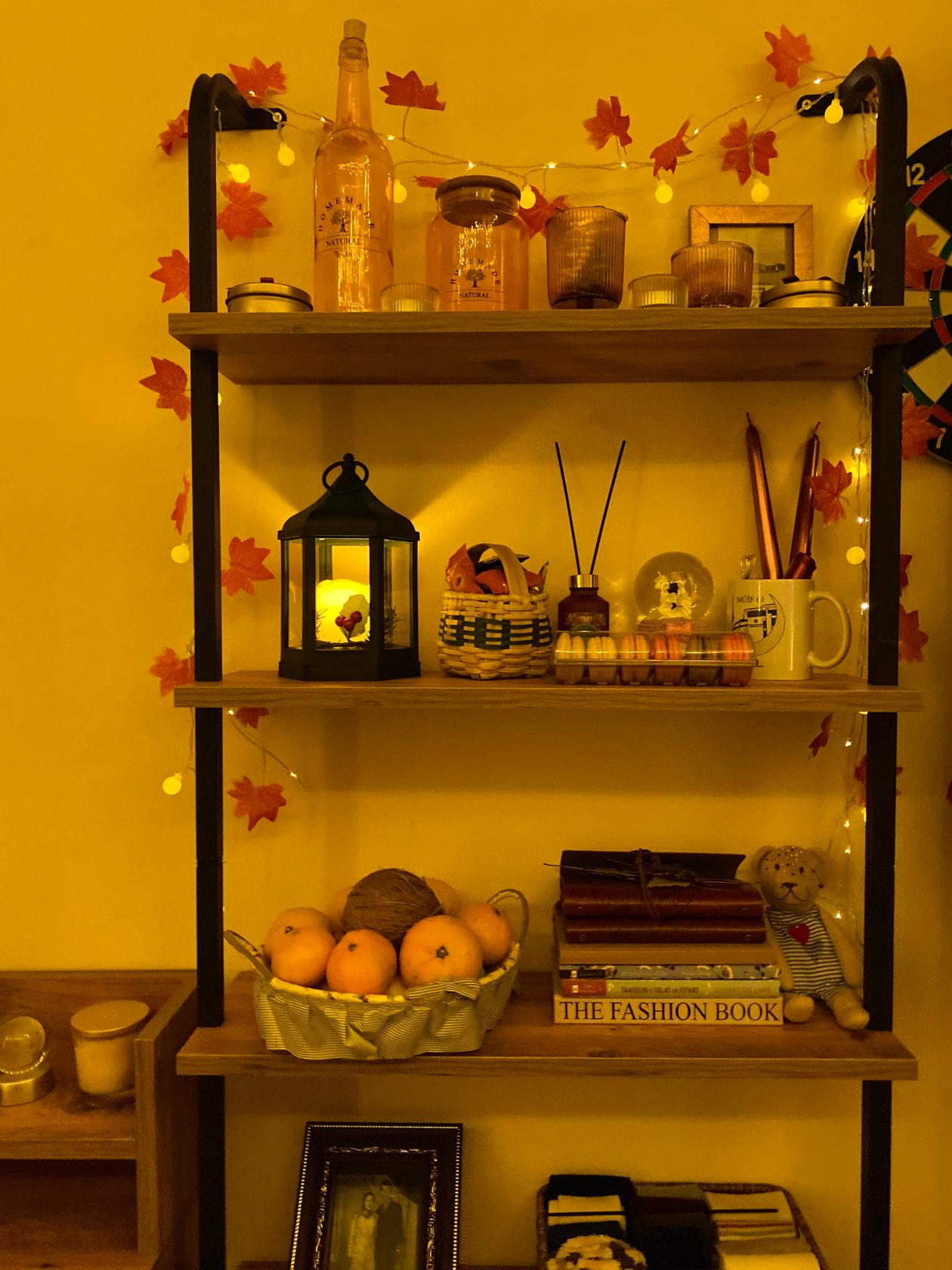
Three candles beat two, five beat four — odd numbers look collected, even numbers look placed. Group pillar candles or tea lights in threes at slightly different heights on one shelf, keeping them tight enough to read as a single cluster.
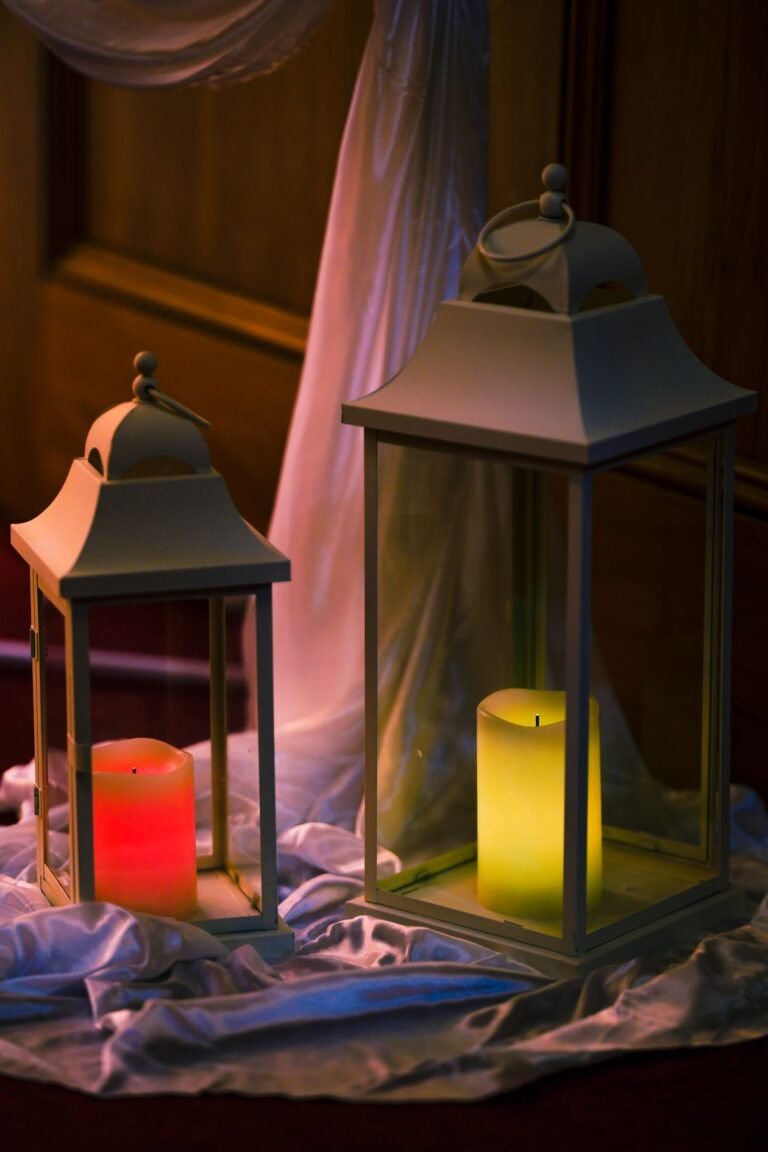
Amber glass holders or matte ceramic in fall tones keep the group seasonal. And since these are shelves, not tables, flameless is the only sane choice — you’ll never be close enough to monitor a real flame up there.
6. Small Signs, Big Impact
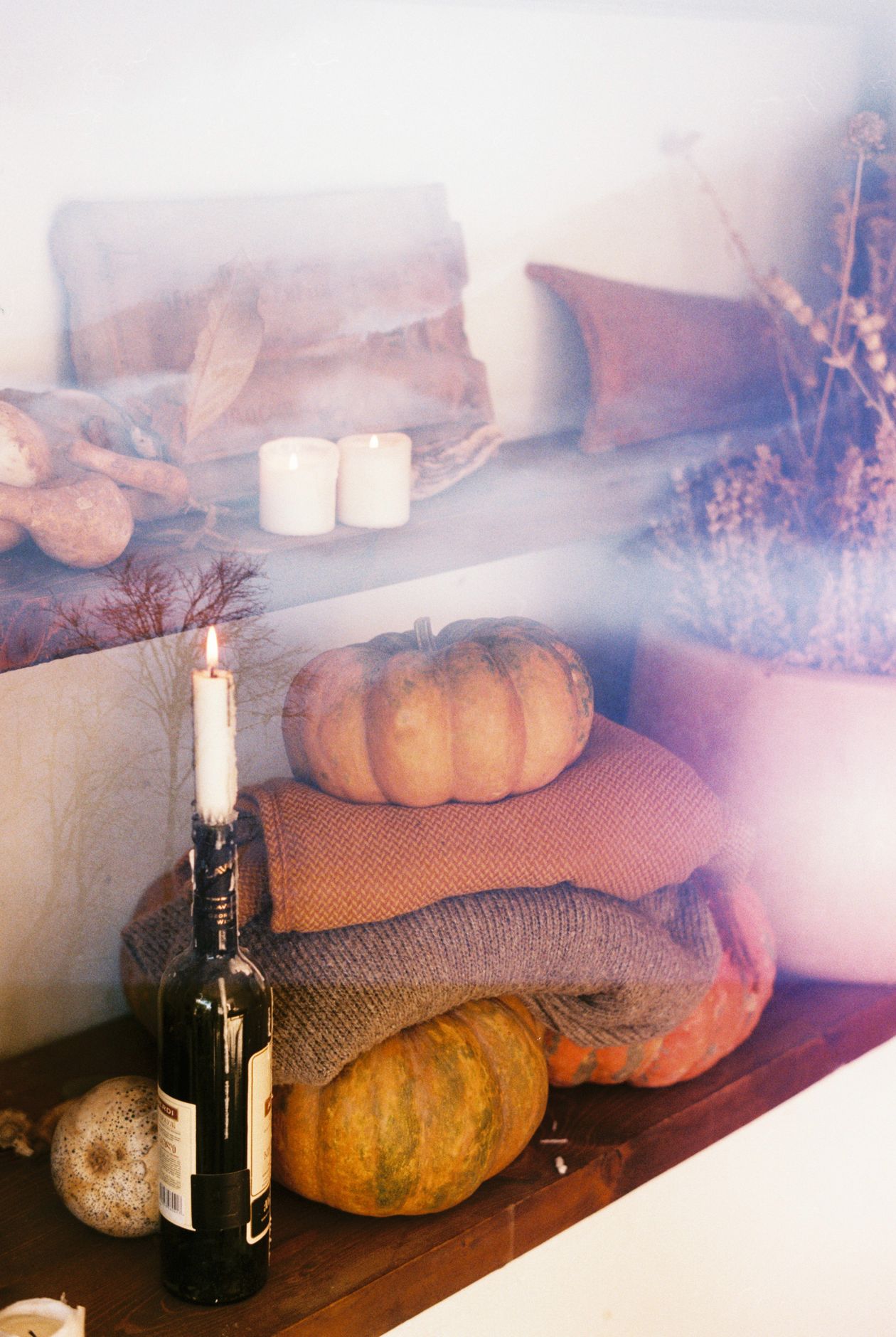
One small sign per bookcase — “gather,” “thankful,” “hello fall” — gives the shelves a voice without turning them into a gift shop. Lean it on a shelf at eye level, slightly off-center, in front of books or a plain backdrop.
Keep the sign’s style consistent with your home: rustic wood for farmhouse, brass letters for traditional, simple black script for modern. One sign is a statement; the second sign is where restraint ends.
7. Mix Wood Tones Freely
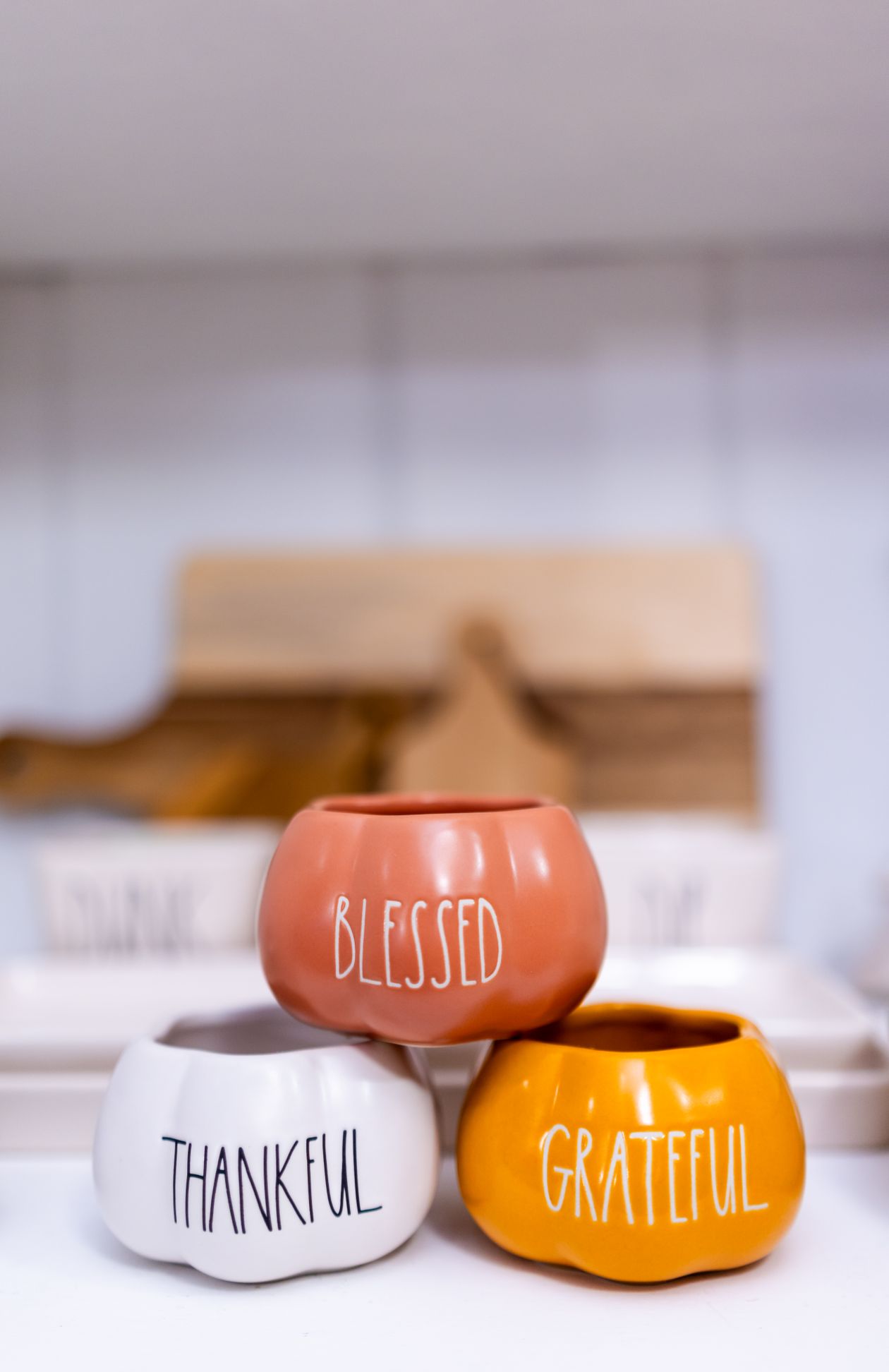
Fall is the season to stop matching your woods. A walnut frame, an oak bowl, a pine pumpkin crate, and a driftwood branch can share a shelf happily — the variety reads as collected over time, which is exactly the feeling fall decorating wants.
The unifier is finish, not species: keep everything matte or everything lightly worn, and mixed woods harmonize. One glossy lacquered piece among matte woods will stick out; keep the sheen consistent and the species can roam.
8. Add One Vintage Find
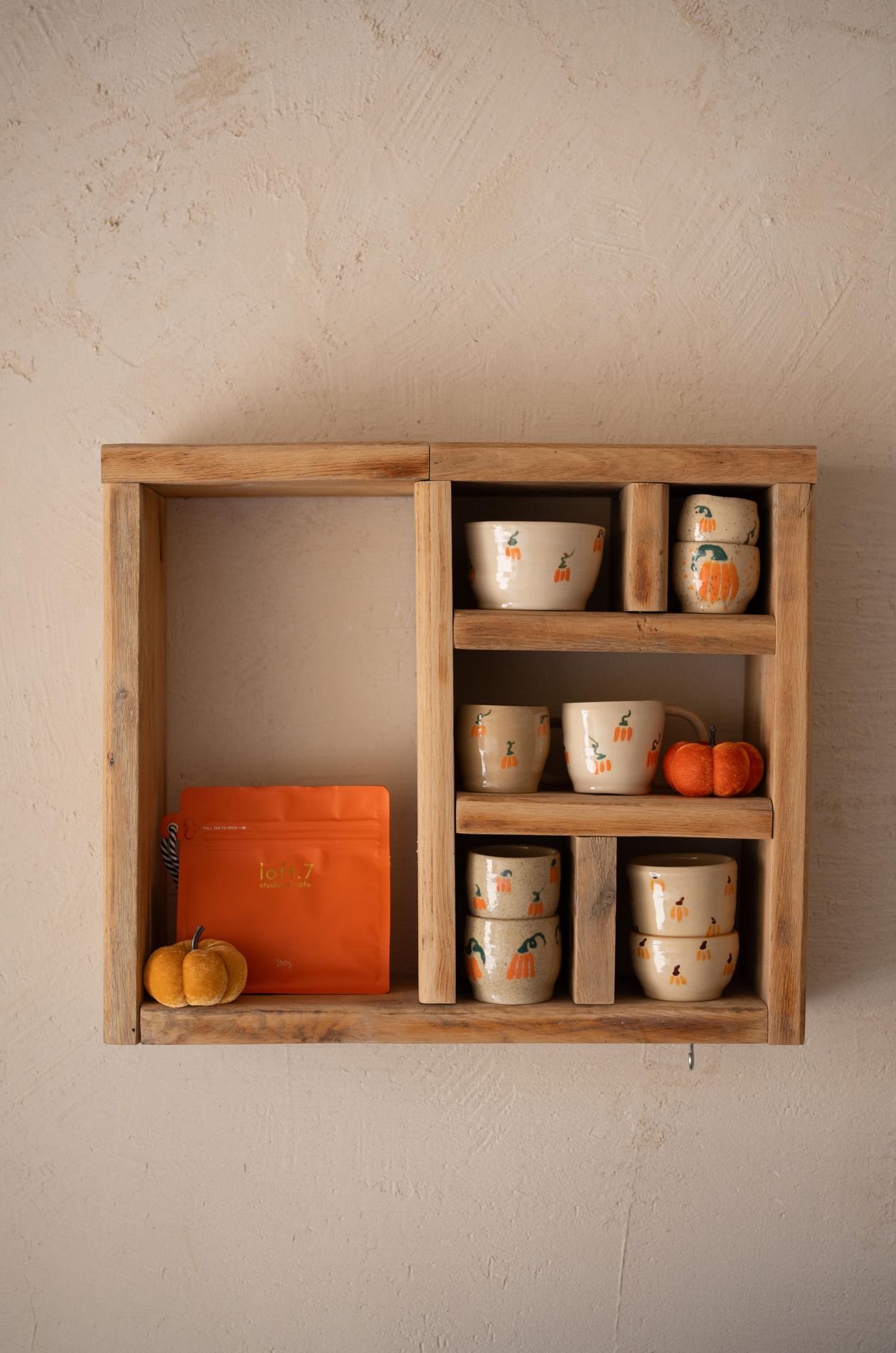
A single vintage object — a brass candlestick, an old camera, a chipped ironstone pitcher — gives shelves the patina that new decor can’t fake. Fall’s whole aesthetic is harvest and heritage, so one genuinely old thing anchors the season’s story.
Place it where the light hits, and let it be the shelf’s conversation piece. You don’t need a shelf of antiques; one, surrounded by simpler fall pieces, does all the work.
9. Faux Stems in a Stoneware Vase
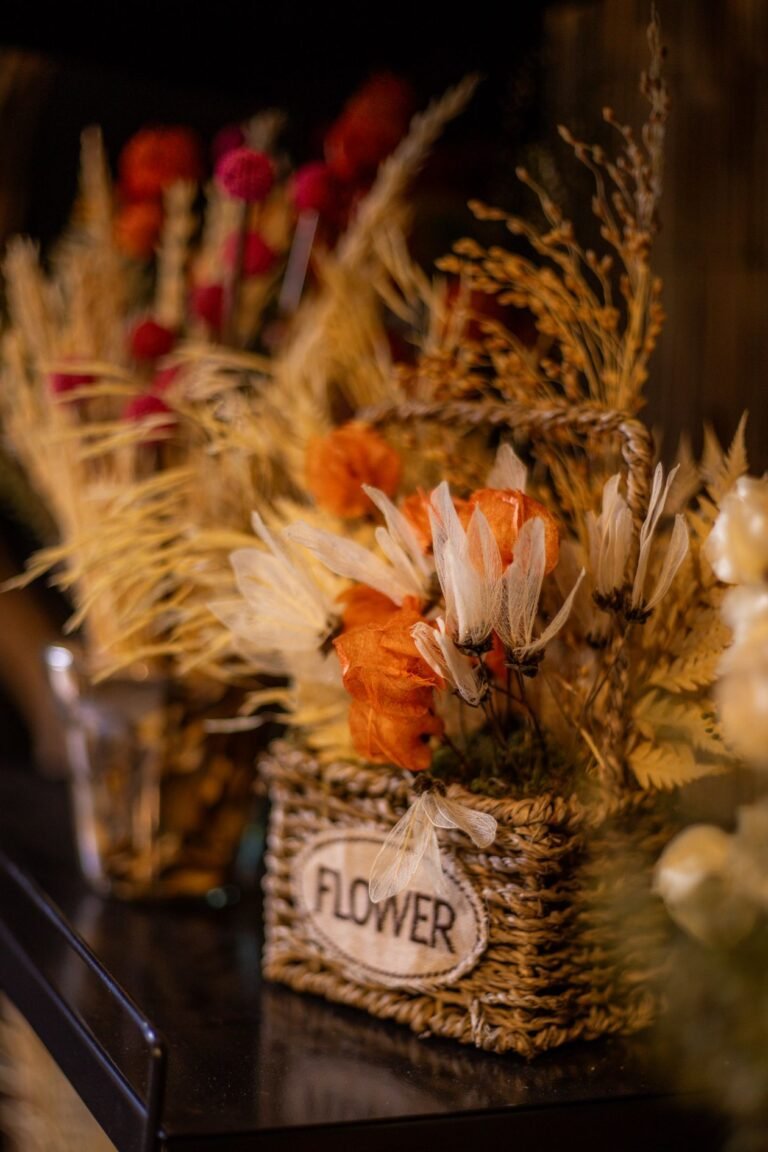
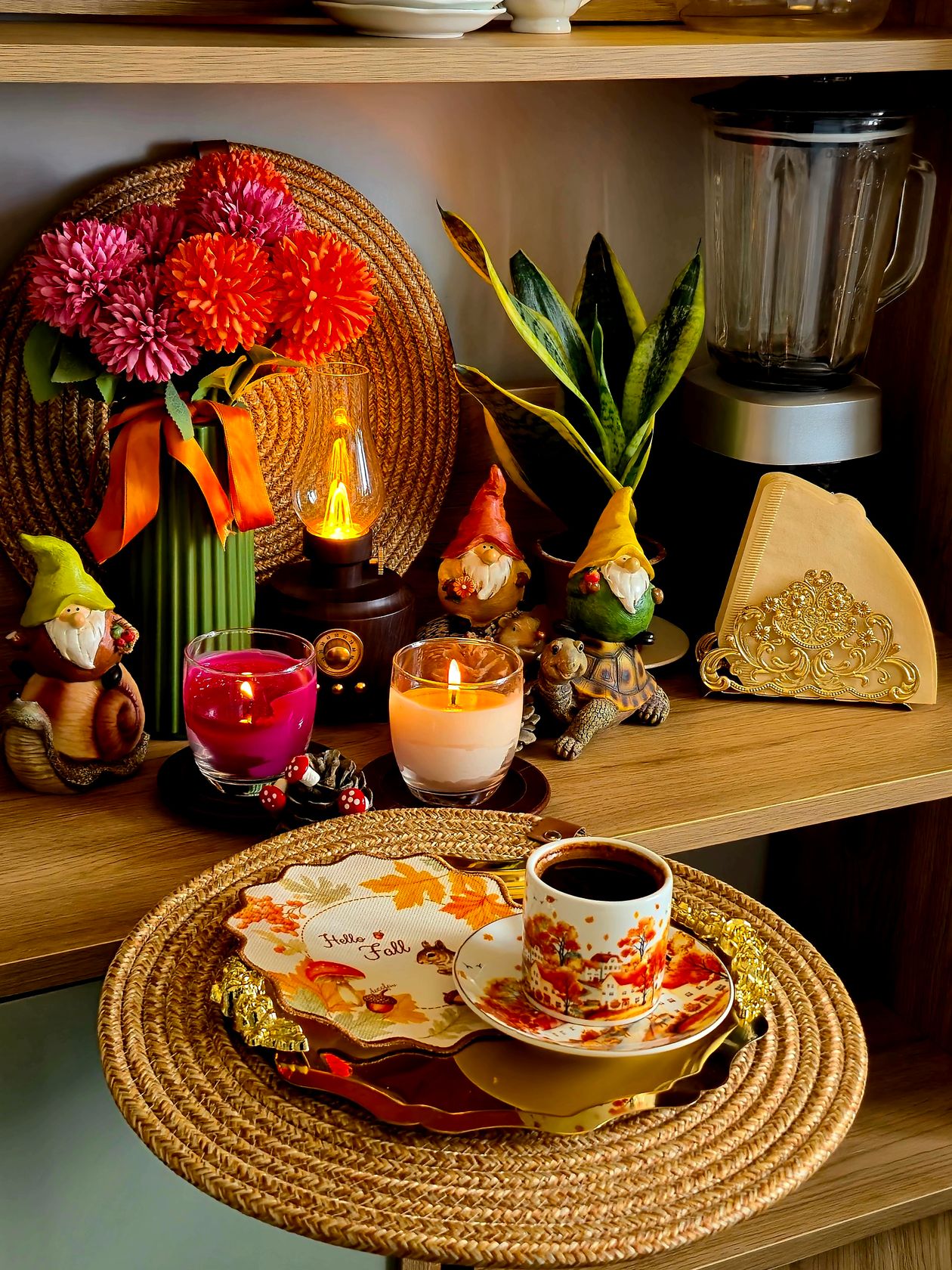
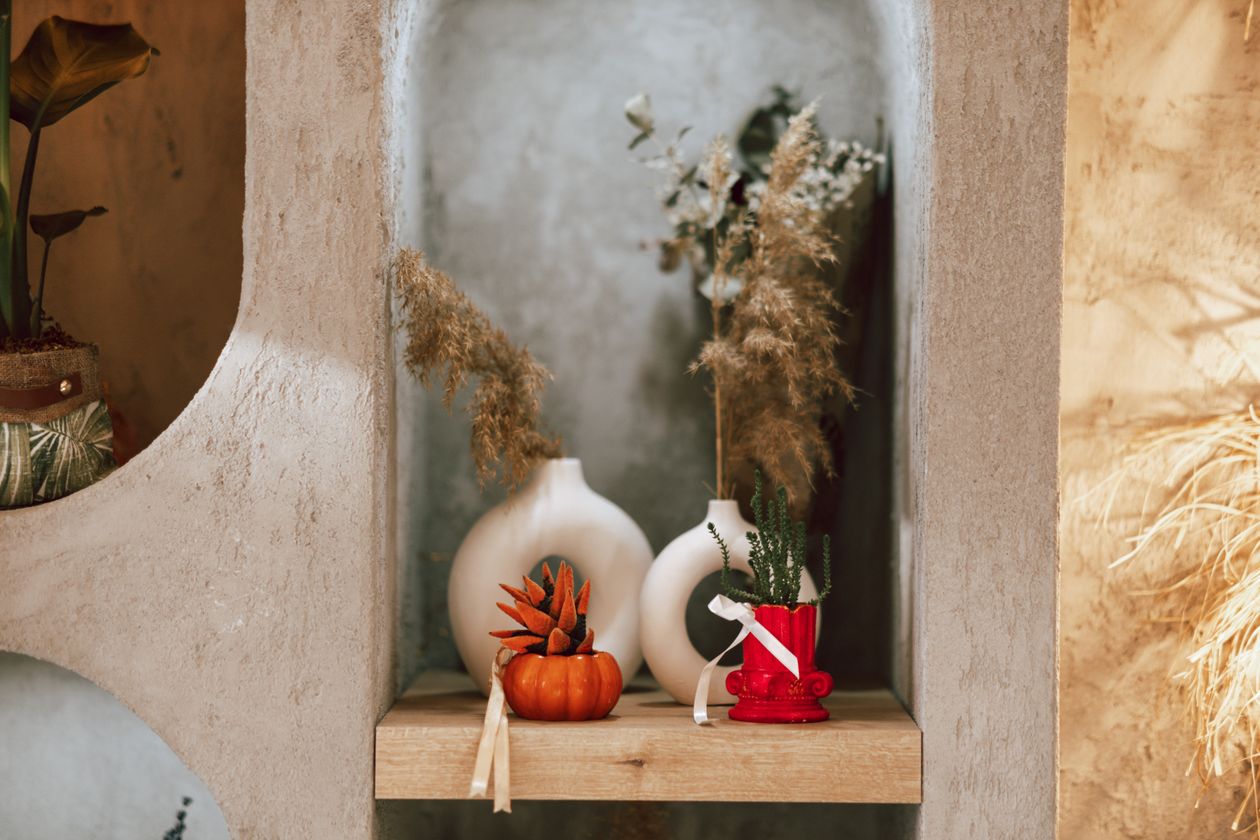
A stoneware crock or vase filled with faux fall stems — wheat, preserved leaves, dried hydrangea — brings height to a shelf that otherwise sits low. Choose stems a head taller than everything around them; height variation is what keeps shelves from looking like a single flat band.
Keep the vase simple so the stems star. One great vessel of stems per bookcase is enough; more and the shelves start feeling like a flower shop.
10. A Mini Pumpkin Row
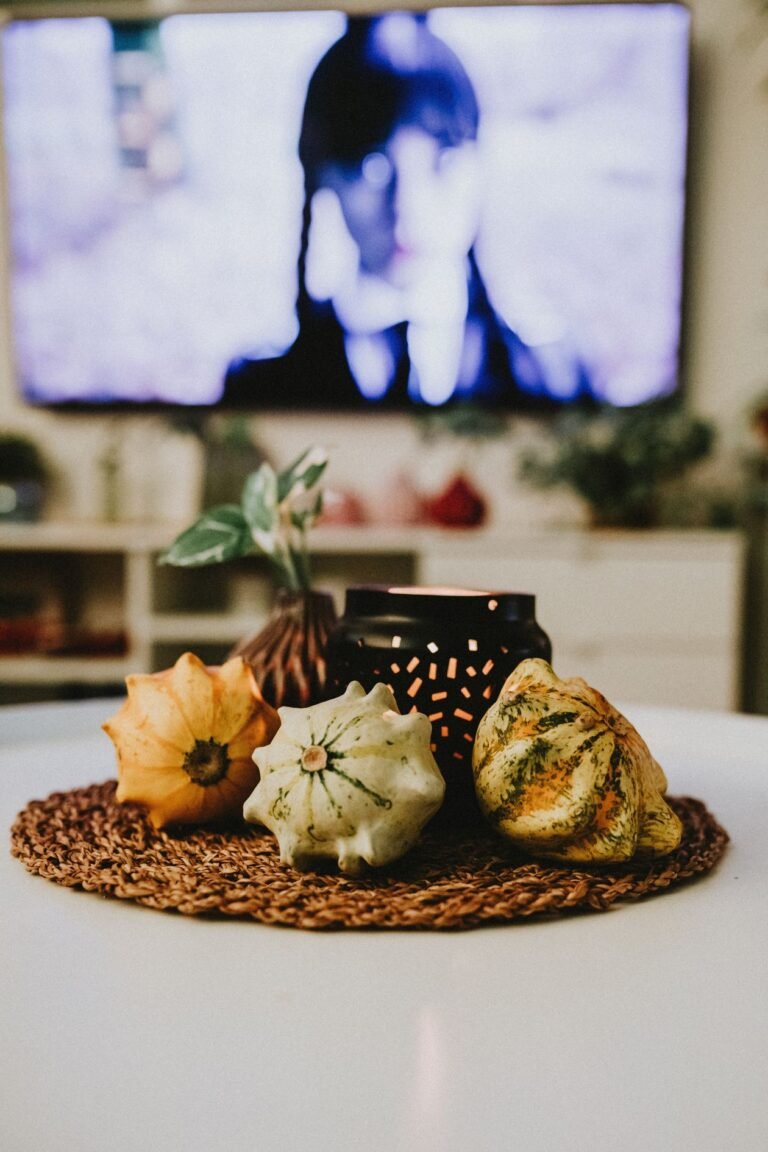
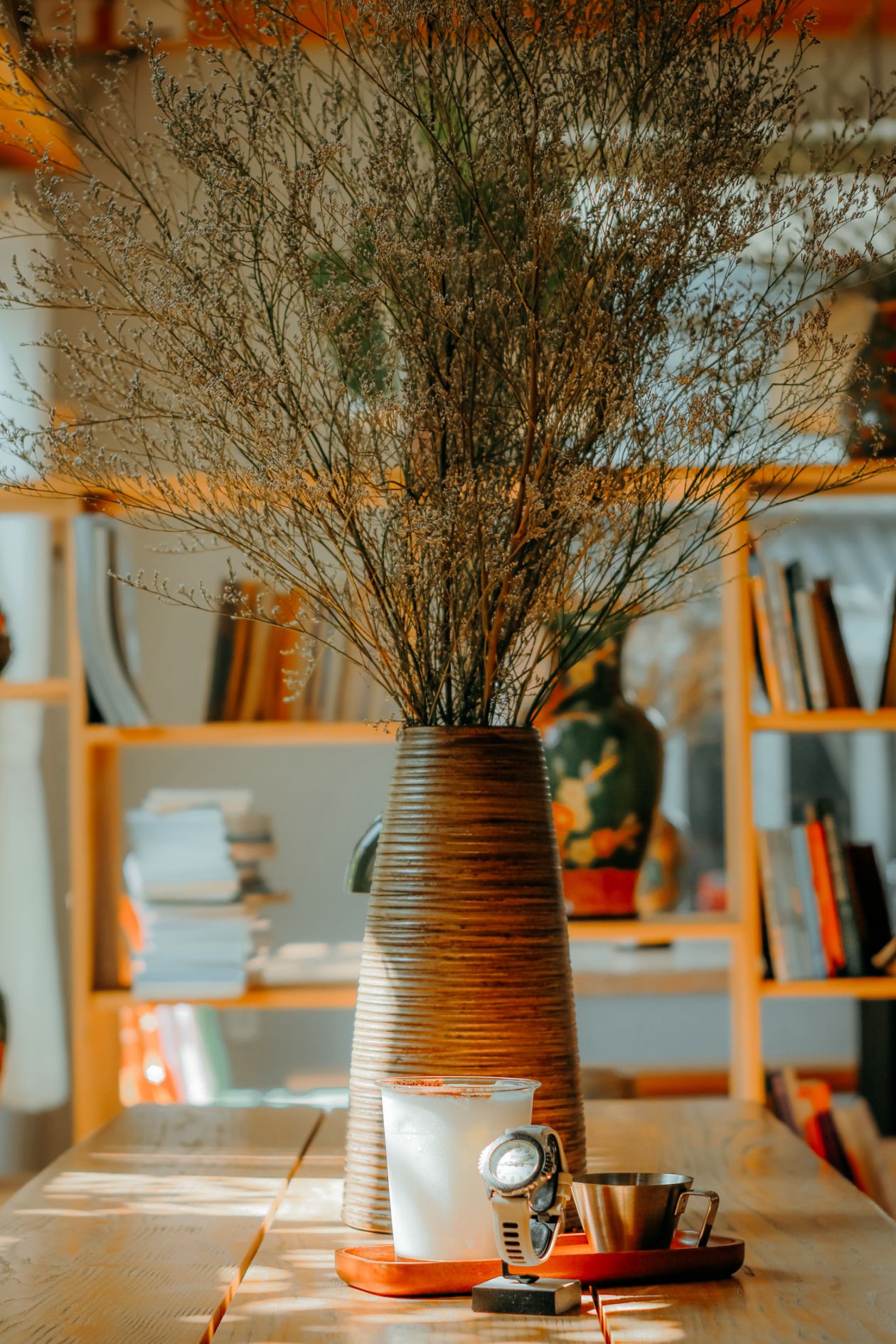
Five mini pumpkins in a row along one shelf’s front edge — alternating colors, same size — is the simplest high-impact move in fall shelf styling. The repetition reads as deliberate design, and it takes about ninety seconds.
Keep the row tight and the pumpkins small; large pumpkins in a row look like a produce stand. This is also the easiest idea to undo — when you’re tired of it, the pumpkins redistribute to every other surface in the house.
11. Leave Breathing Room
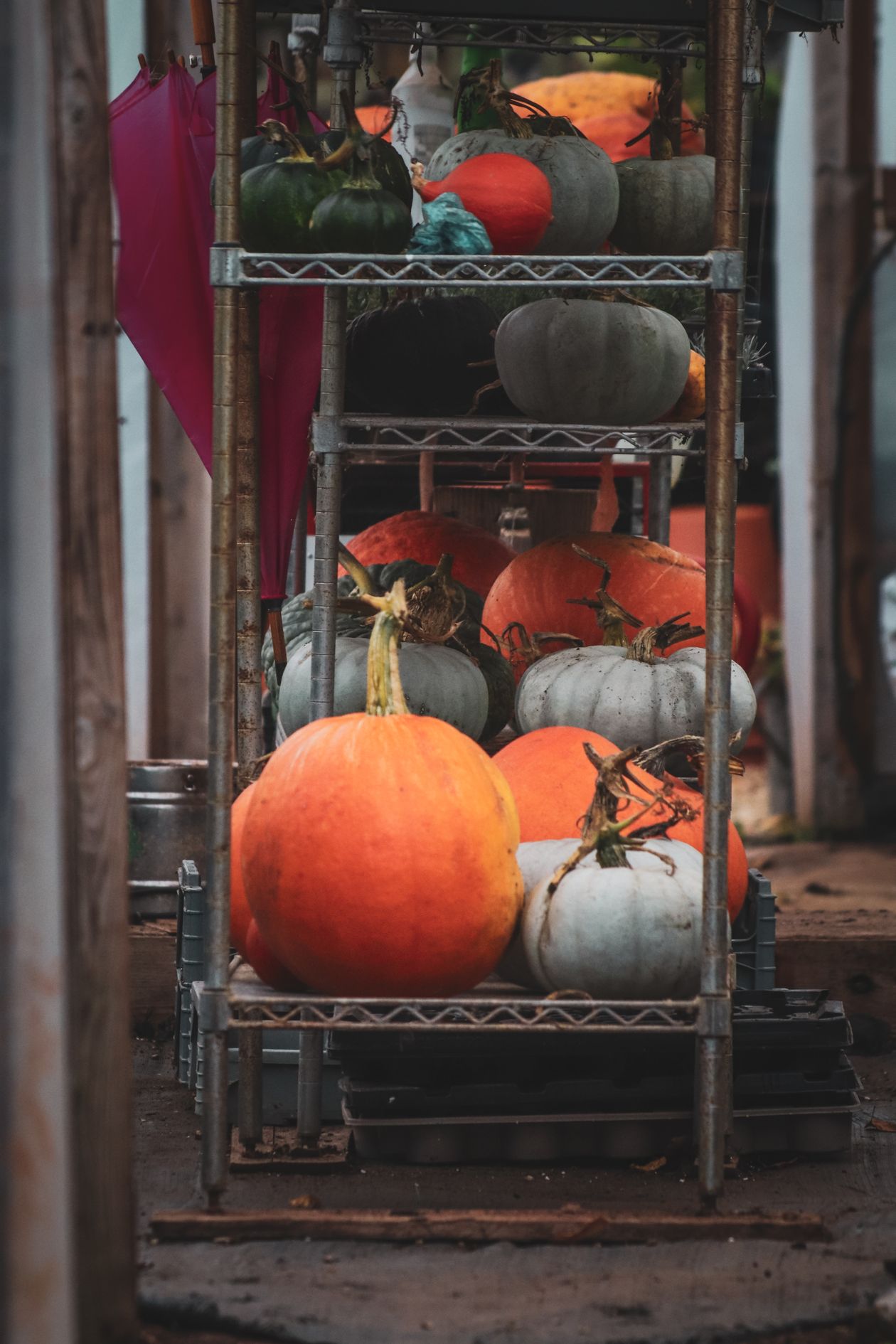
The most advanced shelf styling tip is also the simplest: take something off. Every shelf needs at least one stretch of empty space — six inches minimum — where the eye can rest. Without it, even beautiful objects blur together.
If a shelf feels cluttered, don’t rearrange — subtract. Remove the smallest, least-loved item first, then step back. Repeat until the shelf breathes. Fall’s rich textures need air more than any other season’s decor.
12. One Seasonal Swap for Winter
Design your fall shelves with December in mind: if every shelf has exactly one clearly-fall item — the pumpkin row, the “gather” sign, the orange stems — then the winter transition is a five-minute swap per shelf instead of a full restyle.
Swap pumpkins for bottle-brush trees, the fall sign for a winter one, orange stems for cedar. The books, frames, candles, and vessels all stay. Shelves styled this way evolve through the holidays instead of demanding reinvention.
Good shelf styling is really just editing: layer a little, group in odds, leave air, and change one thing when the season turns. Master those moves once and every shelf in the house — fall, winter, and spring — styles itself.