How to Transition Your Home Decor From Fall to Winter (7 Easy Swaps)
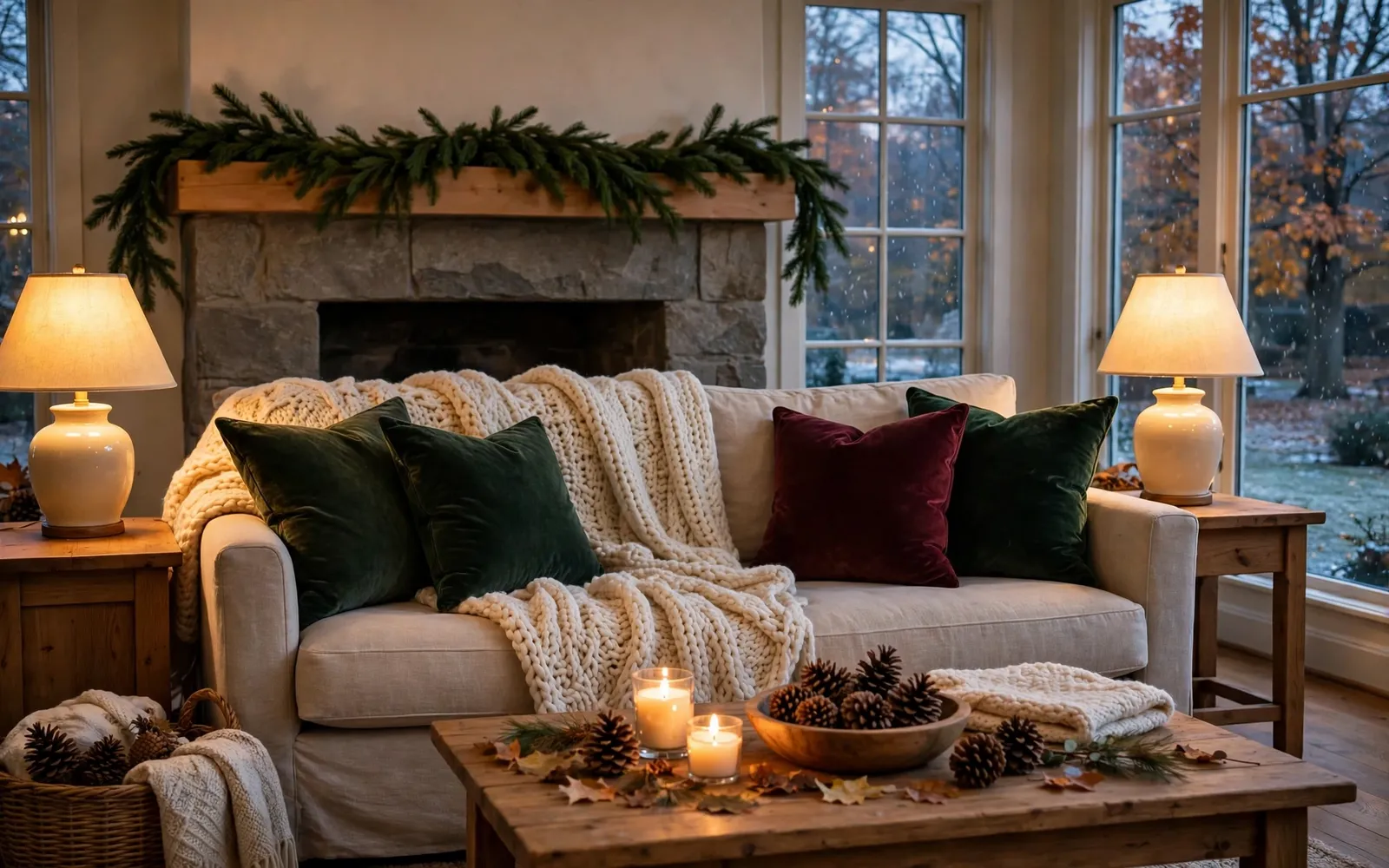
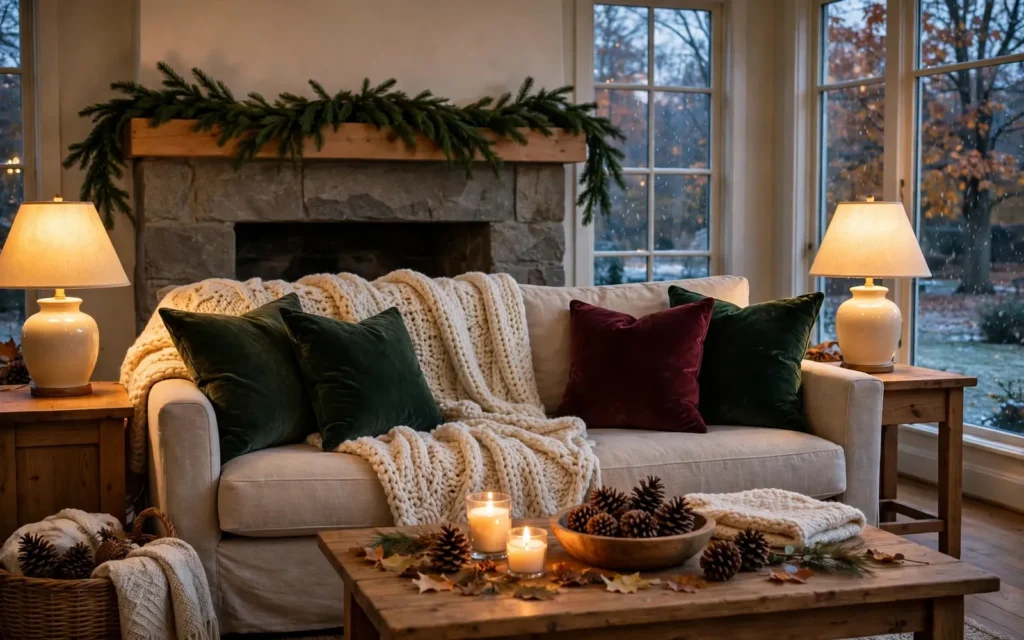
Knowing how to transition fall decor to winter saves money, storage space and that awkward in-between week when the pumpkins feel stale but it is too soon for full winter mode. The good news: a beautiful winter home is mostly an edit of your fall one — not a shopping trip.
The method below works room by room with seven deliberate swaps. You will pack away the unmistakably autumn pieces, keep the neutral workhorses, and shift color, texture, greenery, scent and light toward winter. Set aside an afternoon, put on music, and work through the swaps in order.
A quick principle before you start: winter style is fall style with the warmth kept and the harvest removed. If a piece could sit in a snowy cabin scene, it can probably stay.
Swap 1: Pack Away the Obvious Fall Pieces, Keep the Neutral Base
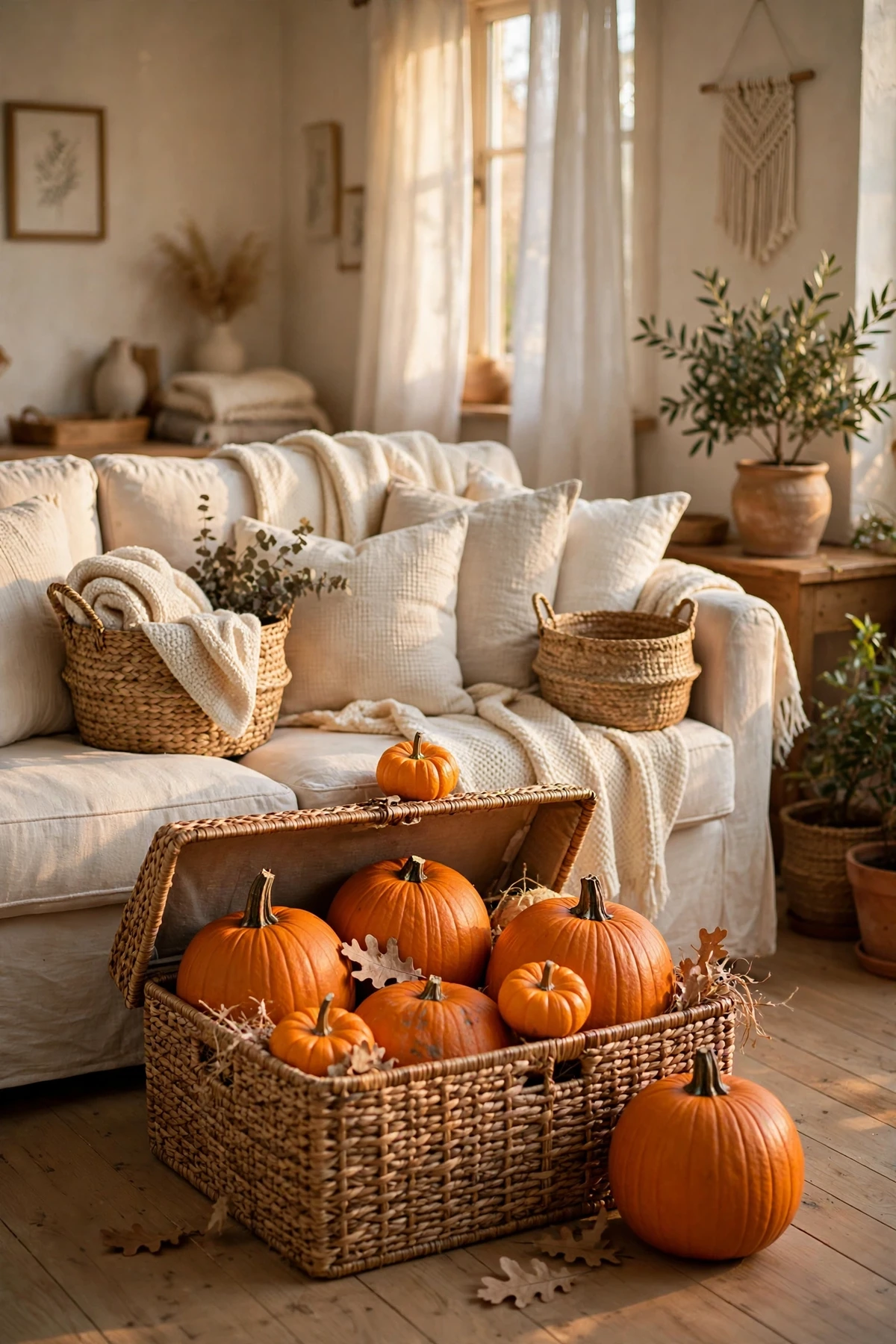
Start by removing everything that shouts autumn: orange and novelty pumpkins, “grateful” signage, faux fall leaf garlands, sunflowers, scarecrow or harvest motifs, and Halloween items still lingering. These go straight into storage — see Swap 7 for the system that makes this painless.
What stays is the neutral base you built in fall: cream and oatmeal throws, woven baskets, wooden bowls, plain candles, linen pillows and any white or pale pumpkins you still like. This base becomes the skeleton of your winter look, and keeping it out means half the job is already done.
Swap 2: Upgrade the Textiles
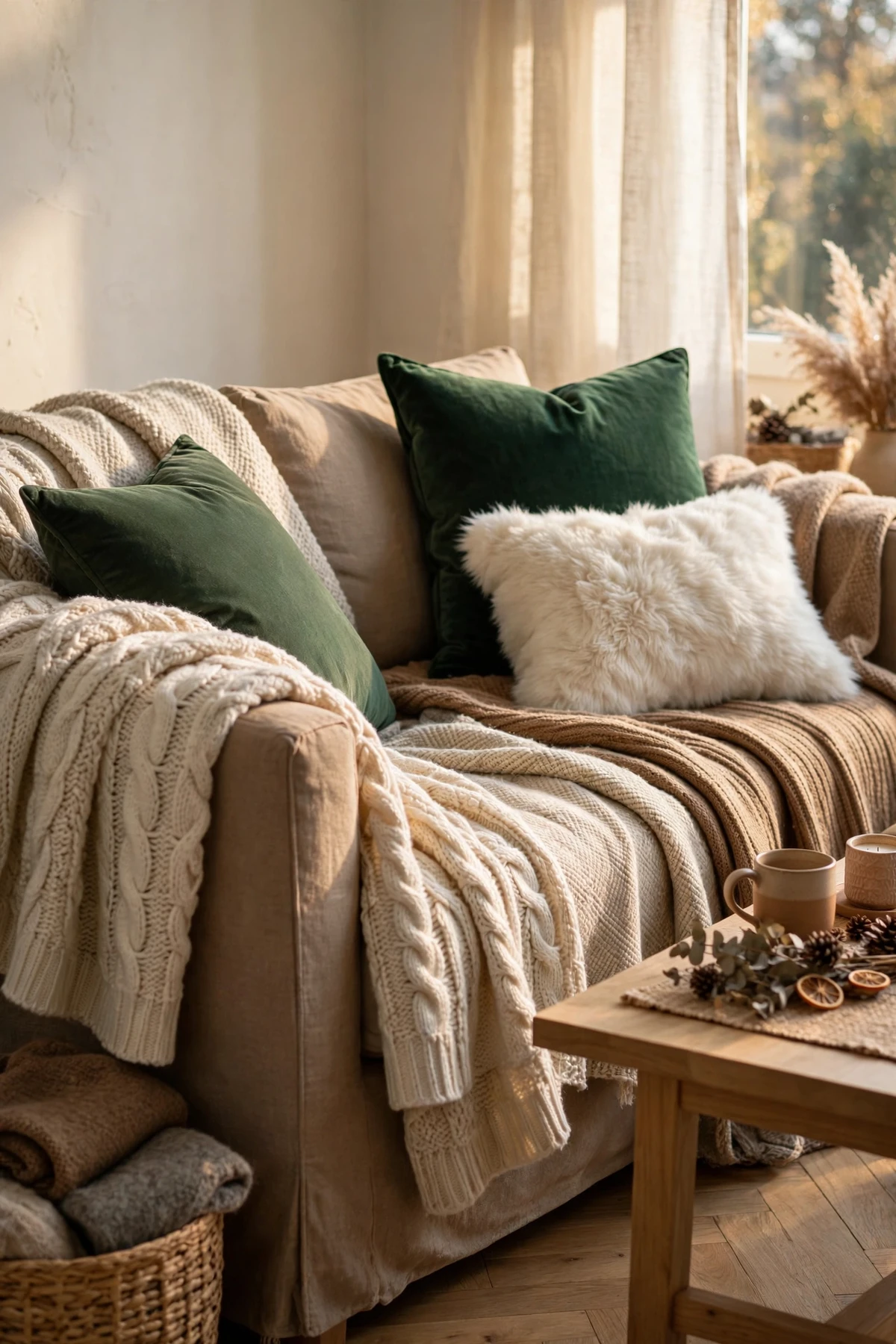
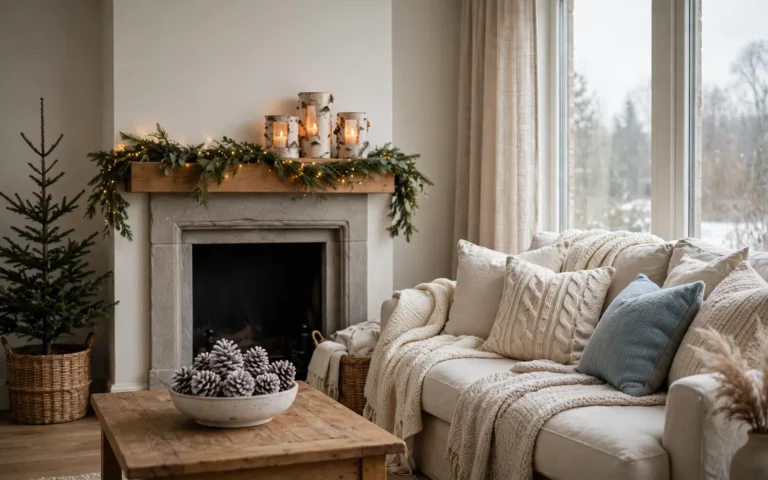
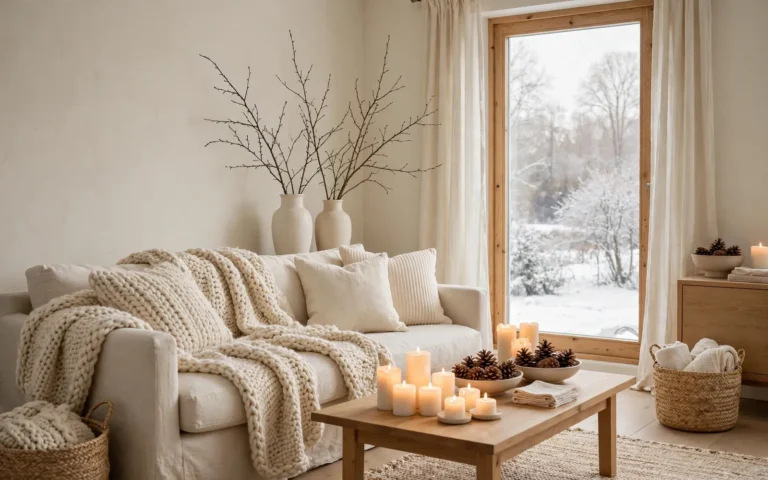
Fall textiles skew light — cotton throws, thin plaid blankets, linen pillow covers. Winter asks for weight: swap in chunky knits, faux fur, velvet, wool-look blankets and flannel, and add one extra layer everywhere people sit or sleep.
Work through the main spots: the sofa gets a heavier throw and one velvet or fur pillow; beds gain a folded quilt and knit layer; dining chairs can take a small sheepskin. If budget is tight, upgrade the living room first — it is where winter evenings happen.
Swap 3: Shift the Color Palette
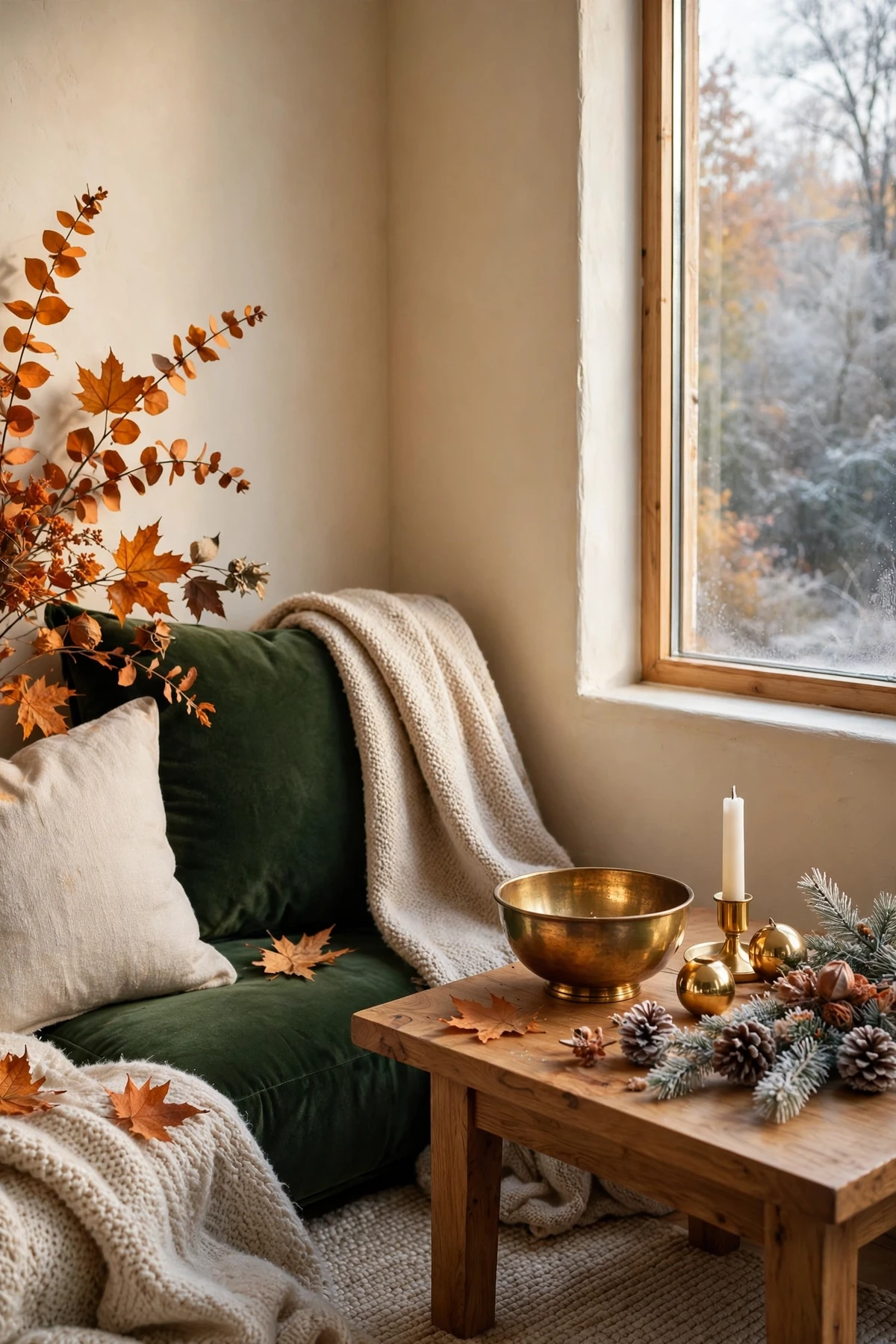
This is the swap that changes the whole mood. Fall’s orange, rust and mustard give way to winter’s cream, warm white, deep green and metallics — brass, pewter and soft gold that glow in early darkness.
You rarely need to buy much: remove the orange items and the palette shifts on its own. Then add two or three deep-green or metallic accents per main room — a velvet cushion, a brass bowl, a dark green throw — to anchor the new scheme. Burgundy can stay if you love it; it bridges both seasons gracefully.
Swap 4: Trade Fall Greenery for Winter Greenery
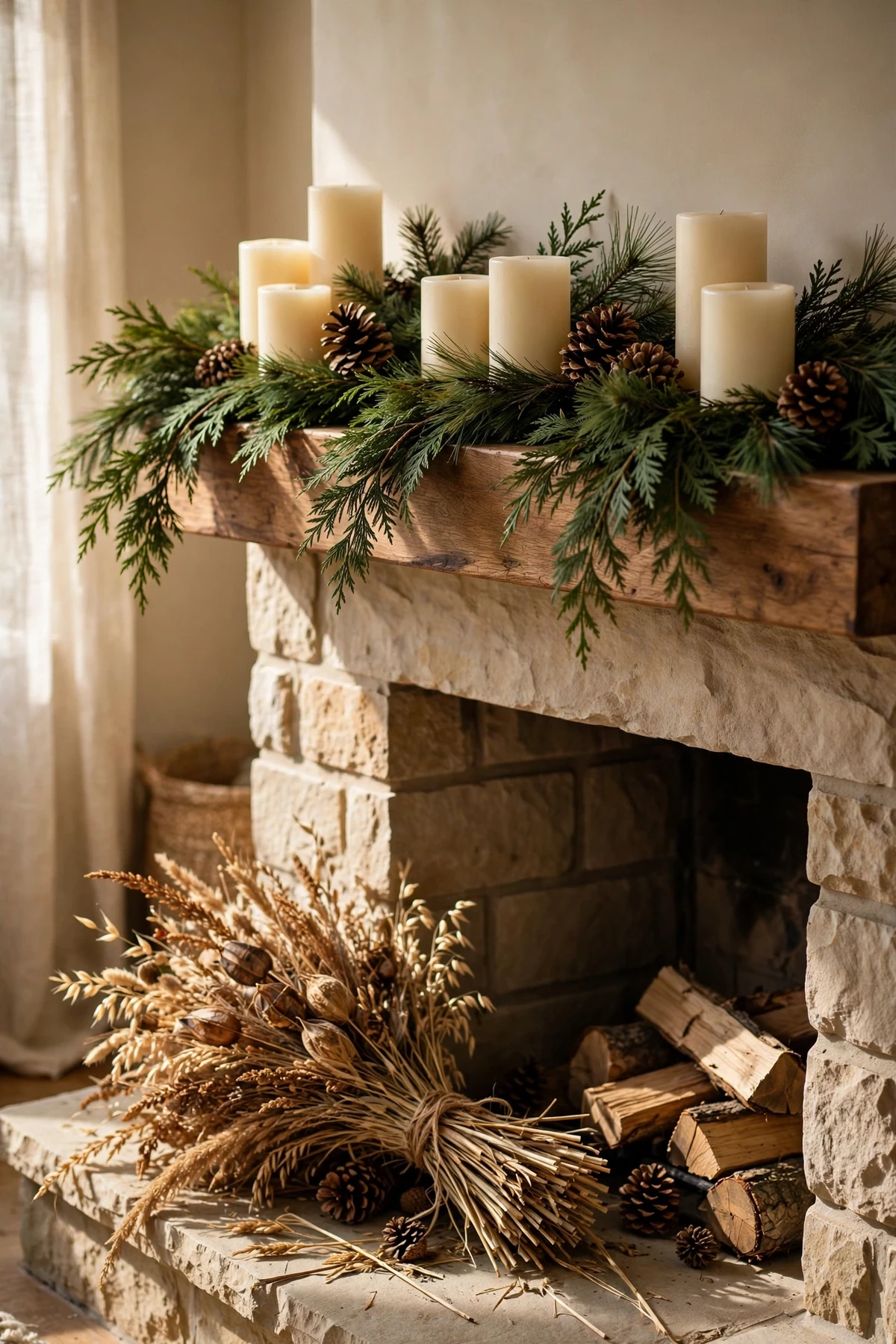
Dried fall grasses, wheat sheaves and orange-leaf stems come out; winter greenery goes in. Think pine, cedar, fir and eucalyptus — fresh if you can, good faux if you can’t — used plainly in wreaths, garlands, vases and table arrangements.
If you decorate for Christmas, this swap blends naturally into it; if you don’t, plain greenery still reads purely “winter.” Keep a few fall naturals that translate — pinecones and bare branches belong to both seasons and can stay right where they are.
Swap 5: Change the Scent Story

Scent is the invisible half of seasonal decorating. Retire pumpkin spice and apple-cider fragrances, and bring in winter’s profile: cedar, pine, fir, clove, orange peel and warm vanilla — woodsy and fresh rather than sweet and baked.
A simmer pot of water with orange slices, cinnamon and cloves is the cheapest route; cedar or pine essential oil in a diffuser is the easiest. Because scent is strongly tied to memory, this single swap makes the house feel transformed before anything looks different.
Swap 6: Warm Up the Lighting
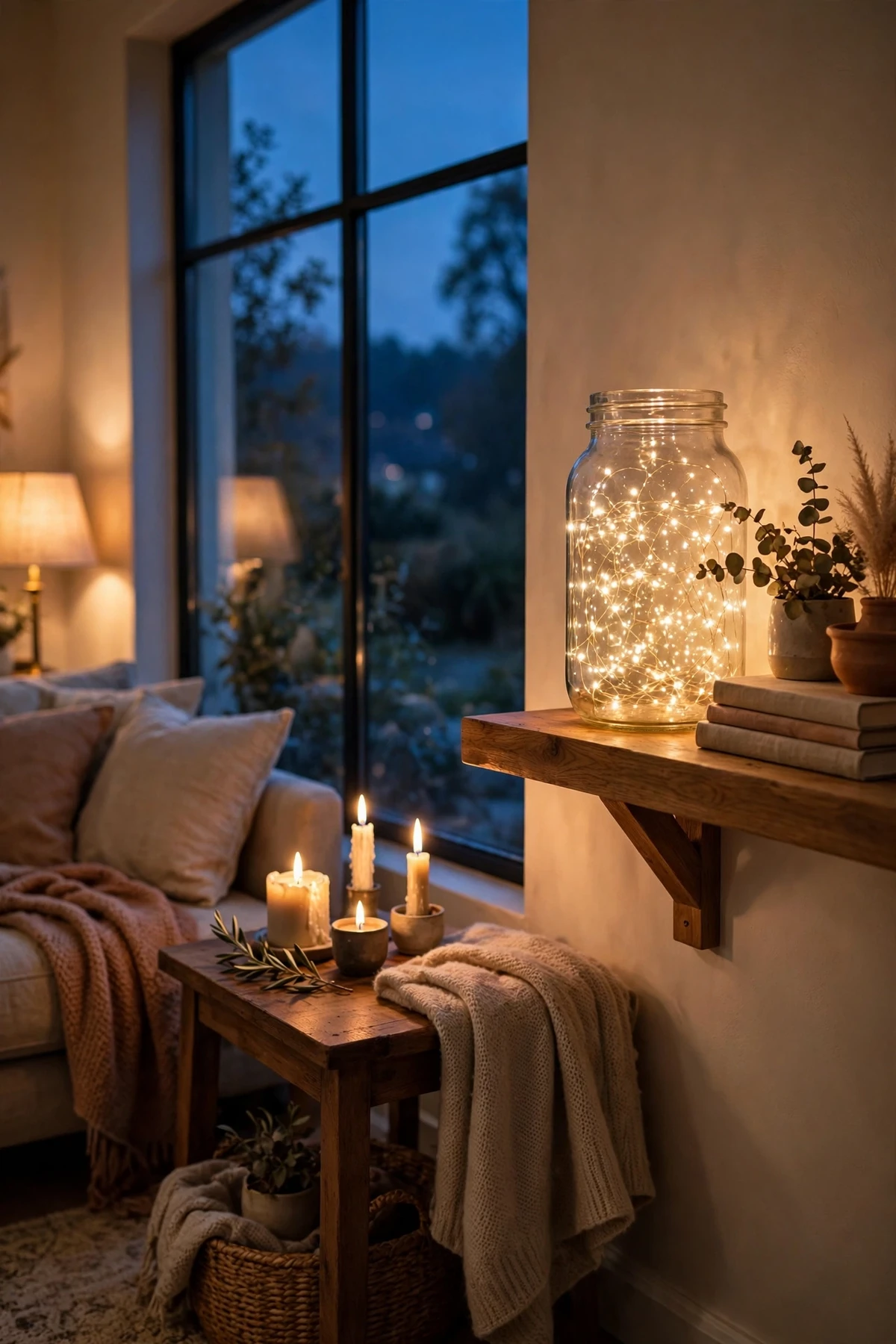
As days shorten, lighting carries the room. Swap cool-white bulbs for warm 2700K ones, add a lamp to any corner that goes gloomy by four o’clock, and bring candles — real or flameless — into the evening routine on timers.
Fall’s bright, golden look becomes winter’s low, layered glow: one overhead light off, two lamps and a candle cluster on. White fairy lights in jars or along a shelf can stay up all winter; they belong to the season, not just the holidays.
Swap 7: Set Up a Two-Bin Storage System
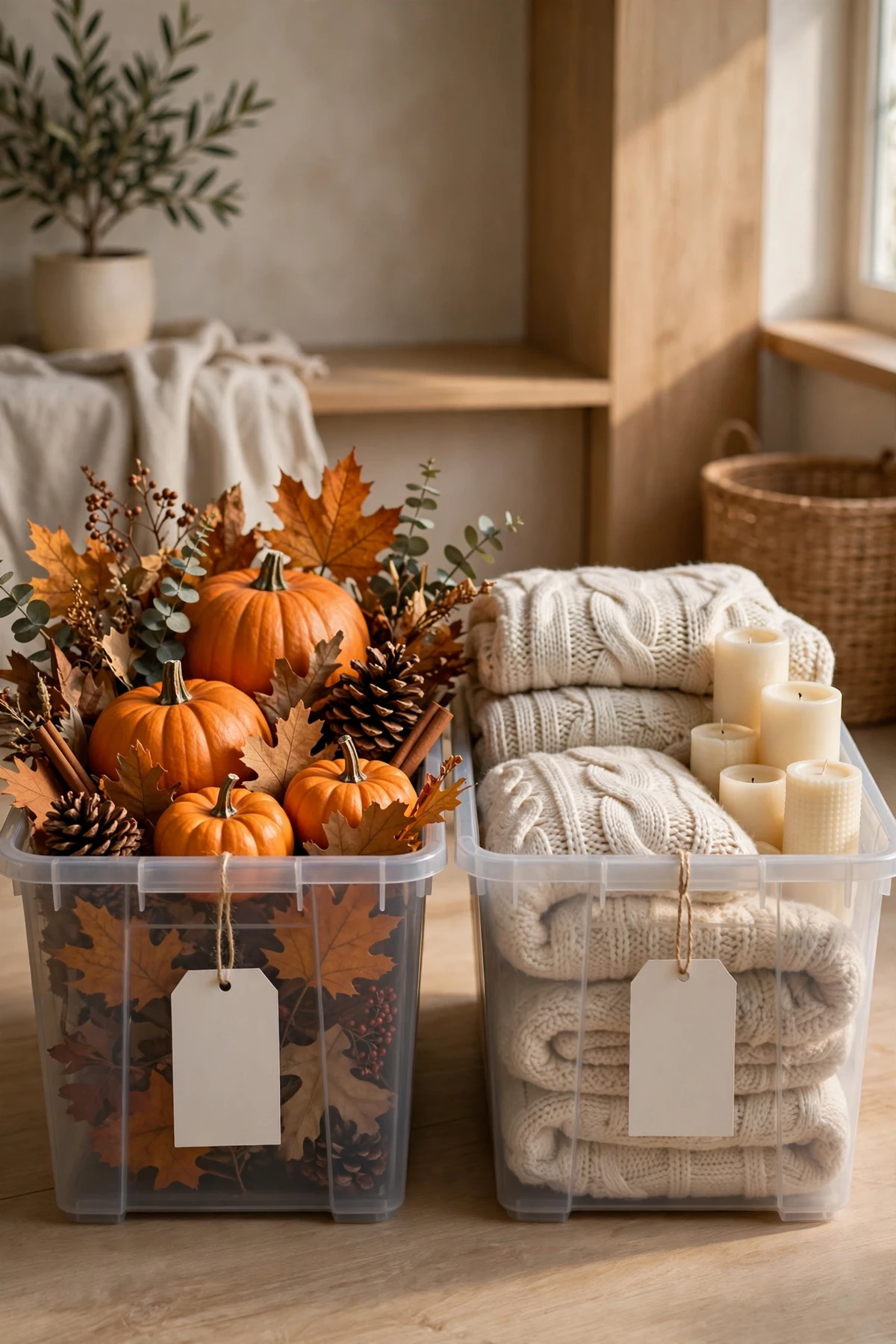
The transition stays easy every year if storage works in two bins: one labeled “Fall — Pack First” for the harvest-specific pieces from Swap 1, and one labeled “Winter” that holds the heavier textiles, winter greenery and candles you just rotated in.
As you pack fall away, photograph the bin’s contents and tape the list inside the lid; next autumn you will know exactly what you own before buying anything. Store textiles clean with a cedar block or lavender sachet, and keep candles somewhere cool so they don’t warp before next season.
Frequently Asked Questions
When is the best time to transition from fall to winter decor?
Most people make the change in mid-to-late November, or right after Thanksgiving in the US. If you skip holiday decorating, you can transition as soon as the weather turns cold — winter decor suits December through February.
What fall decor can I keep out for winter?
Keep anything neutral and textural: cream and oatmeal throws, woven baskets, wooden bowls, plain candles, pinecones, bare branches, white pumpkins and linen pillows. These pieces form the base of a winter look.
How do I transition if I don’t decorate for Christmas?
Use the same seven swaps and lean on the non-holiday winter palette: cream, warm white, deep green and natural wood, plus plain greenery, candles and heavy textiles. The result is a cozy winter home with no holiday theme at all.
How can I do the transition on a small budget?
Edit before you shop: packing away orange pieces and rearranging what you own does most of the work. Spend only on one or two textiles and a winter scent — thrifted knit throws and brass pieces are easy to find and suit the season.
Conclusion
Transitioning from fall to winter is an edit, not an overhaul: pack away the harvest pieces, keep your neutral base, then shift textiles, palette, greenery, scent and light toward winter. With a simple two-bin system waiting in storage, the whole change takes one afternoon — and next year’s swap will be easier still.