16 Winter Decor Ideas After Christmas to Keep Your Home Cozy All January (2026)
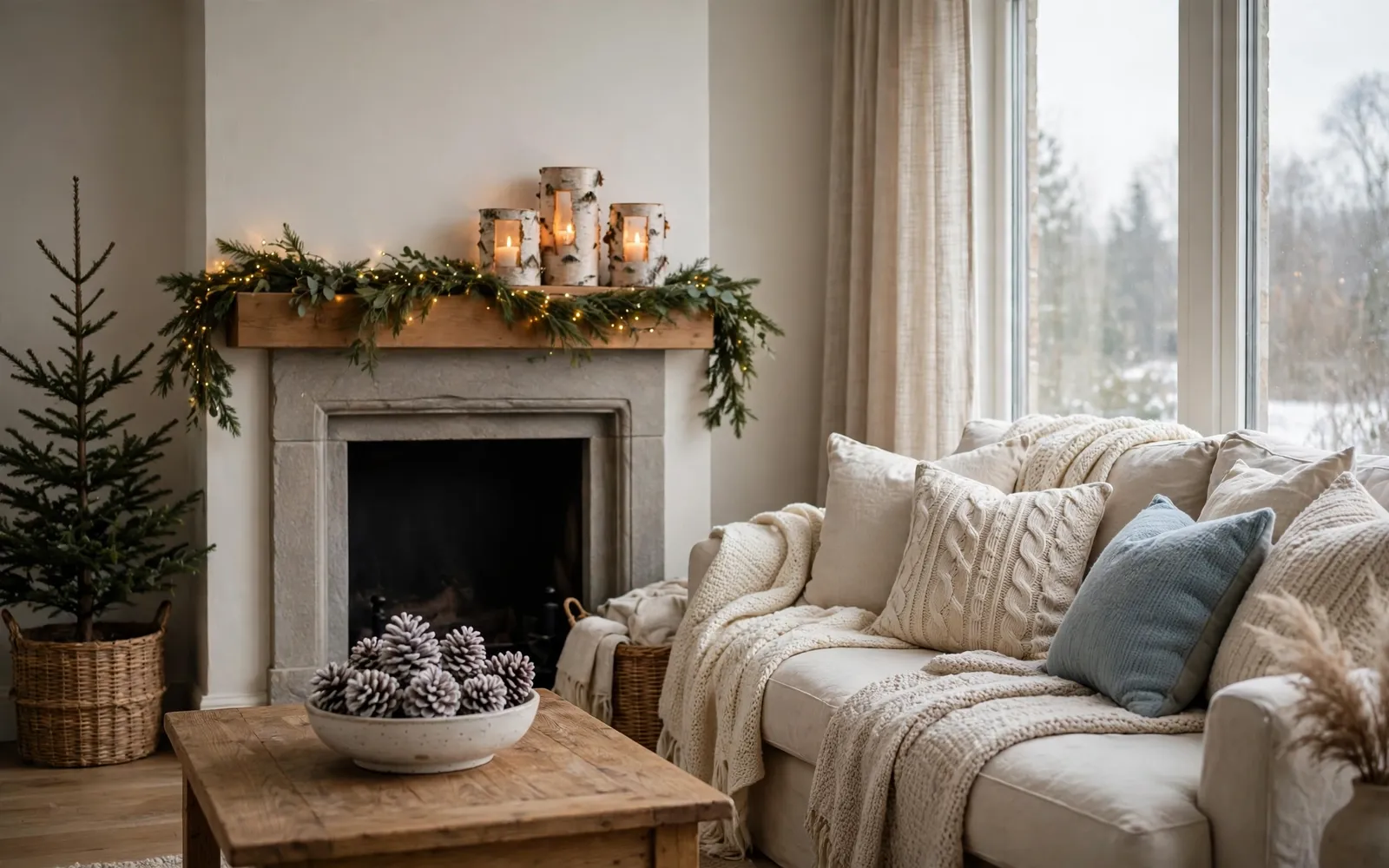
The week the tree comes down is the emptiest moment of the decorating year: the lights vanish, the color goes back in its boxes, and winter decor after Christmas suddenly becomes an urgent problem. Rooms that glowed for five weeks can look bare and cold overnight — in the middle of the darkest month.
The fix is not packing winter away with Christmas. It is editing instead of clearing: keep the greenery, the glow, and the texture; lose the Santas, the red, and the sparkle. These sixteen ideas cover what stays, what goes, and how a cool blue accent can make January feel like a deliberate reset.
1. Apply the Pack-Away Rule: Red, Santa and Sparkle Go First
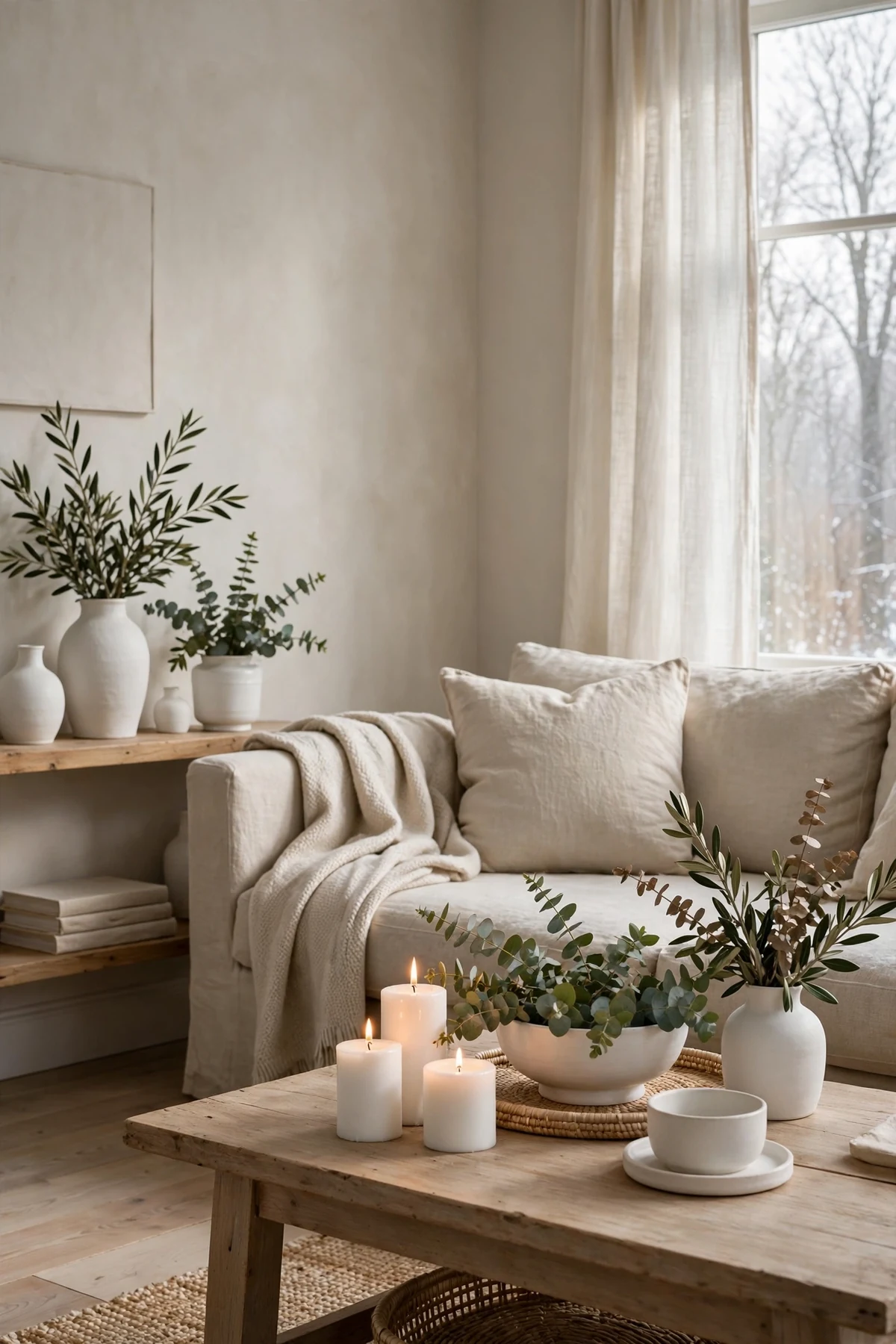
Remove anything unmistakably Christmas first: Santa figures, nutcrackers, red-and-green plaid, ornaments with words, and heavy tinsel sparkle. Packing these creates instant calm and reveals what remains to work with.
What stays — plain greenery, white and wood pieces, candles, pinecones, winter textiles — is your January palette. Most people are surprised how much that is; the edit takes one afternoon, not a redecoration budget.
2. Keep the Bare Tree, Dressed Down in a Woven Basket
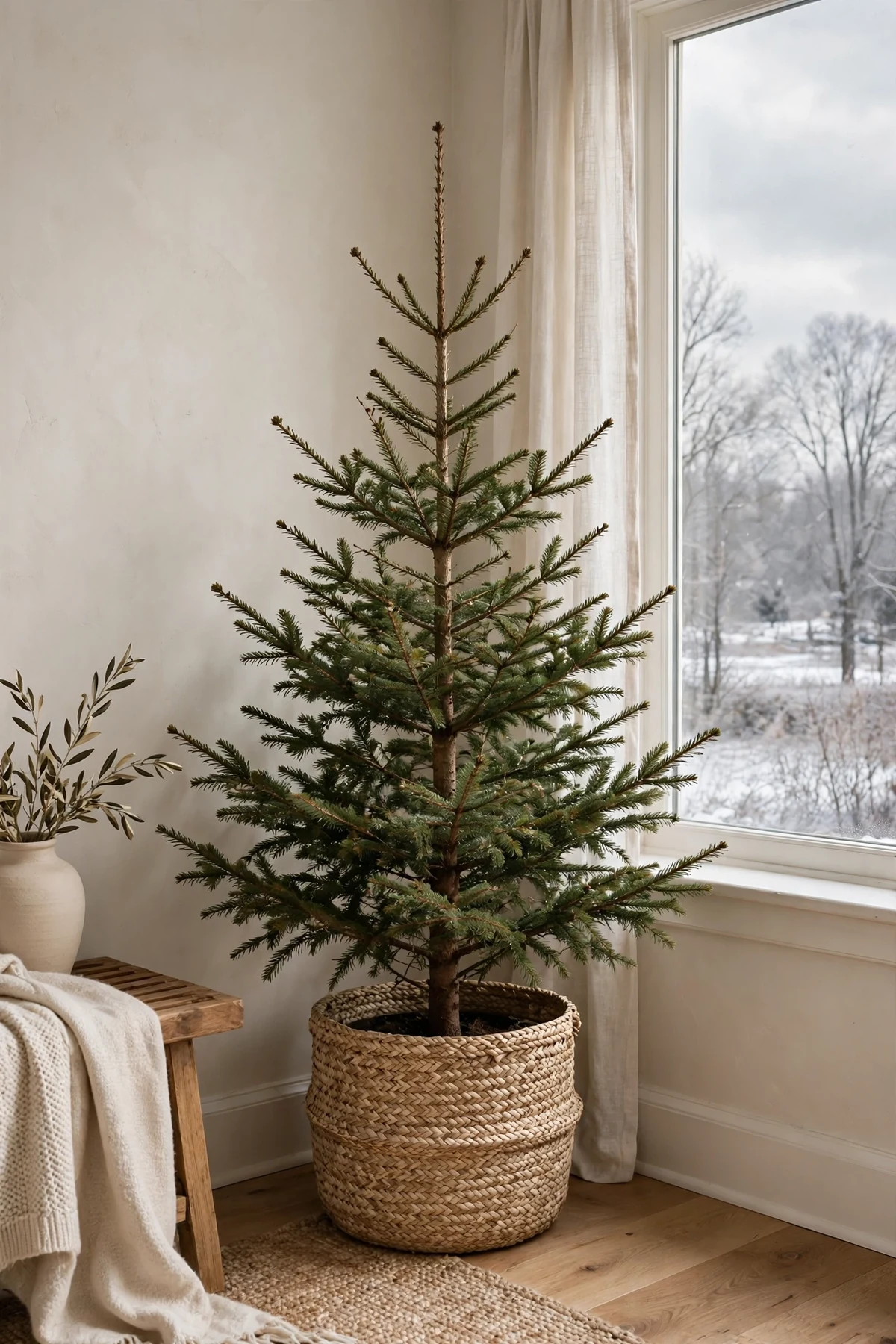
If removing the tree entirely feels abrupt, strip it bare and set it in a woven basket or tree collar. Without one ornament it reads as a winter plant, not a Christmas tree, while keeping height in the corner.
Small tabletop trees can stay on sideboards the same way, especially paired with books and candles. This works anywhere the silhouette fills otherwise empty space.
3. Strip Wreaths Back to Plain Greenery
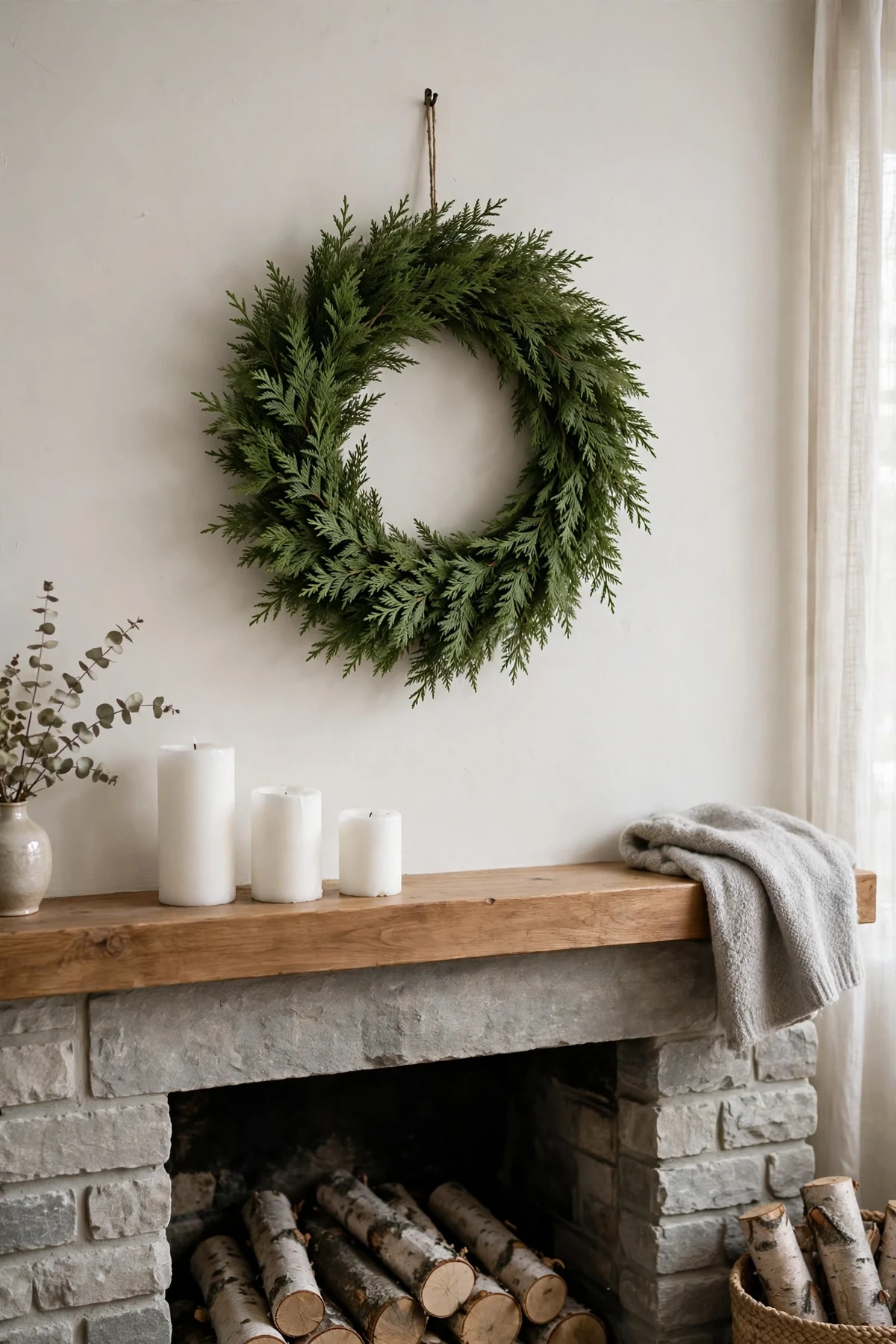
A wreath covered in ornaments and ribbon is Christmas; the same wreath reduced to plain greenery is simply winter. Remove bows, berry clusters, and baubles, and rehang wreaths on the door, mantel, or above the bed.
Bag the extras and label them for next year so nothing is wasted. Plain cedar, pine, or eucalyptus looks especially good in winter light and pairs with the whole January palette.
4. Frost Pinecones and Fill Every Bowl and Jar
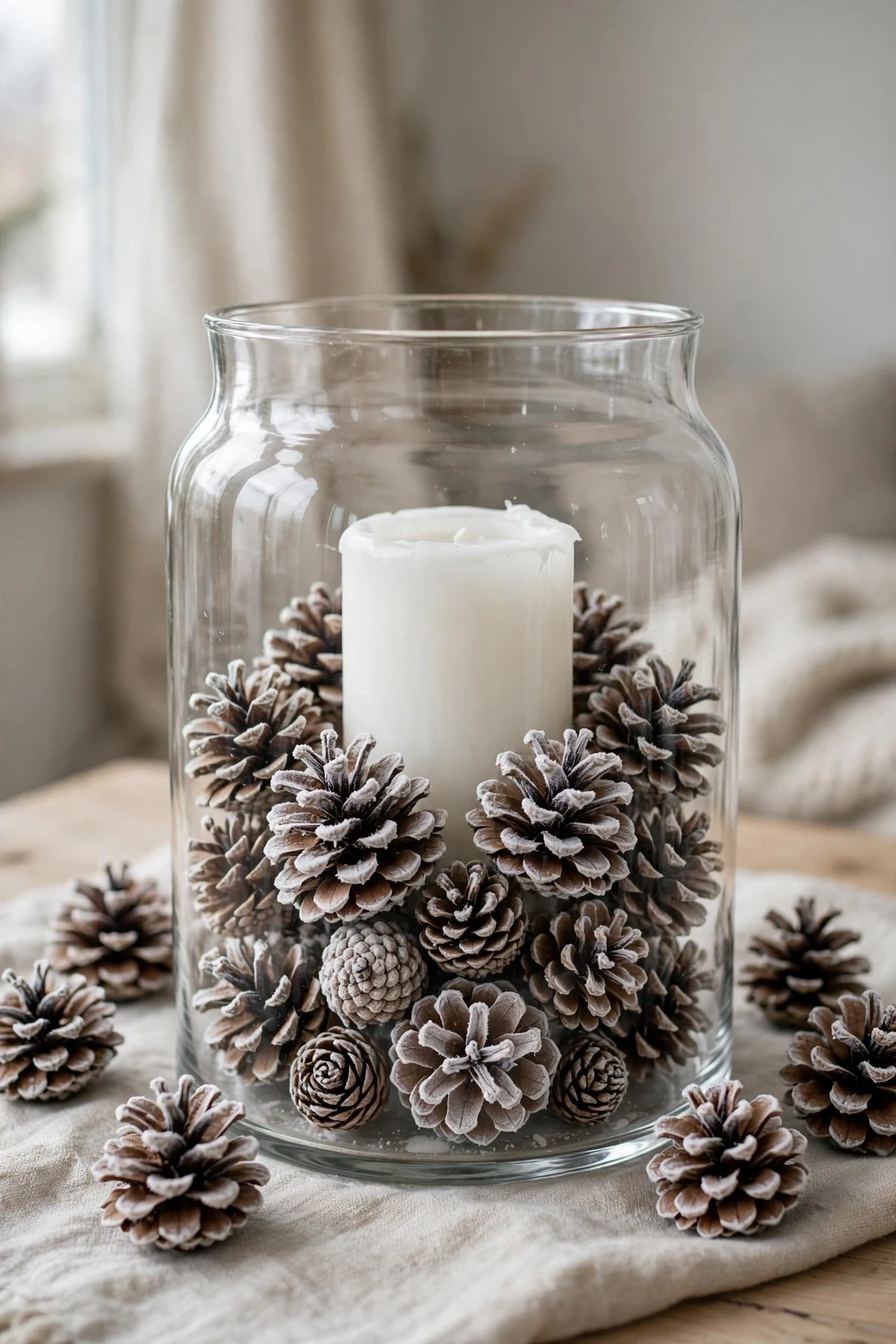
Pinecones are the hardest-working winter accessory: free, style-proof, and instantly seasonal in a quiet way. A light dusting of white paint or faux snow on the tips gives a frosted, just-in-from-the-cold look.
Pile them into bowls and glass hurricanes, scatter a few along the mantel, and tuck some into the bare tree and wreaths. Nothing bridges "holiday" and "winter" better.
5. Swap in Birch Lanterns and Log Accents
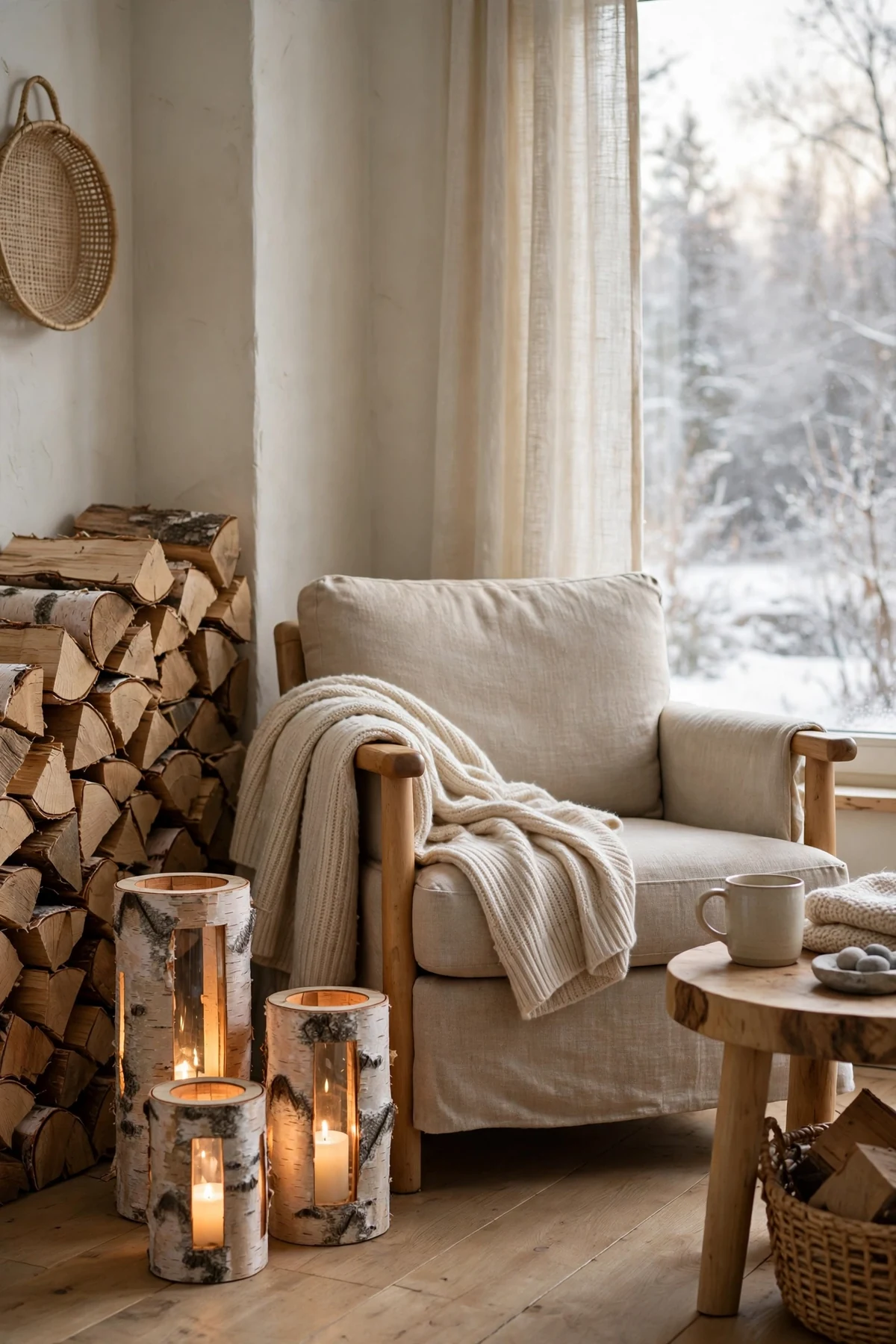
Birch bark lanterns, birch-wrapped candle holders, and a stack of logs by the fireplace bring lodge-like warmth that belongs to deep winter, not December 25th. The pale bark also brightens dark corners.
No fireplace? A basket of logs with a lantern on top creates the same focal point against any wall. LED candles inside keep the glow safe and timer-easy.
6. Let the Fairy Lights Stay Up Through January

The saddest part of undecorating is losing the evening glow — so do not lose all of it. Keep a strand or two of warm fairy lights in a mantel garland, a glass vase, or along a bookshelf.
With no tree and no color involved, they read as ambiance, not holiday decor. On a timer from late afternoon, they make coming home in the dark feel welcoming.
7. Swap Holiday Textiles for Neutral Knits

Trade Christmas-print pillows and throws for neutral heavyweights: cream cable knits, oatmeal wool, grey-and-white plaid, and faux-fur accents. The sofa keeps its layered comfort; the seasonal message disappears.
Wash and store the holiday covers properly while you are at it. Neutral winter textiles then carry the room comfortably through to spring's first edit.
8. Set a Winter Tablescape Without Christmas Motifs

The dining table need not go bare because the centerpiece ornaments are packed. Rebuild in a winter register: linen runner, plain eucalyptus or a wood bead garland down the center, white pillar candles at varied heights, frosted pinecones between.
It works for everyday January dinners and small gatherings alike, and takes five minutes to clear when the table is needed for real life.
9. Introduce Cool Blue as the Fresh January Accent

After weeks of warm red and gold, cool blue — dusty, slate, or pale icy blue — makes a room feel newly awake. Trend forecasters keep pointing to it as the post-holiday reset color, and it pairs beautifully with winter's whites, greys, and woods.
You need very little: two cushion covers, a throw, or blue glass votives change the room's temperature. Blue against evergreen is natural, so it harmonizes with everything you kept.
10. Cluster Candles Generously for the Early Evenings

January evenings arrive early, so lean into candlelight. Cluster candles in threes to fives — on the mantel, coffee table, inside the empty fireplace, in the bathroom — mixing heights in simple glass or ceramic holders.
LED candles on timers are the practical everyday choice, especially near greenery. A home that glows softly at 5 p.m. never feels like a post-holiday letdown.
11. Keep a Hot Drinks Station on the Counter

The cocoa bar can stay — it just needs a costume change. Remove candy canes and Christmas mugs; restyle it as a general hot drinks station with coffee, teas, and cocoa in plain jars, neutral mugs, and a wooden tray.
It earns its counter space by being genuinely used daily. A sprig of greenery or one pinecone beside the mugs is all the decoration it needs.
12. Style Bare Branches and Winter Stems in Tall Vases
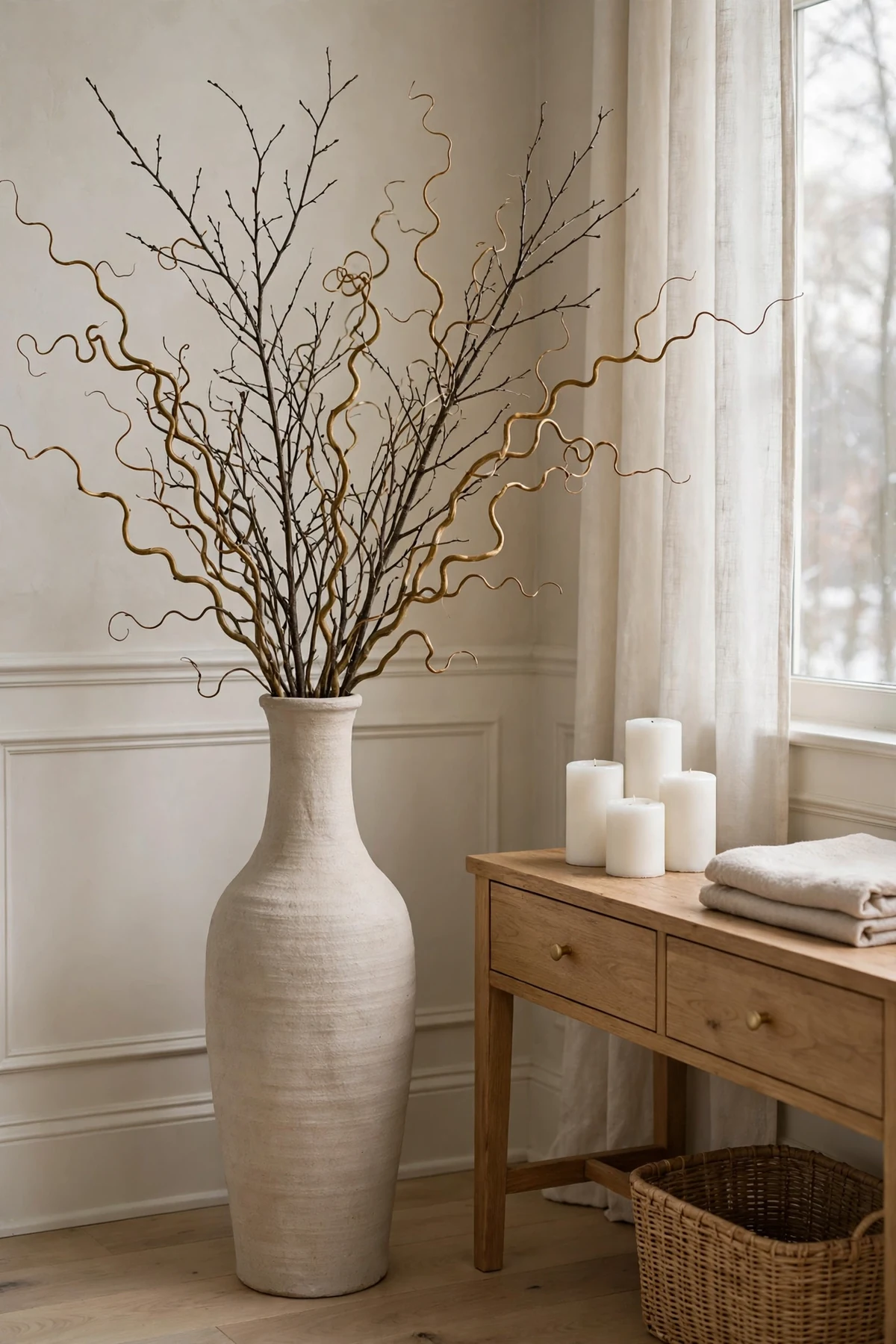
Tall vases of bare branches, curly willow, or white winterberry bring sculptural height to corners and consoles once the tree is gone. They echo the landscape outside the window — exactly the mood January decorating does best.
Branches are usually free from the garden, and their silhouettes beat most faux stems. This is also the lowest-maintenance display in the house.
13. Reset the Entryway for Real Winter Life

January entryways have a job: coats, boots, hats, melting snow. Restyle for function — a sturdy boot tray, a basket for hats and gloves, hooks at full duty — and keep just one plain wreath or swag for softness.
A washable bench cushion and a lantern by the door keep it welcoming. When the entry works in bad weather, the whole house feels calmer.
14. Refresh the Bedroom in Crisp Whites and Wool
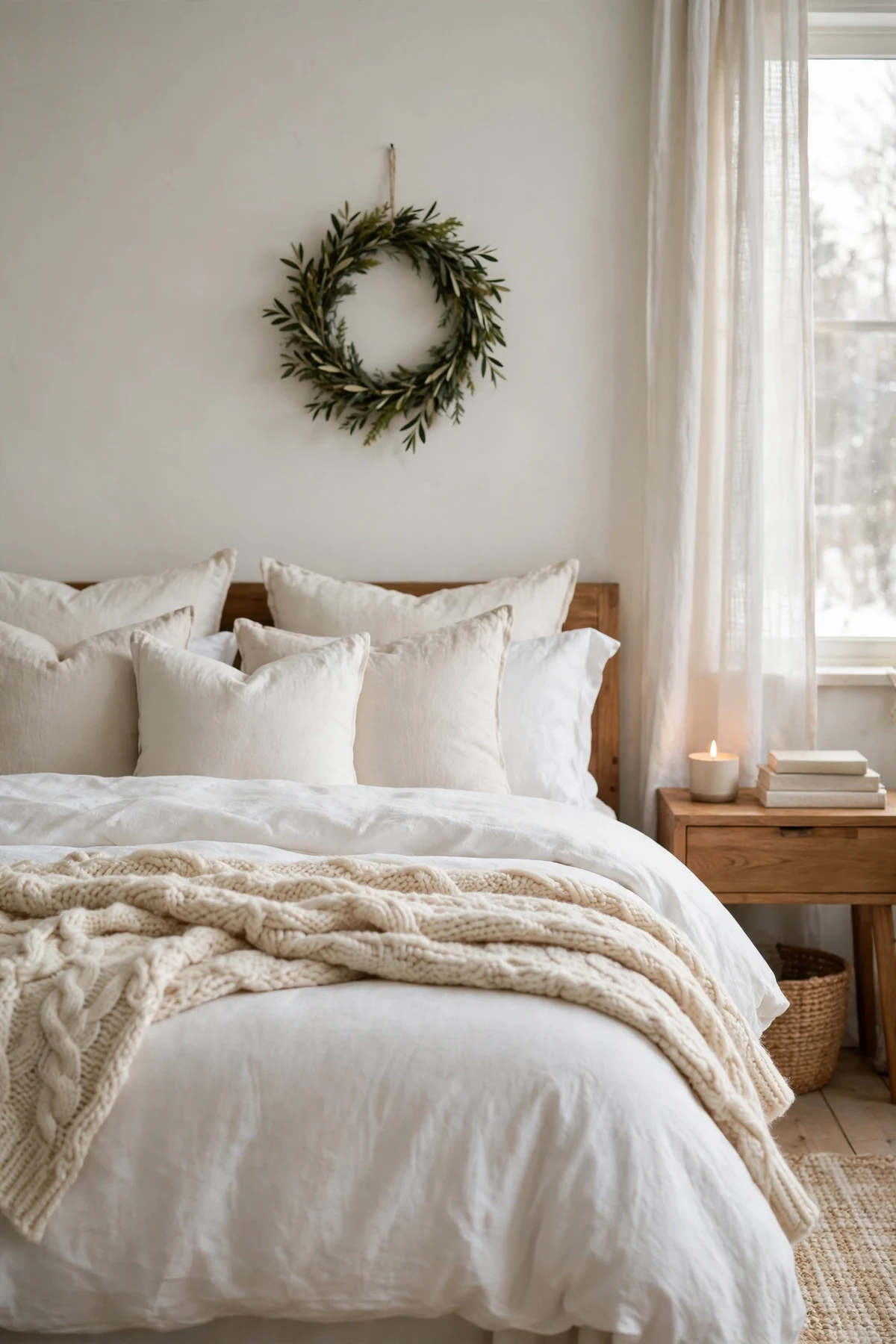
Give the bedroom the full reset: white or cream bedding, one good wool or knit throw across the foot of the bed, and cleared nightstands holding a candle and a small stack of books. After December's noise, the restraint feels like a deep breath.
A stripped-back greenery wreath belongs here too, and dusty blue pillow shams carry the new accent color into the room effortlessly.
15. Swap the Scents: From Pine and Spice to Clean Winter
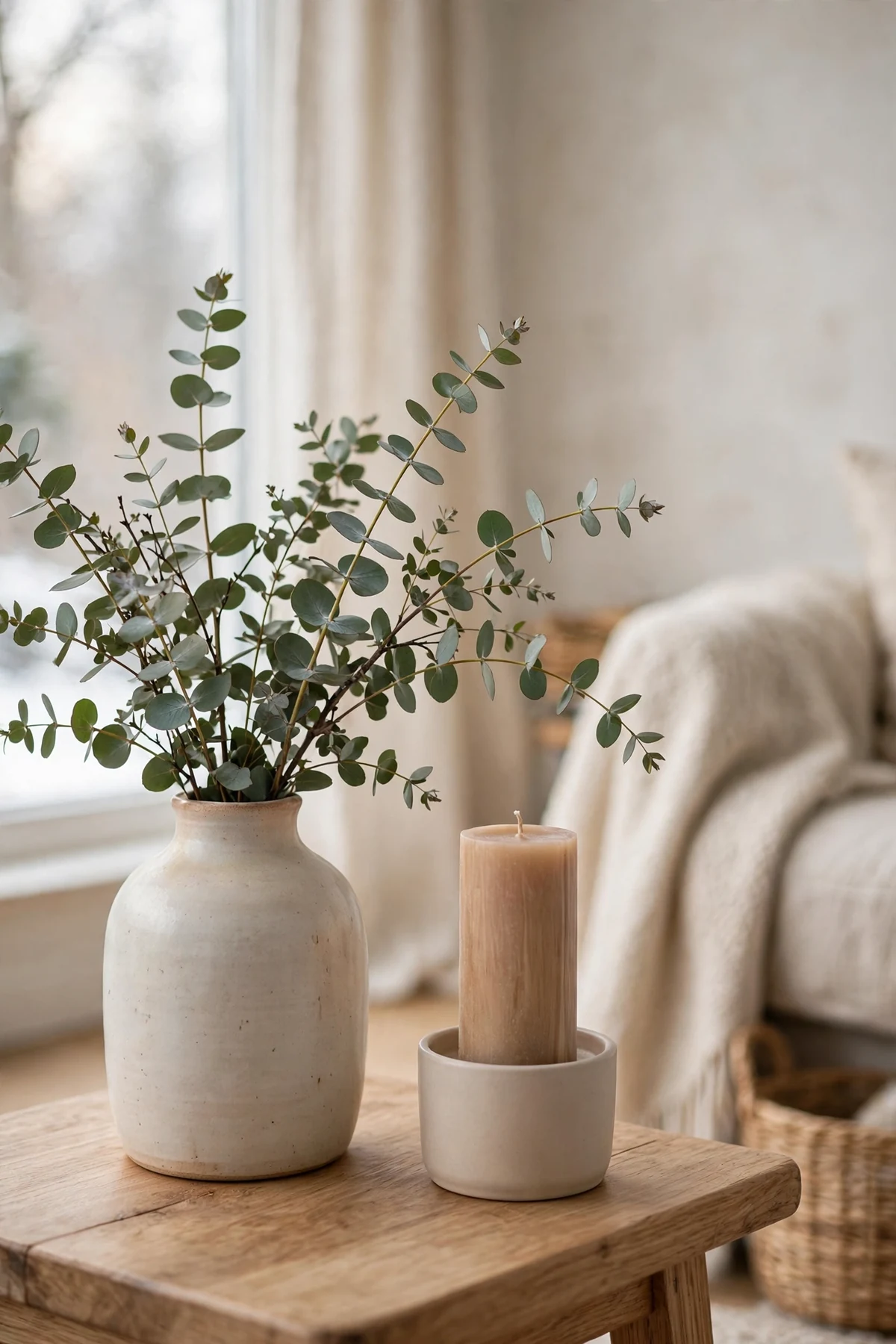
Holiday candles lean on cinnamon, clove, and sweet pine. Rotating to cleaner winter scents — cedarwood, eucalyptus, juniper, or unscented beeswax — signals the new season to your nose before your eyes register it.
Dried eucalyptus in the bathroom or a cedar sachet in the entryway does the same job without a flame. Scent is the cheapest full-room refresh there is.
16. Add One Living Touch: Paperwhites or a Winter Plant
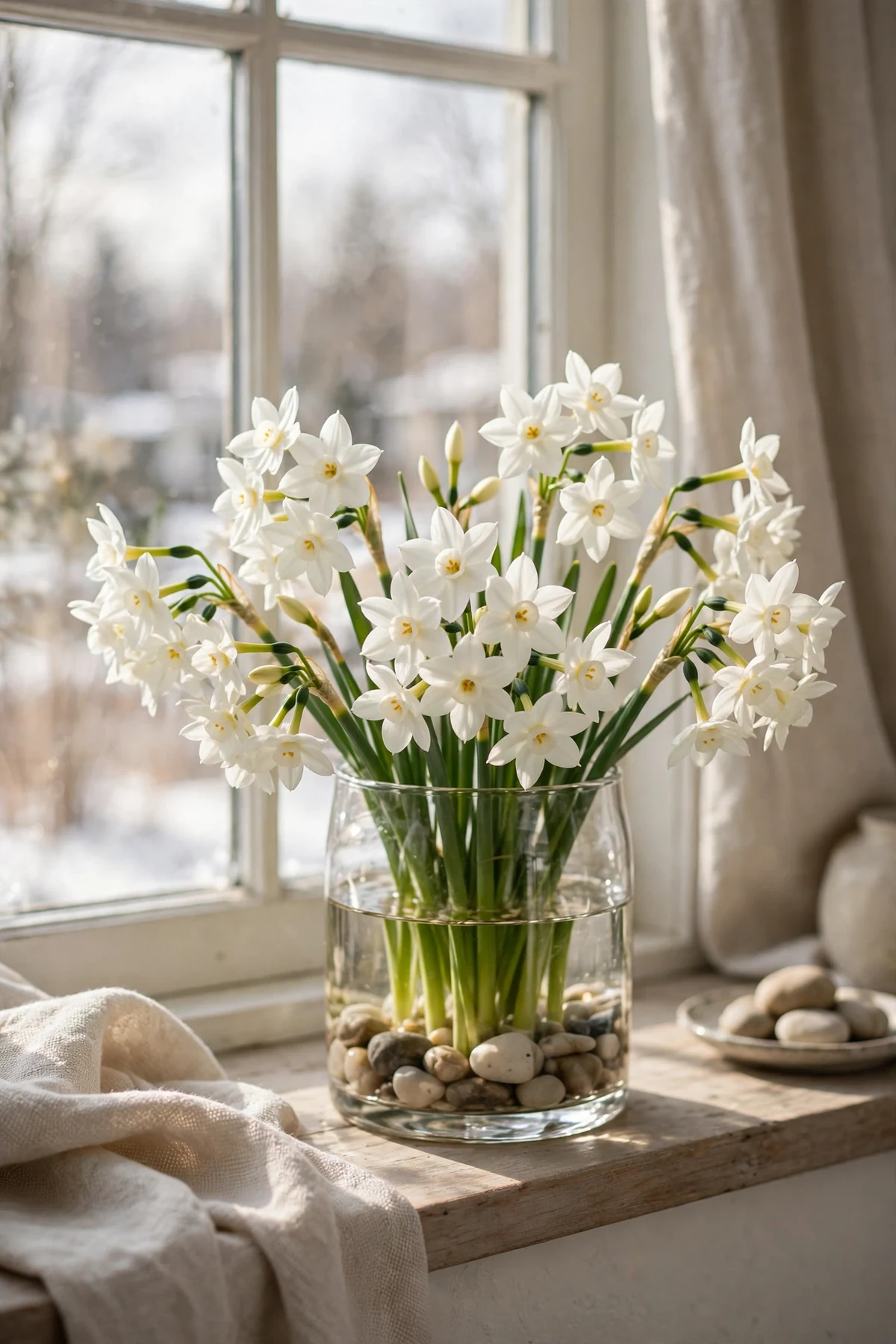
End the reset with something alive: paperwhite bulbs in a glass vessel, a finishing amaryllis, or a simple green houseplant in a woven basket. Growth in January feels hopeful in a way no accessory can match.
Plants also fill the physical gaps the tree and larger displays leave behind. One living element per main room makes January feel like a season of its own.
Frequently Asked Questions
When should I take Christmas decorations down?
Traditionally decorations come down around Twelfth Night (January 5–6), though many people edit gradually through January. A good approach: pack the obviously Christmas items first, live with the winter pieces a few weeks, then decide what still earns its place.
What is the difference between Christmas decor and winter decor?
Christmas decor uses holiday-specific symbols and colors — Santa, red and green, ornament motifs, words like "joy" and "noel." Winter decor uses seasonal materials without the holiday message: plain greenery, pinecones, wood, neutral textiles, candles, and cool-toned accents.
How do I make my home feel cozy after the tree comes down?
Replace the tree's three contributions — height, greenery, and glow — with other elements. A bare tree in a basket or tall branches cover height and greenery; fairy lights and candle clusters restore the glow; layered neutral textiles keep the softness.
What colors work best for January decorating?
Whites, creams, and warm greys form the base; natural wood and greenery add warmth; cool blues — dusty, slate, or icy — are the fresh accent of the moment. The palette feels calm and clean, exactly what most homes need after December's richness.
Conclusion
January does not have to be the month your home feels forgotten. Edit rather than clear: pack the red, the Santas, and the sparkle, but keep the greenery, the glow, and every cozy textile. Add frosted pinecones, birch and candlelight, and a breath of cool blue, and the house settles into a winter style that carries comfortably to spring.