25 Dining Room Decor Ideas for a Stylish and Cozy Home


Introduction
Your home should be a place where memories are made, and nothing brings people together quite like a thoughtfully designed eating space. Whether you are hosting weekend dinner parties or enjoying quiet morning coffee, the right environment makes every moment feel special. If your space currently feels a bit plain or unfinished, exploring fresh dining room decor ideas is the perfect way to breathe new life into your home. In my experience, you do not need a complete home renovation to create a high-end look. Simple visual upgrades—like switching your overhead lighting, adding rich woven textures, or bringing in natural botanical elements—can completely alter the mood of the entire room. I’ve noticed that when a dining area feels warm and intentional, family and friends naturally linger longer around the table. This guide is packed with practical, visual inspiration designed to help you transform your space into a stylish, cozy sanctuary you will love showing off and saving for later.
Rustic Wooden Statement Table
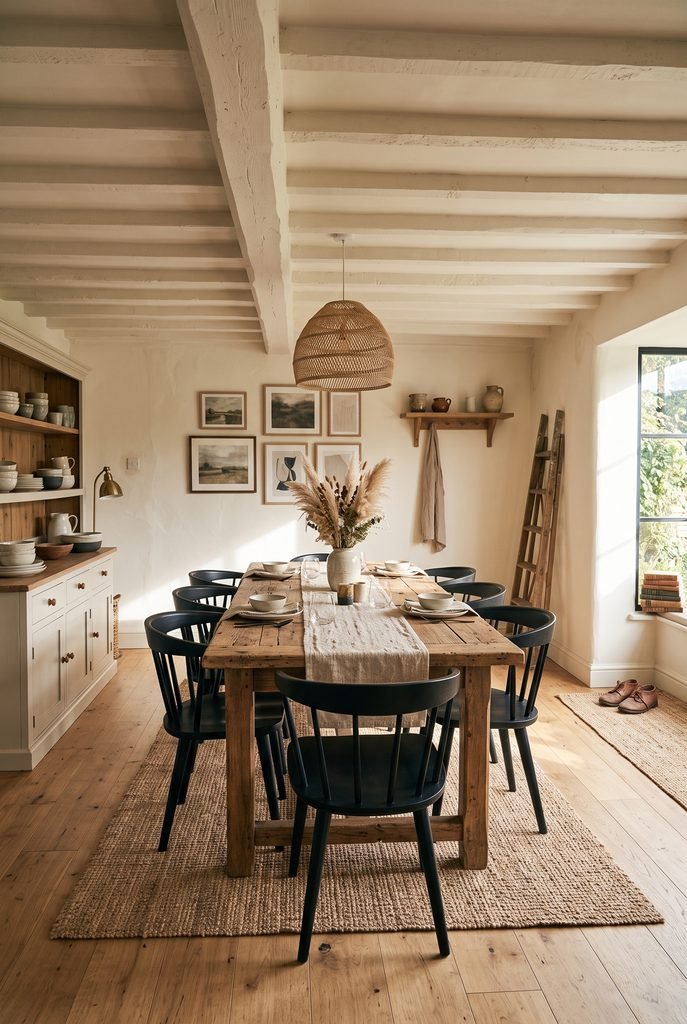
- Restores natural warmth and grounded organic texture to an overly modern or sterile dining room setting.
- Serves as an immediate visual focal point that draws eyes straight to the center of the room.
- Hides everyday wear, minor scratches, and family use far better than smooth high-gloss table surfaces.
- Pairs effortlessly with almost any seating style, from sleek metal industrial chairs to upholstered vintage benches.
A solid timber table completely changes how a home feels by anchoring the space with rich organic textures and timeless character. When setting up a gathering space, picking the right dining room decor ideas sets the overall foundation for your entire layout. I’ve noticed that lived-in wood finishes create an instantly welcoming atmosphere where guests naturally want to linger long after dinner ends. The natural knots and raw grain patterns bring depth into plain rooms without requiring constant restyling. It bridges the gap between casual family breakfast mornings and sophisticated weekend dinner parties effortlessly, providing enduring functionality.
Choosing a rustic table allows you to experiment freely with contrasting modern accents like sleek metal dining chairs or contemporary lighting fixtures. That’s why many designers recommend balancing heavy, dark timber elements with lightweight textiles like pure linen table runners or soft woven seat cushions. In my experience, high-traffic homes benefit immensely from raw or matte-sealed wood since it ages beautifully over time rather than showing every minor scuff. You will instantly notice how the room feels richer, warmer, and significantly more inviting the moment a solid wooden piece takes center stage.
Statement Pendant Lighting
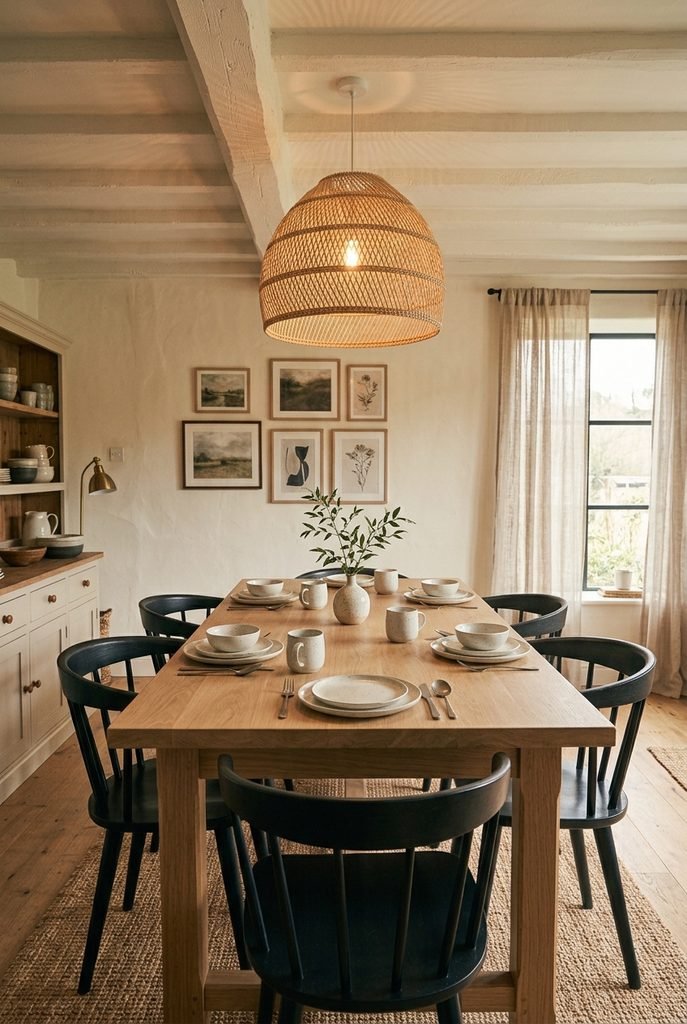
- Creates a distinct visual anchor that defines the dining zone within open-concept home layouts.
- Casts soft, intimate ambient lighting that avoids harsh overhead glare during evening dinner gatherings.
- Draws the eye upward to make standard ceiling heights feel visually taller and more airy.
- Infuses artistic texture and dynamic shape into clean, minimalistic overhead architectural spaces.
Installing a dynamic light fixture directly over your table dramatically transforms the atmospheric tone of your entire eating area. An eye-catching overhead pendant acts as functional artwork, balancing empty air space while drawing attention directly down toward your table setting. I’ve seen this work well in many homes where lighting was originally treated as an afterthought rather than a core design element. Switching out a builder-grade light fixture for an oversized sculptural shade creates immediate drama, elevating standard room layouts into deliberately designed dining spaces with minimal effort or physical structural changes.
Proper hanging height is essential when setting up dramatic overhead lighting to ensure clear line-of-sight across your dining table. The fixture should hang close enough to feel cozy and intentional without blocking sightlines or casting uncomfortable shadows on seated guests. That’s why many interior experts suggest choosing dimmable fixtures, giving you total control to shift seamlessly from bright daylight meal prep to intimate evening gatherings. A beautifully placed light fixture adds undeniable elegance while serving as the unifying design element that effortlessly binds your entire dining aesthetic together.
Layered Floor Area Rug
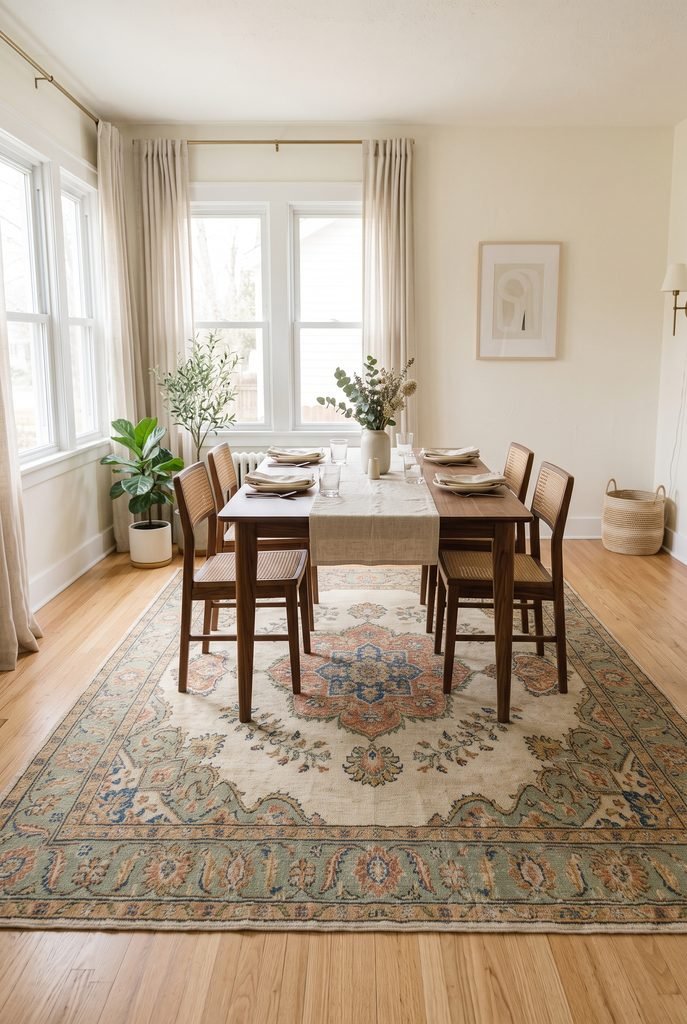
- Frames the dining set cleanly, visually separating eating areas from adjacent open living zones.
- Protects hardwood flooring from heavy chair legs, frequent sliding movement, and accidental surface scuffs.
- Absorbs background noise and reduces echoing to create a quieter, more peaceful eating environment.
- Introduces subtle color, classic patterns, and comfortable softness underfoot during family meals.
Placing a generous, textured rug underneath your table instantly grounds the entire room while adding crucial physical softness underfoot. A well-chosen area rug visually locks your furniture together, preventing chairs and tables from appearing as though they are floating disconnectedly across hardwood floors. In my experience, choosing a flat-weave or low-pile material makes sliding dining chairs back and forth completely effortless while keeping daily cleanup simple. The right floor covering pulls disparate wall colors, furniture stains, and window trims into one cohesive, harmonious visual story smoothly.
Scale is the most critical element when selecting floor coverings for functional dining spaces across different architectural layouts. The rug must extend far enough beyond the table edge so chair legs stay firmly on the woven fabric even when pulled completely out for seating. I’ve noticed that muted patterns or subtle heathered weaves work exceptionally well at hiding unexpected spills or daily crumbs between routine vacuums. Investing in a durable, proportioned rug brings immediate physical warmth, acoustic dampening, and refined structural balance to your daily home eating experience.
Oversized Wall Mirror Accent
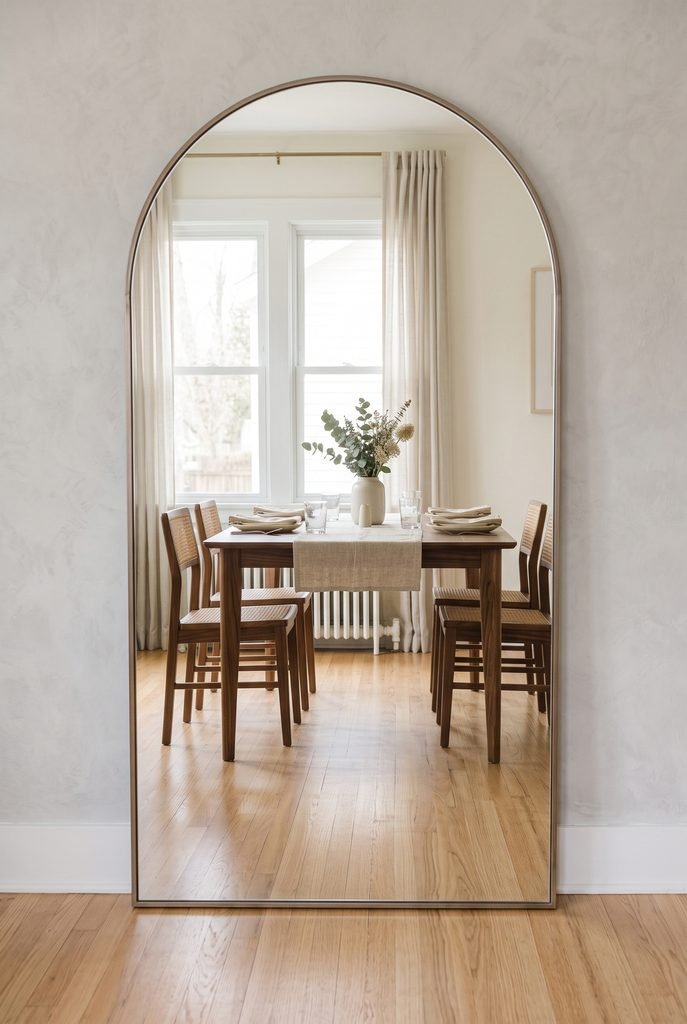
- Multiplies natural sunlight entering the room, making small or dim eating areas feel instantly brighter.
- Creates the visual illusion of added architectural depth, expanding the apparent square footage effortlessly.
- Serves as a elegant, low-maintenance alternative to complex gallery walls or heavy framed artwork.
- Bounces ambient lighting gently around the room during evening candlelit dinners for an enchanting mood.
Hanging or leaning an expansive mirror along a main dining wall instantly transforms the room’s overall spatial perception and lighting quality. A strategic mirror acts like an extra window, capturing incoming sunlight and reflecting beautiful details from across the dining room decor ideas layout. I’ve noticed that narrow or windowless eating areas benefit dramatically from reflective surfaces because they eliminate dark, closed-in feelings without structural renovations. The sleek reflective glass introduces sophisticated contrast against matte walls and wooden furniture, creating an open, airy backdrop that instantly upgrades your everyday home eating experience.
Selecting a frame style that complements your existing home architecture ensures your oversized mirror feels intentionally placed rather than haphazardly added. That’s why many designers recommend pairing thin brass or simple black metal frames with modern minimalist spaces, while carved wood frames suit classic interiors. Position the glass high enough so seated guests aren’t staring directly at their own reflections throughout dinner, maintaining a comfortable dining atmosphere. You will love how a mirror bounces soft candlelight during evening meals, doubling the warmth and creating a magical, cozy ambiance for your guests.
Woven Gallery Wall Display

- Adds organic texture, warm earthy tones, and dimensional height without relying on heavy glass picture frames.
- Offers an affordable, lightweight DIY decorating solution that fills large empty wall spaces effortlessly.
- Complements bohemian, coastal, rustic, and modern organic interior design styles with natural elegance.
- Introduces hand-crafted artistry and tactile depth that instantly softens flat, painted drywall surfaces.
Curating a dynamic arrangement of woven wall baskets brings incredible tactile interest and artisanal personality to plain, uninspired dining room walls. Flat artwork can sometimes feel distant, but dimensional natural fibers introduce immediate organic texture and warmth that makes the space feel truly curated. In my experience, mixing different basket shapes, shallow dishes, and varied weave patterns keeps the eye moving naturally across the entire installation. The soft, neutral tones of rattan and seagrass pair beautifully with simple neutral walls, creating a relaxed, earthy focal point that feels personal and artistic.
Arranging your gallery on the floor first allows you to perfect the composition and balance before placing hanging nails into your drywall. Start with your largest central basket slightly off-center to create visual weight, then build outward using smaller complementary pieces to maintain organic balance. I’ve seen this work well in open-concept homes where you want artistic impact without creating visual clutter or introducing harsh, reflective glass frames. This creative wall feature delivers effortless bohemian charm while making your eating area feel uniquely cozy, customized, and full of natural character.
Floor-To-Ceiling Sheer Curtains
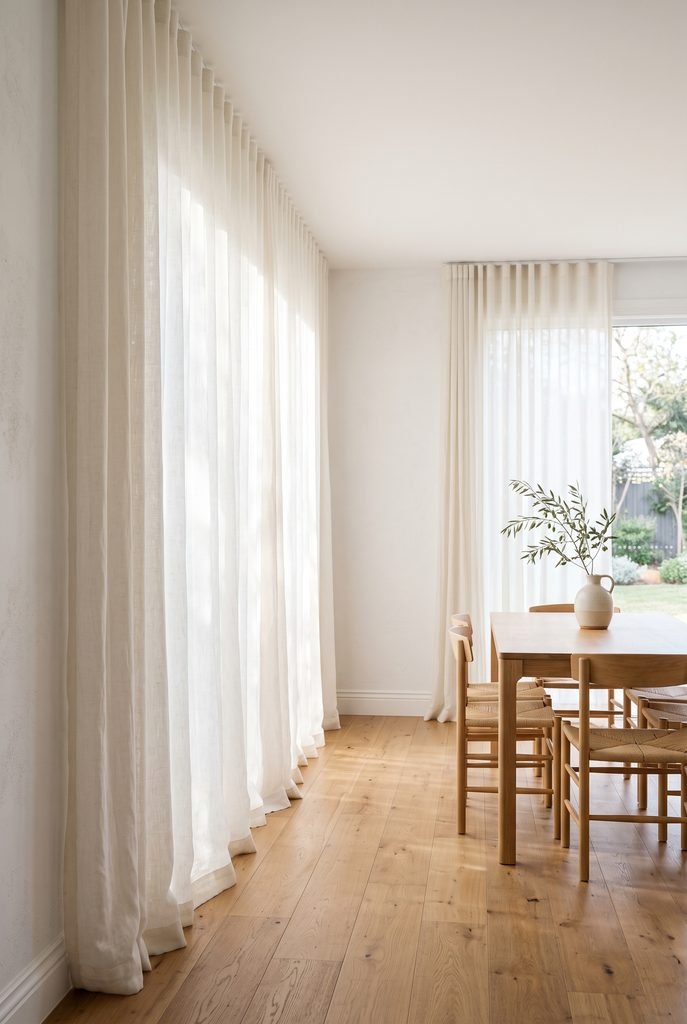
- Filters harsh direct sunlight into a soft, flattering glow that warms up the entire room.
- Draws the eye upward to ceiling height, making standard rooms feel taller and grander.
- Adds soft movement and delicate fabric texture that balances hard wooden and metal furniture pieces.
- Maintains subtle daytime privacy from neighbors while still allowing maximum natural daylight to fill the space.
Installing airy, light-drenching window drapery instantly softens the sharp angles and hard surfaces typically found in dining room settings. Sheer fabric panels frame your windows beautifully without blocking essential daylight, diffusing harsh sun beams into a gentle, welcoming glow throughout the room. That’s why many designers recommend hanging curtain rods as close to the ceiling line as possible to visually stretch your wall height. The fluid movement of light linen drapery introduces soft, gentle elegance, transforming standard dining zones into tranquil, elevated spaces perfect for lingering over long weekend breakfasts.
Choosing natural linen or high-quality cotton sheers provides a beautifully textured weave that feels sophisticated rather than cheap or artificial. Extend your curtain rod several inches wider than your window frame so fabric panels rest comfortably on the outer walls when fully open. In my experience, letting the fabric gently kiss or pool slightly on the floor creates a luxurious, custom-tailored appearance that feels relaxed yet polished. You will instantly feel the shift toward a calmer, more serene dining environment as the curtains filter incoming sunlight into pure architectural beauty.
Botanical Centerpiece Floral Arrangement
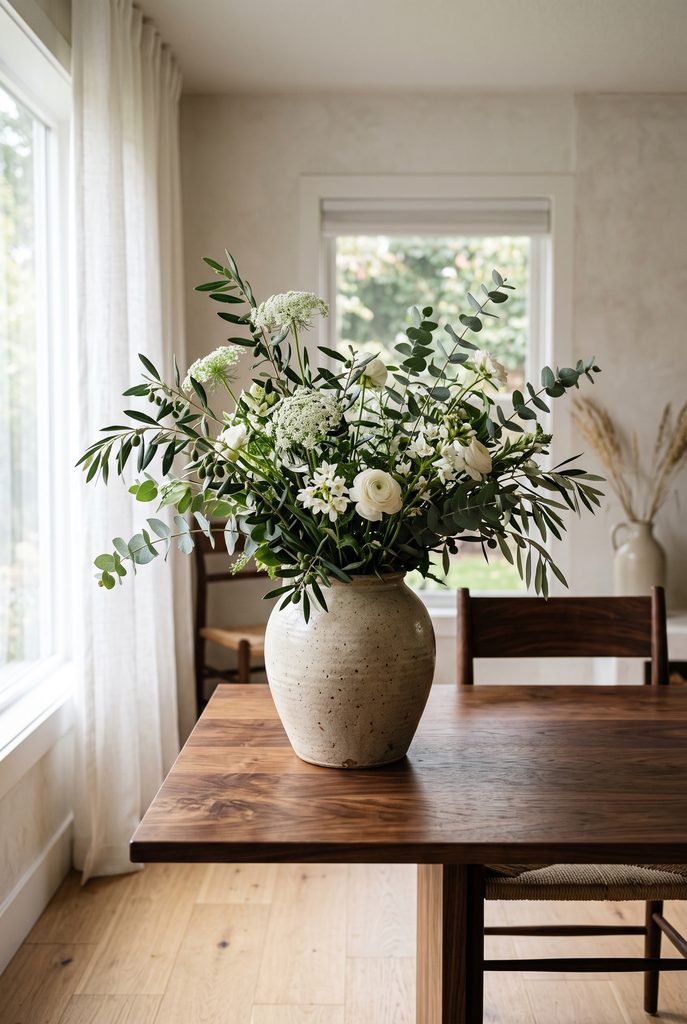
- Injects lively natural color and organic foliage without requiring extensive permanent interior redesigns.
- Fills central table real estate with flexible seasonal decor that switches easily throughout the year.
- Balances structured wooden or metal dining furniture with soft, flowing organic shapes and stems.
- Purifies indoor air visual perception, creating an immediate sense of fresh air and vitality.
Introducing fresh botanical arrangements directly onto your dining table breathes immediate life and vibrant color into your daily eating space. A thoughtfully arranged vase of leafy foliage serves as an ever-changing centerpiece that connects your indoor dining room decor ideas layout with natural outdoor elements. I’ve noticed that tall, branching stems like eucalyptus or olive branches bring artistic height without blocking line-of-sight across the table during conversations. The contrasting textures of smooth ceramic pottery and soft green leaves soften hard tabletop surfaces, making the room feel instantly fresh, thoughtful, and lived-in.
Selecting low-maintenance branches or dried florals ensures your centerpiece remains beautiful for weeks without requiring constant flower replacements or daily pruning. That’s why many designers recommend using earthy stoneware or matte glass vessels that complement your overall home color palette effortlessly. Position your stem arrangement directly in the center of the table, keeping height balanced so guests can chat across the table comfortably. You will love how simple green foliage creates an effortless, elevated centerpiece that elevates everyday family meals into feeling like special occasions.
Statement Wall Color Accent
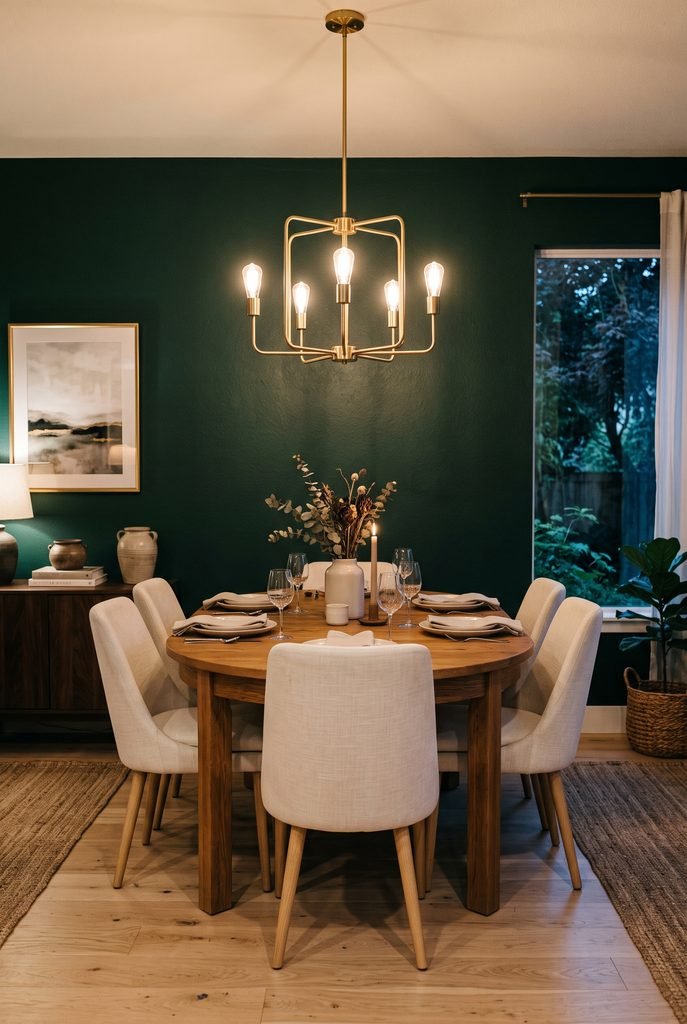
- Creates deep visual contrast that highlights wood furniture, metallic light fixtures, and lighter decor.
- Establishes a cozy, intimate atmosphere that feels private, high-end, and intentionally styled for dining.
- Delineates the dining boundary clearly within larger open-plan living rooms without adding physical walls.
- Conceals minor wall imperfections while adding sophisticated architectural character through rich color tones.
Painting a single focal wall in a rich, saturated shade completely redefines the mood and depth of your dining environment. Dark greens, deep navy hues, or warm terracotta colors wrap the dining area in a snug, cozy atmosphere that encourages guests to relax and stay long after dessert. In my experience, a bold accent wall behind your main table setup makes lighter furniture pieces and brass fixtures pop with incredible artistic clarity. It offers a high-impact, budget-friendly design transformation that turns plain, flat drywall into a sophisticated background for memorable dinner gatherings.
Balancing a dark wall requires pairing it with light-reflecting elements like pale wood flooring, bright linen cushions, or glowing brass lighting fixtures. I’ve seen this work well in rooms with ample natural light, where deep paint colors shift tones beautifully throughout the daylight hours. Keep remaining walls in soft neutral shades to maintain visual balance and prevent the room from feeling overly small or claustrophobic. Painting an accent wall creates an instant cozy retreat feel, making your home dining space look custom-designed and visually stunning.
Upholstered Dining Chair Combination

- elivers luxurious seating comfort, allowing family and guests to linger comfortably over long meals.
- Introduces tactile fabric textures like bouclé, velvet, or linen that soften hard dining surfaces.
- Reduces room echo and absorbs ambient sound, creating a quieter, more intimate dining environment.
- Offers endless customization possibilities through fabric patterns, color choices, and tailored trim details.
Swapping out plain wooden chairs for cushioned, fabric-covered seating elevates both the physical comfort and visual elegance of your dining room. Plush upholstered chairs invite family members and dinner guests to stay seated longer, transforming quick dinners into meaningful visual and conversational experiences. In my experience, mixing soft fabric chairs with a solid wood or stone table creates a rich, balanced contrast that feels intentionally styled. The fabric introduces cozy tactile depth while softening the hard geometry typically created by straight table legs and flat architectural walls.
Choosing stain-resistant or performance fabrics ensures your upholstered chairs remain pristine despite accidental spills, pet hair, or busy daily family use. That’s why many designers recommend performance linen or treated velvet for dining areas where durability is just as crucial as visual style. Consider choosing neutral beige, warm taupe, or soft gray fabric tones that adapt easily if you decide to change wall colors later. You will notice an immediate upgrade in both daily seating comfort and elevated aesthetic beauty the moment cushioned chairs surround your table.
Open Floating Wall Shelving
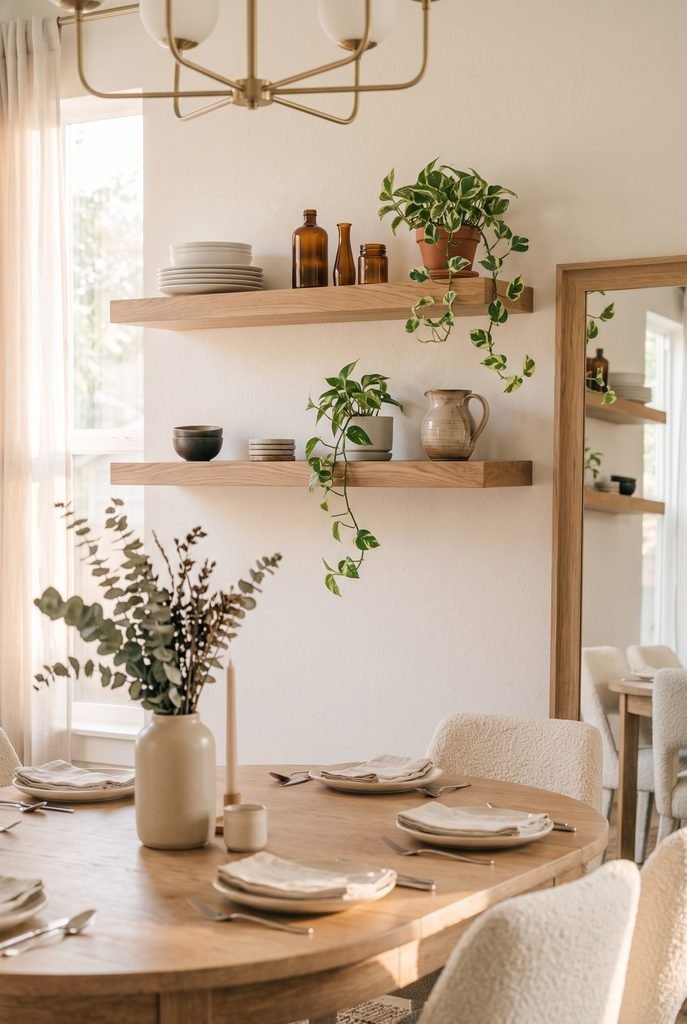
- Transforms unused vertical wall space into an open, stylish display for curated tableware and decor.
- Keeps daily dining essentials like serving bowls and wine glasses within easy reach during dinner.
- Creates a light, airy aesthetic compared to heavy enclosed wooden cabinets or bulky dining hutches.
- Allows flexible seasonal restyling simply by swapping out pottery, artwork, or fresh green plants.
Installing minimalist floating shelves along your dining wall creates a functional, beautifully layered backdrop that instantly showcases your personal style. Open shelving replaces heavy storage cabinets with an airy, modern layout that makes smaller eating areas feel significantly more spacious. I’ve noticed that displaying daily ceramics alongside trailing house plants adds organic movement and warm, lived-in character to plain walls. The exposed horizontal lines draw the eye smoothly across the room, providing a charming focal point that feels both decorative and practically useful for everyday family living.
Spacing your shelves evenly ensures a balanced look that harmonizes with your table height and surrounding architectural features. That’s why many designers recommend styling floating shelves with items of varying heights, mixing tall glassware, flat cookbook displays, and small potted greenery. In my experience, sticking to a cohesive color palette of neutral stoneware and warm natural woods prevents open shelving from feeling cluttered or visually overwhelming. You will love how easy it is to refresh your dining space each season simply by rearranging your favorite decorative ceramic pieces.
Symmetric Wall Sconce Fixtures
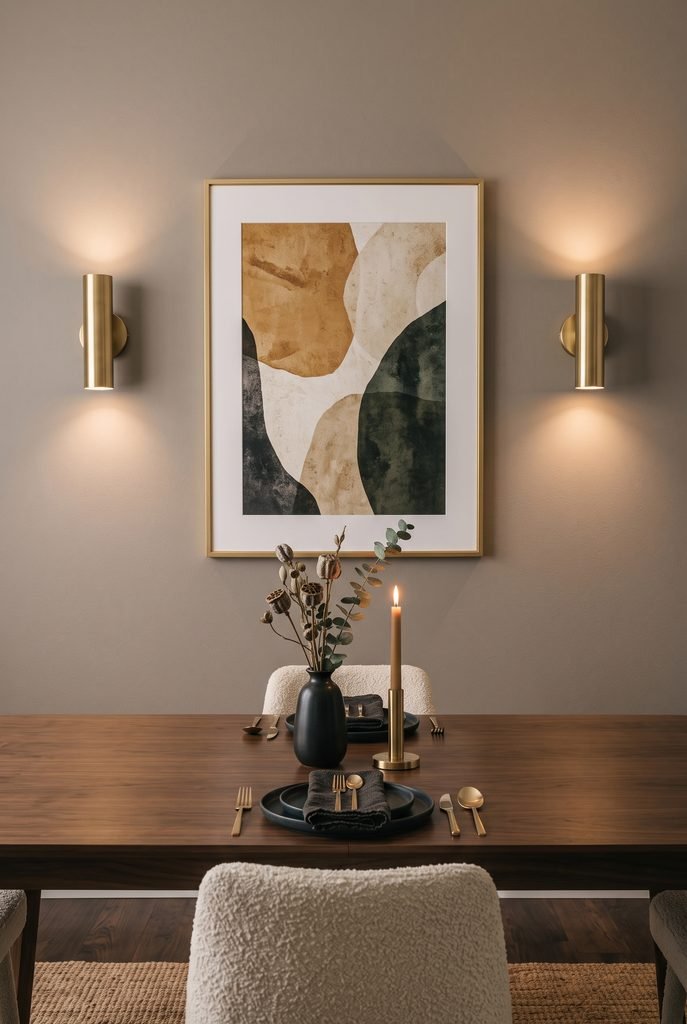
- Delivers soft accent lighting that builds a cozy, intimate atmosphere during evening dinner parties.
- Frames central artwork or mirrors symmetrically, creating a balanced and polished wall composition.
- Saves valuable tabletop and floor space by mounting functional light fixtures directly onto vertical drywall.
- Adds warm metallic accents like brass or matte black that elevate the overall interior decor scheme.
Mounting a pair of decorative wall sconces brings balanced architectural elegance while introducing soft secondary lighting to your dining space. Direct overhead lights can sometimes feel harsh, but wall-mounted fixtures cast a soothing ambient glow that warms up surrounding vertical surfaces. I’ve seen this work well in homes where creating a relaxing, evening-ready atmosphere is essential for entertaining guests. The dual fixtures flank central art pieces or mirrors beautifully, bringing structural symmetry and high-end hotel sophistication directly into your daily home eating environment.
Choosing dimmable or plug-in wall sconces gives you incredible design flexibility without necessarily needing complex internal electrical rewiring. Position the fixtures at eye level when standing so the exposed bulbs don’t shine directly into seated guests’ eyes during dinner. That’s why many designers recommend pairing matte brass or dark bronze sconces with subtle warm-toned bulbs to enhance the cozy room mood. You will instantly appreciate how soft wall illumination turns simple family dinners into lingering, candlelit-style dining experiences every single evening.
Mix and Match Seating
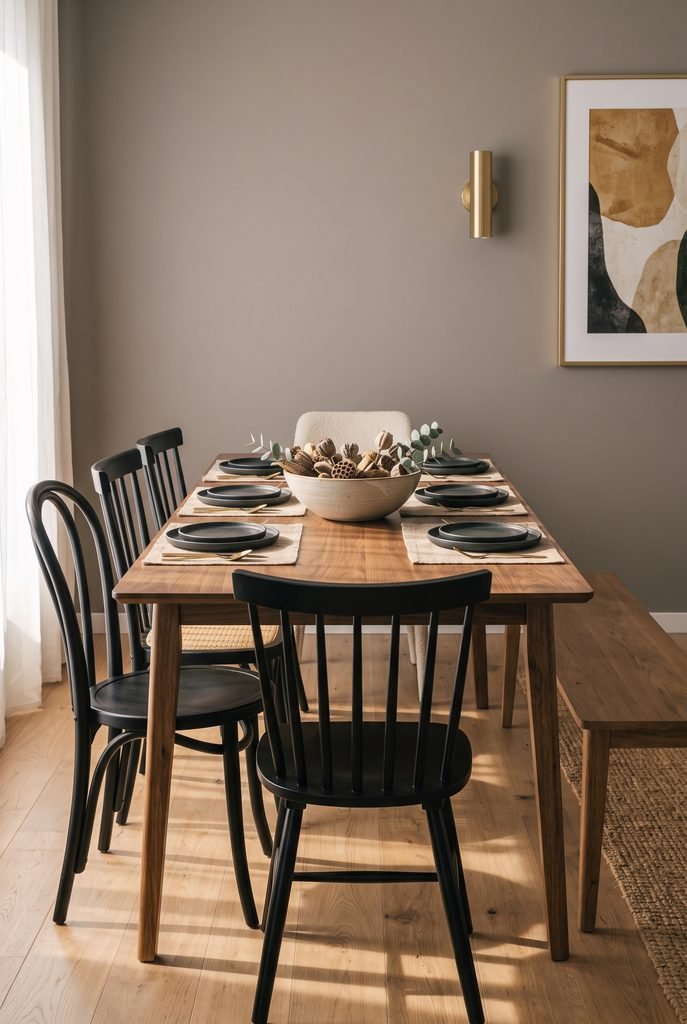
- Breaks up predictable matching furniture sets, adding relaxed personality and eclectic designer flair.
- Maximizes seating capacity along wall sides by utilizing a continuous, space-saving wooden dining bench.
- Blends modern, vintage, and rustic elements effortlessly for a custom, curated interior look.
- Offers budget-friendly versatility by allowing you to collect individual unique chairs over time naturally.
Combining different chair styles around a single dining table creates an inviting, collected-over-time look that instantly relaxes the room’s tone. Rigid, perfectly matching dining sets can sometimes feel formal or clinical, but mixing seat shapes introduces playful contrast and approachable charm. In my experience, pairing a comfortable wooden bench on one side with slender metal or woven chairs opposite gives your dining setup a casual, modern farmhouse touch. It creates an adaptable layout where family members can choose their favorite spot while keeping visual interest exceptionally high.
Maintaining a common design thread like matching wood finishes, uniform cushion fabrics, or a consistent color palette ties mismatched chairs together seamlessly. I’ve noticed that keeping chair seat heights consistent ensures everyone sits comfortably together regardless of the chair’s unique backrest design. Use lighter chair silhouettes in tighter spaces to keep visual lines open while placing heavier upholstered chairs at table ends for grounding weight. This creative seating approach transforms plain eating areas into welcoming, personality-filled spaces designed for lively everyday gatherings.
Architectural Wall Board Board Panel

- Adds classic architectural depth and custom carpentry texture to flat, uninspired drywall surfaces.
- Protects lower walls from daily chair scuffs, accidental bumps, and frequent family wear and tear.
- Elevates basic builder-grade rooms into sophisticated, custom-designed spaces with minimal structural changes.
- Draws vertical lines upward to make standard ceiling heights feel visually higher and more expansive.
Installing vertical wall paneling or classic board and batten brings immediate architectural structure and character to your dining area. Flat walls can leave eating spaces feeling empty, but structured woodwork creates rich dimensional shadows that make the room feel intentionally crafted. I’ve noticed that painting paneling in a subtle muted color like sage or warm greige anchors the entire space beautifully without overwhelming your dining room decor ideas setup. The clean geometric lines provide a permanent decorative backdrop that looks stunning on its own, reducing the need for heavy hanging wall art.
Choosing the right paneling height allows you to customize the room’s proportions based on your specific layout and ceiling structure. Running paneling three-quarters up the wall creates a cozy, historic feel, while full-height vertical boards pull the eye upward for a grander effect. In my experience, using durable satin or semi-gloss paint on wall paneling makes wiping away daily smudges completely effortless. You will love how light catches the raised wooden trim throughout the day, bringing continuous visual depth and refined elegance to every mealtime.
Earthy Terracotta Clay Accents

- Introduces rich, earthy warmth and inviting natural tones that instantly soften modern or cold spaces.
- Pairs effortlessly with natural wood grains, organic linen textiles, and lush green indoor houseplants.
- Delivers an affordable way to introduce trendy, warm color accents without committing to wall paint.
- Adds handcrafted, artisanal texture that makes everyday table settings feel thoughtful and cozy.
Incorporating warm terracotta ceramics and rust-toned accessories brings an inviting, sun-drenched feel to your daily dining layout. Natural clay elements possess a grounding, organic quality that instantly balances crisp white walls and modern furniture lines. That’s why many designers recommend placing hand-thrown terracotta pitchers or decorative earthenware bowls along the center of your table for subtle color warmth. The rich terracotta hues reflect natural sunlight beautifully, creating a comfortable, relaxed atmosphere that makes family breakfasts and evening dinners feel wonderfully welcoming and grounded.
Layering clay accents with complimentary natural materials ensures your color scheme feels cohesive rather than forced or disconnected. Pair raw terracotta vessels with soft cream table linens, woven placemats, and light wood textures to create a gentle, Mediterranean-inspired palette. I’ve seen this work well in minimalist homes where subtle warmth is needed without cluttering surfaces with excessive small trinkets. Bringing earthy clay textures into your space adds timeless visual charm, making your eating area feel naturally curated, cozy, and full of character.
Natural Textured Jute Rug
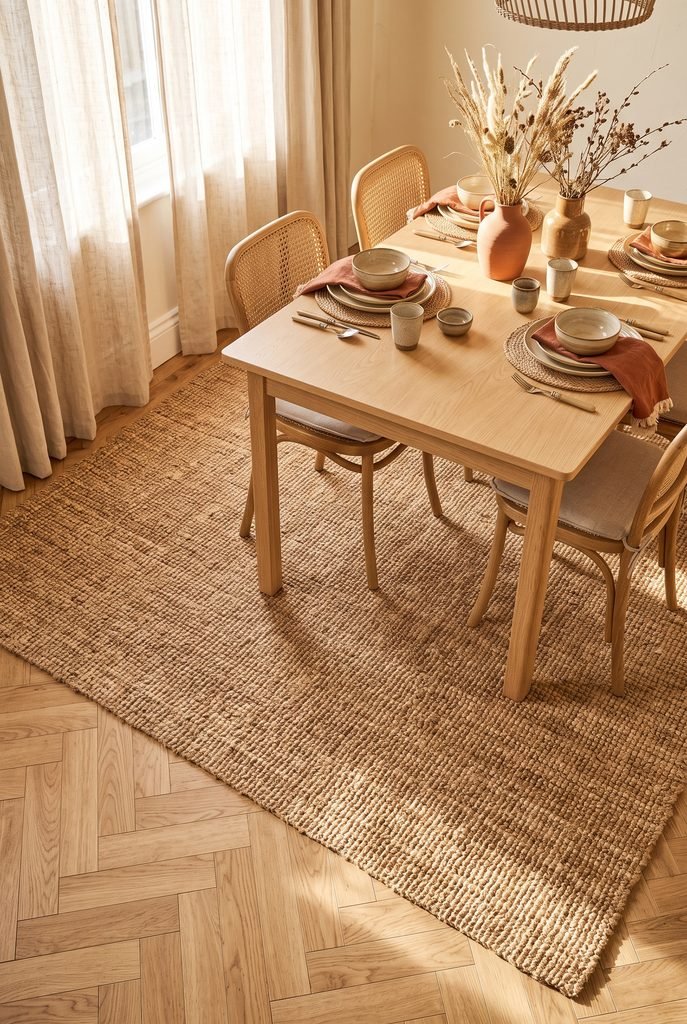
- Brings rich organic texture and golden, earthy tones that ground the entire dining layout naturally.
- Offers exceptional durability against heavy foot traffic, sliding chair legs, and daily family wear.
- Serves as a versatile, neutral base that complements modern, bohemian, rustic, or traditional decor.
- Provides an eco-friendly flooring choice crafted from natural, renewable plant fibers.
Placing a thick, woven jute rug under your dining table provides an instant foundation of natural texture and laid-back warmth. The raw, golden fibers of jute introduce a coastal or bohemian charm that effortlessly softens polished wood or cool tile flooring. In my experience, natural fiber rugs are remarkably forgiving in high-traffic eating spaces, blending seamlessly with almost any color scheme or furniture style. The heavy woven weight keeps the rug firmly in place, framing your dining set cleanly while creating a distinct, comfortable zone within open floor plans.
Selecting a flat or tightly woven jute weave ensures chair legs slide smoothly without catching or pulling on loose natural fibers. That’s why many interior experts suggest choosing a generously sized rug that comfortably accommodates chairs even when pulled completely out from the table. I’ve noticed that pairing a textured jute rug with sleek modern furniture creates a striking contrast between raw organic materials and refined architectural lines. This simple flooring addition brings incredible natural warmth underfoot, making your dining room feel relaxed, cozy, and timeless.
Minimalist Gallery Art Display

- Fills expansive blank walls with refined artistic structure without creating visual chaos or clutter.
- Establishes an instant sophisticated focal point that draws attention directly toward the dining core.
- Allows easy personalization of overall color schemes using complementary contemporary or classic print styles.
- Elevates basic dining setups into feeling deliberately curated like a modern gallery exhibition space.
Hanging oversized art prints across your primary dining wall creates a captivating focal point that instantly elevates your room’s design profile. Large-scale artwork provides visual structure without cluttering vertical space with numerous small frames. I’ve noticed that choosing abstract prints with subtle neutral tones harmonizes beautifully with natural wood furniture, binding the entire layout together. The clean lines of matching frames frame your eating zone intentionally, transforming a simple dining area into an artistic, elevated space that encourages thoughtful conversation during long evening meals.
Hanging artwork at the correct eye level ensures your gallery display feels naturally proportioned relative to your seated height. That’s why many designers recommend mounting canvas centers roughly 57 to 60 inches from the floor for ideal balance. In my experience, pairing thin minimalist frames with generous white matting gives simpler prints an expensive, custom-framed appearance effortlessly. You will love how clean artwork anchors your wall layout, introducing sophisticated artistic character that makes your overall home decor feel complete and refined.
Woven Cane Seating Accent

- Introduces airy, semi-transparent texture that keeps tight dining spaces feeling open and bright.
- Combines mid-century vintage nostalgia with modern organic aesthetics for timeless visual appeal.
- Offers lightweight structural flexibility that moves easily across hardwood or tiled floor surfaces.
- Balances heavy solid wood tables with delicate, breathable woven craftsmanship details throughout seating.
Integrating cane or rattan-back chairs into your setup introduces a airy visual lightness that prevents dining sets from feeling overly heavy. The classic woven pattern allows natural light to filter through, maintaining open sightlines across compact or narrow rooms. In my experience, pairing tactile cane seating with smooth marble or sleek lacquer table surfaces creates a rich contrast of materials. This subtle blend of vintage craftsmanship and contemporary furniture shapes brings relaxed sophistication and timeless style to your everyday home dining setup.
Maintaining cane furniture requires minimal effort while offering surprising structural resilience for daily family dining use over time. I’ve seen this work well in coastal, Scandinavian, and mid-century modern interiors where natural textures play a primary design role. Ensure the chair frames offer ergonomic back support so family members remain comfortable through extended weekend brunches and dinner parties. Incorporating woven seating accents elevates your dining room decor ideas concept with natural craftsmanship, giving your space a bright, airy, and stylish ambiance.
Sculptural Ceramic Tableware Display
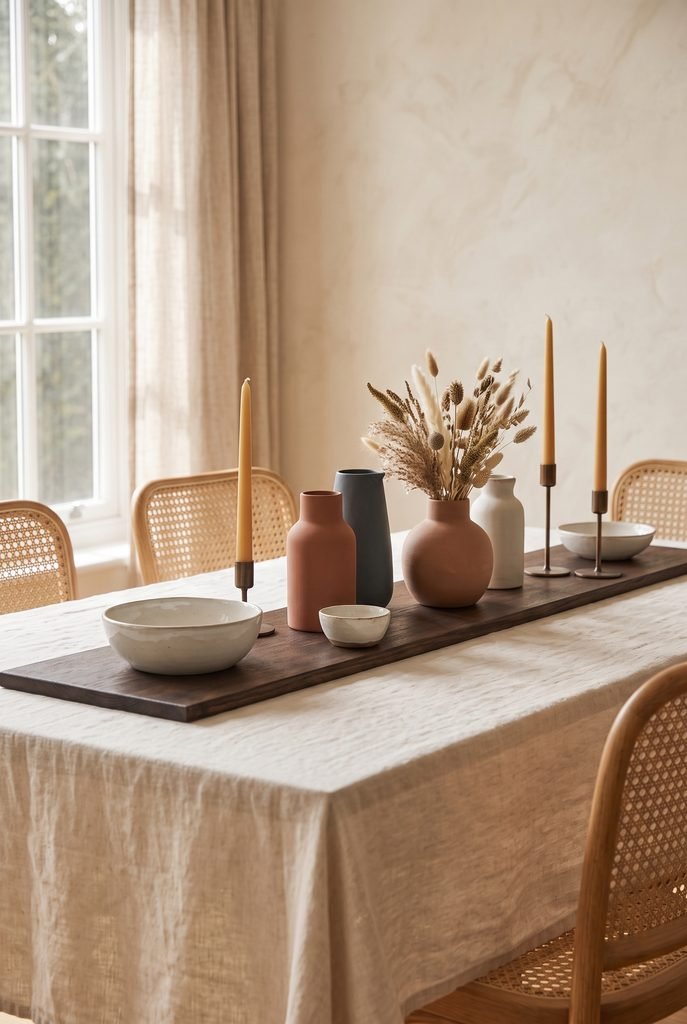
- Transforms daily functional dinnerware into an artistic, permanent visual accent for your table.
- Adds varied dimensional height and hand-crafted tactile quality across flat wooden tabletop surfaces.
- Provides an effortless tabletop styling method that adjusts easily for casual lunches or formal dinners.
- Bridges overall room color palettes smoothly by repeating key accent shades through stoneware glazes.
Styling your table with sculptural ceramic pottery turns an ordinary dining table into a continuously beautiful decorative display even when not in use. Hand-thrown stoneware pieces with organic, irregular shapes introduce artistic texture that feels far more personal than factory-made glass accessories. I’ve noticed that layering ceramic vessels in varying heights creates a dynamic centerpiece that catches light softly throughout the day. This simple styling approach keeps your eating space looking intentionally dressed, cozy, and ready for guests at a moment’s notice.
Grouping ceramic pieces in odd numbers—such as clusters of three or five—builds a balanced, visually appealing composition effortlessly. That’s why many interior experts suggest mixing matte glaze finishes with subtle glazed earthenware to introduce understated textural contrast. Position your pottery arrangement along the table center, allowing room for practical items like napkins and serving platters during meal times. You will appreciate how hand-crafted ceramics infuse your eating space with organic warmth, making everyday home dining feel uniquely stylish and charming.
Monochromatic Color Palette Accent
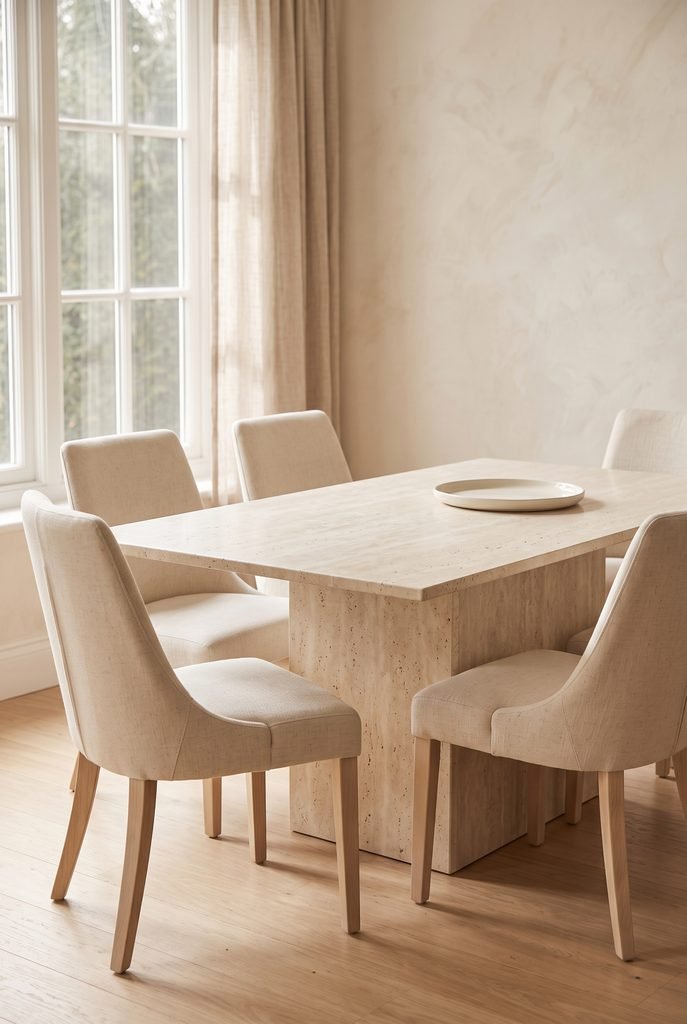
- Creates a serene, cohesive atmosphere that makes small dining areas feel open, airy, and expansive.
- Simplifies decor choices by focusing on rich material textures rather than contrasting color schemes.
- Exudes a luxurious, high-end aesthetic reminiscent of contemporary Scandinavian and Japanese design styles.
- Provides a soothing, calm backdrop that keeps everyday family meal times feeling relaxed and peaceful.
Designing your eating space around a single tonal color family creates an instantly sophisticated, uncluttered visual environment. When wall colors, upholstery fabrics, and window treatments share similar undertones, visual boundaries melt away to create continuous space. In my experience, a monochromatic cream or beige palette lets high-quality materials like natural stone, wool, and light woods shine without competing for attention. This unified approach eliminates visual noise, transforming your daily gathering spot into a tranquil, spa-like retreat that feels intentionally designed and effortlessly chic.
Layering contrasting material textures is essential when working with a single color family to keep the room from feeling flat. That’s why many designers recommend pairing matte plaster walls with plush bouclé cushions, smooth stone tops, and raw linen drapes. I’ve noticed that subtle warm lighting accentuates these material variations beautifully, creating cozy depth as natural sunlight shifts throughout the day. Adopting a monochromatic palette gives your dining space a timeless, high-end feel that remains stylish through changing seasonal trends.
Statement Glass Tabletop Surface
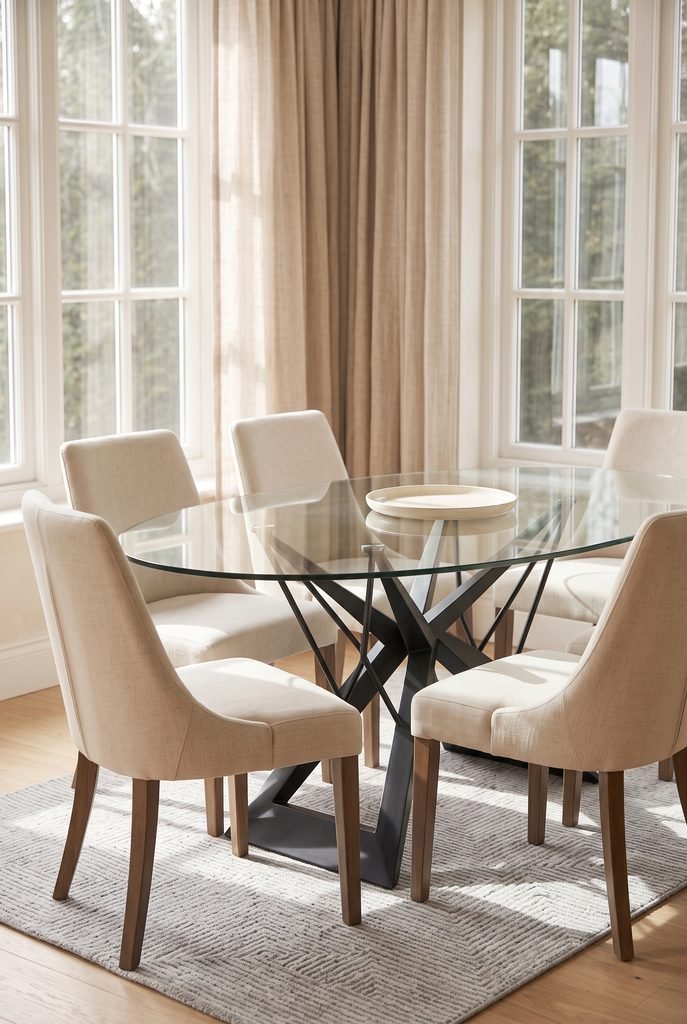
- Opens up visual sightlines completely, making compact or narrow rooms appear noticeably larger.
- Highlights intricate, sculptural table base designs that would otherwise remain hidden under solid wood.
- Wipes clean effortlessly after family meals, offering high stain resistance against everyday food spills.
- Reflects natural window daylight throughout the space to keep eating zones feeling bright and airy.
Choosing a glass-top dining table is an incredible spatial design choice that instantly maximizes light and floor visibility across your room. Unlike heavy timber or dark metal tables that absorb light and block sightlines, transparent glass lets sightlines pass directly through to surrounding features. I’ve seen this work exceptionally well in smaller apartments or open-plan homes where maintaining an airy atmosphere is essential. The sleek glass surface introduces a crisp, contemporary edge that contrasts beautifully against warm rugs, upholstered chairs, and organic wall textures.
Pairing a glass surface with a bold, artistic base turns your dining table into a functional piece of modern sculpture. That’s why many interior stylists suggest choosing dynamic metal or curved wooden leg structures that shine beneath clear glass. In my experience, maintaining a spotless glass surface is simple with a quick microfiber wipe, keeping your layout looking polished and pristine. You will love how a transparent table lightens up your floor plan while reflecting soft overhead light during intimate evening dinners.
Built-In Banquet Window Seating
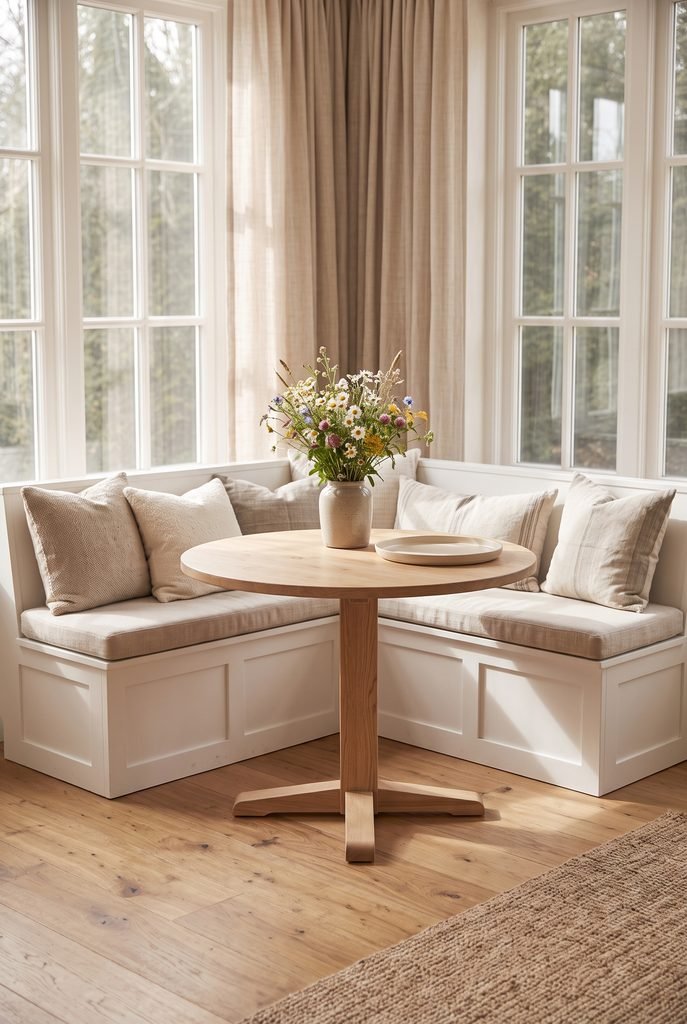
- Maximizes seating capacity in compact dining corners without cluttering space with extra chair legs.
- Delivers valuable hidden storage potential under lift-up bench seats for extra linens and seasonal decor.
- Creates an intimate, cozy breakfast nook environment that encourages family members to gather naturally.
- Capitalizes on natural window sunlight to form a bright, welcoming spot for morning coffee and meals.
Integrating built-in banquet seating into a window nook transforms unused corner spaces into an amazingly cozy, highly functional eating hub. Custom benches fit snugly against walls, offering generous seating while eliminating the awkward floor space behind traditional chair backs. I’ve noticed that corner nooks quickly become the favorite spot in the house for morning coffee, casual family homework, and weekend breakfasts. The continuous bench cushion adds plush physical comfort while anchoring your dining setup tightly against natural light sources for a sunny atmosphere.
Customizing your banquet cushions with durable, washable fabrics ensures your cozy seating corner withstands daily spill risks effortlessly. That’s why many interior experts suggest choosing performance fabrics or removable zippered covers that make cleaning fast and stress-free. Layering cozy throw pillows along the back wall introduces soft texture, color, and ergonomic lumbar support for seated family members. Incorporating built-in window seating maximizes both practical storage and charming visual character, making your home feel custom-built and wonderfully welcoming.
Vertical Slatted Wood Wall

- Adds linear architectural interest that visually elevates low ceiling heights across contemporary spaces.
- Delivers acoustic dampening benefits by absorbing unwanted echo and sound vibrations during noisy dinners.
- Creates a rich graphic focal point that pairs exceptionally well with Scandinavian or modern organic aesthetics.
- Introduces continuous natural wood texture without closing off natural light or obscuring surrounding open walls.
Incorporating a vertical slatted timber feature wall behind your dining table introduces striking graphic texture and architectural sophistication. The repeating wood fins create dynamic rhythm and continuous depth, transforming flat drywall into a handcrafted visual installation. In my experience, slatted walls serve as an incredible backdrop for modern light fixtures, highlighting geometric furniture shapes with incredible clarity. The subtle contrast between warm wood slats and dark recessed spacing grounds your dining layout, giving the entire eating zone a tailored, designer-built aesthetic.
Spacing your wood slats evenly ensures a clean, proportional look that enhances your room’s overall dimensional balance effortlessly. That’s why many designers recommend using pre-panelled wood acoustic boards to streamline installation while benefiting from built-in sound dampening properties. I’ve noticed that pairing slatted woodwork with smooth stone or crisp linen upholstery creates a beautiful balance of hard and soft materials. Installing a slatted wall treatment instantly elevates your daily eating space into a stylish, high-end architectural dining sanctuary.
Vintage Antique Sideboard Cabinet

- Offers generous concealed storage for extra dinnerware, seasonal table linens, and serving platters.
- Injects rich historical character, warmth, and timeless personality into modern or contemporary homes.
- Serves as a versatile styling surface for lamps, artwork displays, and festive holiday party buffet setups.
- Balances modern furniture pieces with authentic vintage charm to avoid a sterile showroom appearance.
Adding a character-rich vintage credenza along your dining perimeter brings immediate warmth, storage utility, and timeless heritage charm. Older wooden sideboards possess unique patina, hand-carved craftsmanship, and rich grain patterns that mass-produced modern furniture simply cannot replicate. I’ve seen this work well in open-plan spaces where extra storage is essential for keeping dining clutter out of view. A dedicated sideboard provides a practical serving surface during large family gatherings while anchoring your wall decor with authentic historical weight.
Selecting a vintage piece with sturdy drawers and smooth cabinets ensures high functional utility alongside its charming visual appeal. That’s why many interior experts suggest styling credenza surfaces with a mix of modern lamps and organic ceramics to blend old and new design eras smoothly. In my experience, pairing a dark antique sideboard with lighter dining chairs prevents the room from feeling overly heavy or dated. Incorporating vintage storage furniture elevates your overall layout, making your home feel curated, authentic, and thoughtfully composed.
Statement Organic Pendant Light

- Casts soft, shadowless lighting that creates a flattering and relaxing mood for evening dinner parties.
- Introduces sculptural, artistic volume above the table without adding heavy visual weight or dark shadows.
- Provides an affordable, high-impact light fixture swap that transforms standard dining spaces rapidly.
- Softens hard geometric furniture lines with gentle, organic curves and delicate fabric or paper textures.
Hanging a large paper lantern or fabric shade over your table creates an ethereal, soft glow that completely transforms your evening mood. Sculptural paper lights act like luminous clouds overhead, diffusing bright bulb light into a gentle illumination that flatters both food and faces. In my experience, lightweight organic pendants bring remarkable artistic drama into minimalist spaces without feeling heavy or visually intrusive. The soft curves break up straight wall lines, providing a central anchor that pulls your entire dining area together beautifully.
Positioning your organic shade at the right hanging clearance ensures comfortable sightlines while maximizing the light’s warm visual impact. That’s why many designers recommend keeping the bottom edge of oversized shades roughly 30 to 36 inches above the tabletop surface. I’ve noticed that pairing paper or fabric lights with natural wood furniture reinforces a calm, Japandi-inspired aesthetic that feels remarkably peaceful. Installing an organic statement pendant light upgrades your space with soft ambient glow, making everyday dinners feel quiet and magical.
Cozy Tabletop Candlelight Arrangement

- Creates an instant intimate, romantic dining mood perfect for evening gatherings and special occasions.
- Delivers flexible, low-cost tabletop styling that changes easily with seasons, holidays, and events.
- Adds varied vertical height and soft warm glow across flat, unadorned tabletop surfaces.
- Softens overall room lighting to build a relaxing, stress-free atmosphere after long, busy days.
Arranging a cluster of warm flickering candles across your dining table brings immediate magic, warmth, and intimacy to any meal. Overhead electrical lighting can sometimes feel overly bright or clinical during quiet evening dinners, but natural candlelight casts a gentle, flickering glow that instantly relaxes guests. In my experience, mixing brass candleholders of different heights creates dynamic movement across your table without obstructing sightlines across the dining space. The soft golden light highlights table linens, glassware, and tableware beautifully, turning simple weeknight dinners into memorable, cozy dining experiences.
Selecting unscented candles for your dinner table ensures flickering flames enhance the cozy room mood without interfering with delicious food aromas. That’s why many interior stylists suggest grouping brass, ceramic, or glass candle holders in odd numbers along a central linen runner. I’ve noticed that combining tall slender tapers with low pillar candles adds rich visual layers that feel rustic yet refined. Incorporating warm candlelight creates a serene, welcoming sanctuary inside your home, giving your daily meals a touch of timeless warmth, comfort, and quiet elegance.
Conclusion
Creating a home you truly love begins with taking small, inspired steps in the spaces where you gather most. By blending these practical dining room decor ideas, you can easily turn a basic eating area into a warm, stylish, and welcoming center for your daily life. I’ve seen how small changes like these can completely transform a space, making every meal feel like a special occasion. Pick your favorite design idea, save this post on Pinterest for future decorating projects, and share it with friends who are ready to refresh their homes. Start styling today and enjoy the beautiful transformation in your home!