25 Home Office Ideas to Create a Productive and Stylish Workspace
Introduction
Struggling to focus in a chaotic, uninspiring workspace that feels more frustrating than productive? Transforming your work area into a stylish sanctuary doesn’t require a total renovation, just a few intentional design choices. This collection of 25 practical home office ideas will show you how to blend functional layouts with scroll-stopping aesthetics that breathe new life into your daily routine. Whether you are dealing with a tiny awkward corner or trying to balance a dual workstation, the right setup can completely eliminate visual noise and boost your everyday focus. In my experience, even small tweaks like updating task lighting or bringing in natural organic elements can dramatically shift your energy and focus. Get ready to turn your everyday desk area into a cozy, high-vibe space you’ll be excited to work in and eager to save for future inspiration.
Small Space Corner Desk
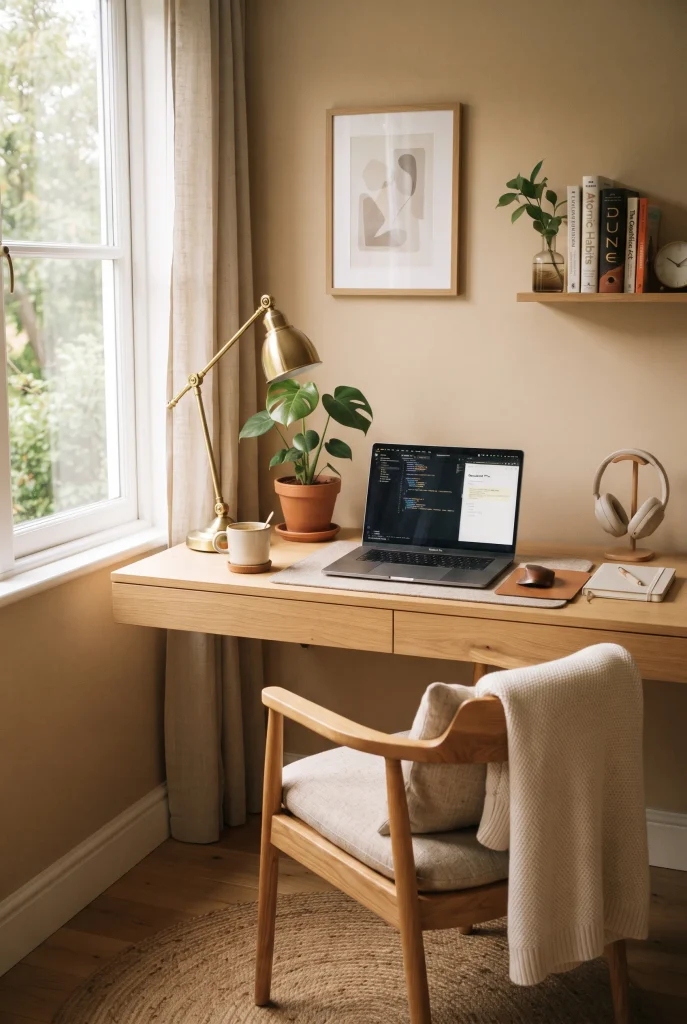
- Maximizes underutilized corner square footage to free up floor space in small rooms.
- Creates a cozy, dedicated focus zone away from heavy household foot traffic.
- Uses floating furniture pieces to visually expand the room’s overall proportions.
- Combines warm wood tones with neutral walls for an inviting, clutter-free look.
Setting up a dedicated workspace in a small room often feels like a puzzle, but utilizing an forgotten corner completely transforms the dynamic. Floating desks work exceptionally well here because eliminating bulky table legs instantly creates the visual illusion of a larger, lighter room. In my experience, keeping the desktop depth around twenty inches provides ample room for a laptop and notepad without intruding on the surrounding living space. Pairing light-toned wood with soft neutral paint colors ensures the nook feels like a seamless, intentional design feature rather than an awkward, crammed afterthought.
Positioning your seating toward natural light sources significantly enhances daily focus and prevents the corner setup from feeling dark or isolated. Adding vertical wall storage directly above the work surface keeps everyday essentials easily reachable while preserving vital physical desk area for actual productivity. I’ve noticed that placing a small green plant or a textured ceramic accessory nearby softens the sharp lines of electronic equipment, making the environment much more inviting. This thoughtful approach balances practical spatial efficiency with a refined aesthetic, allowing compact homes to comfortably host a functional, stylish daily workstation.
Minimalist Floating Shelves
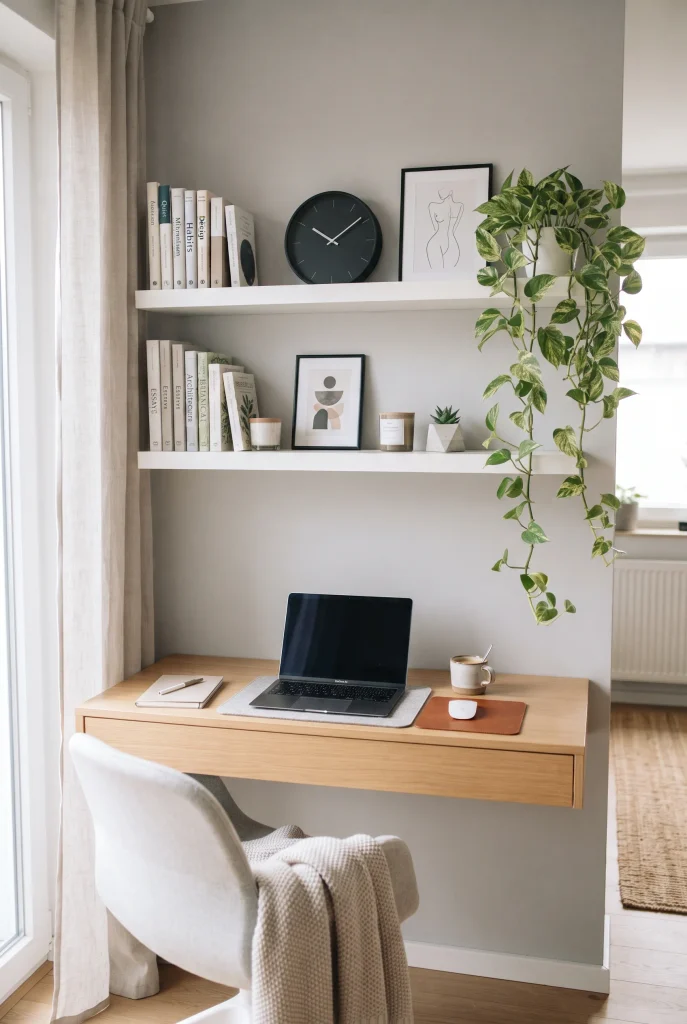
- Utilizes vertical wall storage to keep main desk surfaces clear and clutter-free.
- Adds personalized aesthetic flair through curated decor items and indoor greenery.
- Creates clean, horizontal lines that draw the eye upward and expand room height.
- Allows quick, effortless access to frequently used books, notebooks, and supplies.
Vertical storage remains one of the most effective strategies for maintaining an organized home office ideas setup without sacrificing style. Installing low-profile wall ledges directly above your workstation allows you to store essential reference books and decorative accents high off your main work surface. That’s why many designers recommend keeping the lowest shelf at least twenty-two inches above the desktop to ensure comfortable screen clearance and clear sightlines. Using uniform shelf colors that match your wall paint helps the storage blend effortlessly into the background, creating an open, airy feeling throughout the room.
Curating these raised displays with a careful balance of practical items and personal decor prevents your room from feeling overly industrial or sterile. Incorporating small trailing plants introduces natural organic shapes and vibrant color contrast against structured modern furniture. I’ve seen this work well in many homes where space is limited, as styled wall shelves draw the eye upward and emphasize vertical room height. Limiting decorative objects to a cohesive neutral color palette ensures your workspace stays visual calm, reducing ambient visual noise while maintaining an effortlessly elevated, inspirational daily atmosphere.
Warm Boho Botanical Nook
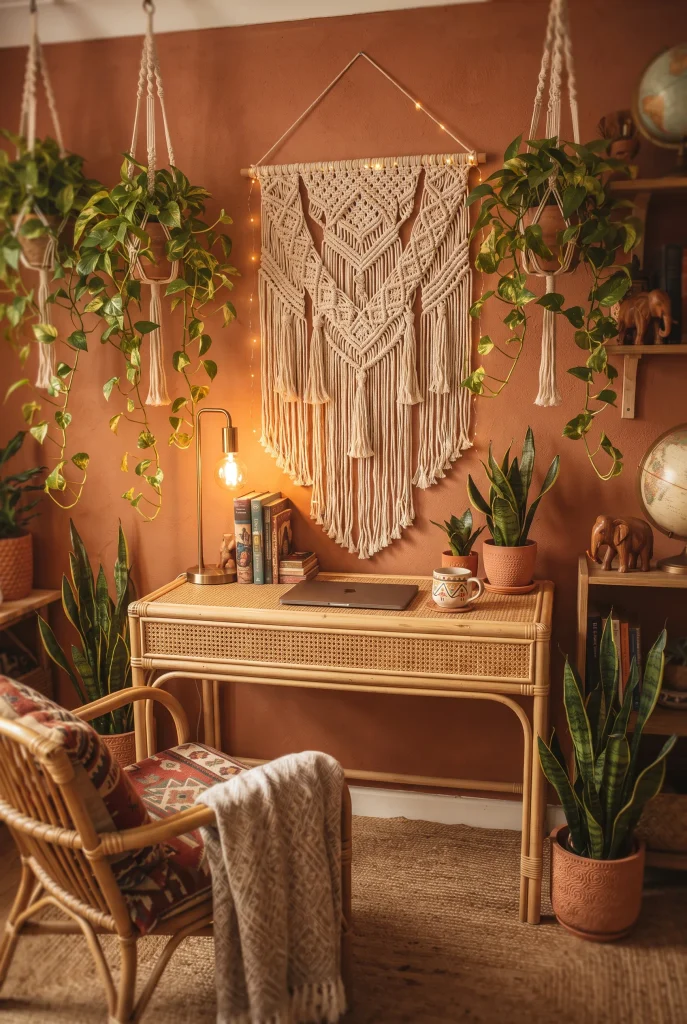
- Earthy terracotta and warm tones boost mood, creativity, and overall comfort.
- Integrated indoor plants improve indoor air quality and bring refreshing natural textures.
- Woven textures like jute and rattan soften functional electronics and sharp desk edges.
- Creates a relaxed, inviting environment that reduces daily stress during long work sessions.
Bringing earthy colors and abundant indoor greenery into your daily work environment fosters a deeply relaxing, creative atmosphere that makes long hours far more enjoyable. Rich terracotta walls pair beautifully with natural rattan furniture, introducing tactile warmth that counteracts the cold, technical feel of modern computers and monitors. In my experience, incorporating organic materials like woven jute rugs and raw wooden accents creates a grounded space that feels personal and lived-in. Soft lighting accents further enhance these deep, organic wall tones, turning a simple working space into a cozy, inspiring sanctuary.
Integrating various plant species across different height levels adds vibrant visual texture while naturally improving the overall ambient indoor air quality. Placing tall snake plants beside the desk and cascading ivy on nearby shelving fills empty vertical spaces with lively green accents. I’ve noticed that working alongside natural elements noticeably lowers stress levels and boosts daily focus throughout long computer sessions. Using matte ceramic or unglazed clay planters ties the room together seamlessly, ensuring your functional home equipment harmonizes effortlessly with a lush, nature-inspired decor style.
Neutral Scandinavian Style
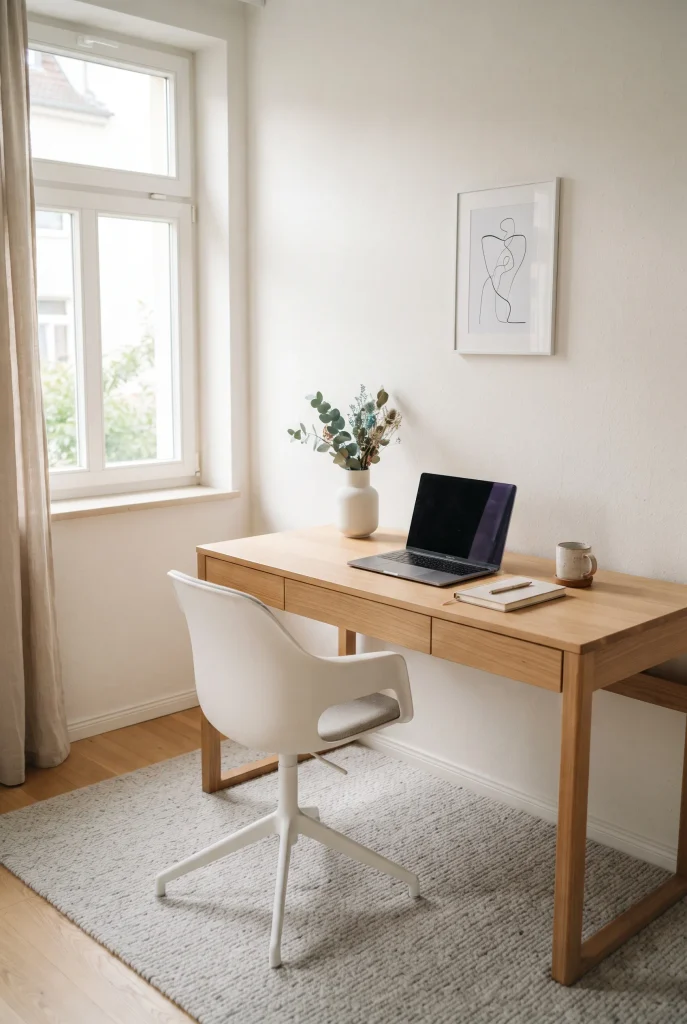
- Emphasizes clean lines and uncluttered surfaces to promote mental clarity and deep focus.
- Utilizes pale wood tones and soft neutrals to maximize natural light reflection across the room.
- Blends modern functional ergonomics with soft, organic textures for long-term everyday comfort.
- Creates a timeless, soothing environment that reduces visual clutter and daily cognitive overload.
Adopting a Scandinavian design approach focuses on simplicity, functional elegance, and maximizing available natural light within your daily working environment. Light-toned woods like ash or pale oak instantly brighten dark rooms, while pale neutral wall colors reflect sunlight across every corner of the room. That’s why many designers recommend pairing minimalist wooden desks with soft linen textiles and smooth matte ceramics to create balance. Keeping surface clutter to an absolute minimum ensures your eyes aren’t overwhelmed by competing visual stimuli, allowing you to settle into productive work routines with ease and sustained mental clarity.
Integrating functional ergonomic seating that matches the soft, light-toned aesthetic keeps the workspace looking cohesive rather than industrial or cold. Positioning the setup adjacent to a window captures gentle daytime illumination, reducing the reliance on harsh overhead electric lighting. I’ve noticed that incorporating a textured wool or jute rug underfoot defines the physical workstation area while adding essential tactile warmth to hard flooring. This simple harmony between soft organic textures, functional furniture, and bright natural lighting yields a tranquil workspace that feels effortlessly organized, calm, and deeply inspiring every single day.
Mood Accent Wall

- Deep, moody wall colors create striking contrast and make furniture pieces pop.
- Establishes a clear, visually distinct boundary for your workstation in open layouts.
- Minimizes glare and visual distractions, creating an immersive, high-focus environment.
- Elevates the space with a sophisticated, high-end studio feel without full-room renovation.
Applying a rich, dark paint color to a single focal wall instantly anchors a home office ideas setup and creates a striking sense of depth. Shades like deep charcoal, forest green, or navy blue absorb excess light, which significantly reduces glare on computer screens during long hours of digital work. In my experience, pairing a dark accent wall with warm walnut wood furniture produces a luxurious, sophisticated contrast that feels both cozy and deeply grounding. The dark backdrop also serves as an exceptional gallery display wall, allowing gold or light wood frames to stand out dramatically.
To keep a deep paint tone from feeling overly heavy or enclosed, strategic lighting becomes an essential element of the design. Warm brass desk lamps or wall-mounted sconces cast focused pools of light, creating an inviting ambient glow that enhances the room’s mood. I’ve seen this work well in many homes where a dedicated working zone needs clear separation from an open-concept living area. Adding light-colored art prints or metallic decor items breaks up the dark surface, resulting in a balanced, high-focus sanctuary that feels distinctly professional and stylish.
Industrial Loft Style
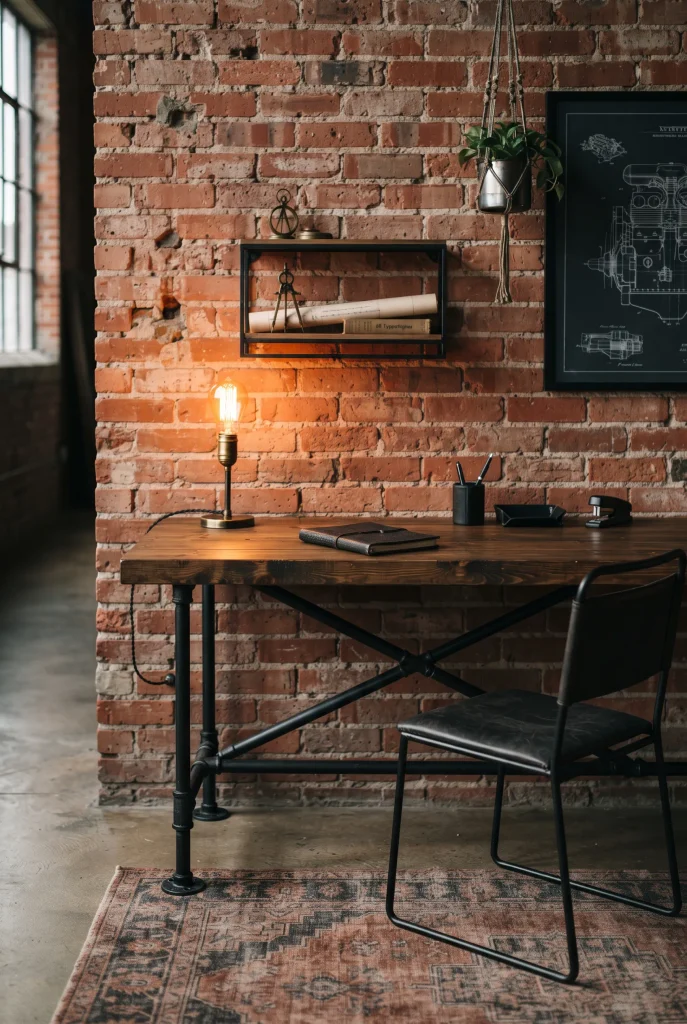
- Combines raw, tactile materials like exposed brick, iron, and reclaimed wood for character.
- Offers high durability and low-maintenance surfaces that withstand heavy daily usage.
- Introduces urban architectural interest to standard, featureless modern rooms or apartments.
- Utilizes dark metallic accents to create strong structural lines and clear design contrast.
Embracing an industrial design style brings a bold, architectural edge to your home work environment through the strategic blend of raw materials and exposed structural elements. Reclaimed wood desks featuring sturdy black iron frames bring rugged character and history into the space, offering exceptional durability for heavy daily use. That’s why many designers recommend balancing hard metal and rough brick textures with smooth leather desk pads or soft floor coverings. This contrast prevents the room from feeling overly sterile or unfinished, turning exposed architectural features into a intentional, stylish design statement.
Lighting plays a crucial role in highlighting the rich textures found in exposed brickwork, raw timber, and matte metal finishes throughout the room. Vintage Edison bulb fixtures or articulated architect lamps cast a warm, golden glow that softens industrial edges while offering precise task lighting. I’ve noticed that keeping cord management hidden behind iron desk frames keeps the focus purely on the structural aesthetics of the furniture. The end result is an authentic, urban studio environment that feels grounded, highly functional, and packed with bold visual personality.
Built-In Wall Unit
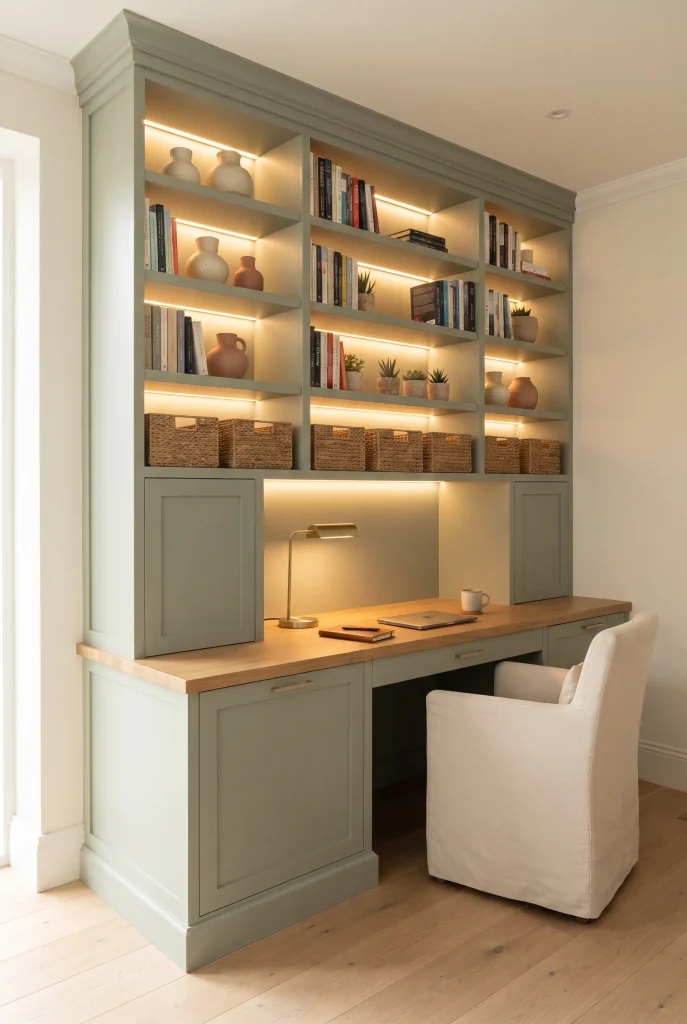
- Custom cabinetry maximizes vertical floor space while hiding bulkier office hardware.
- Integrated LED strip lighting provides even task illumination without cluttering the desktop.
- Painted millwork creates a polished architectural look that increases overall home value.
- Concealed storage cabinets keep paperwork and cords completely out of visual sight.
Investing in a built-in cabinetry unit transforms an ordinary room into a highly structured, architecturally intentional workspace that makes storage effortless. Running custom shelving from floor to ceiling maximizes every square inch of available vertical space, allowing you to hide printer units, cables, and files behind sleek cabinet doors. In my experience, choosing a calming paint color like sage green or muted blue unifies the entire wall, turning functional storage into an elegant focal point. Integrated desk surfaces seamlessly pop out from the cabinetry, maintaining sleek, uninterrupted lines throughout the room.
Incorporating subtle LED strip lighting directly underneath the lower shelves provides clean illumination across your main working area while highlighting styled decorative accents. Adding open display cubbies alongside closed lower cabinets lets you showcase personal books and ceramics without creating a sense of visual clutter. I’ve seen this work well in many homes where a workspace must seamlessly double as a guest room or formal library. The clean combination of hidden storage and custom millwork yields an elevated, calm environment that feels tailored specifically to your daily workflow.
Minimalist Glass Desk
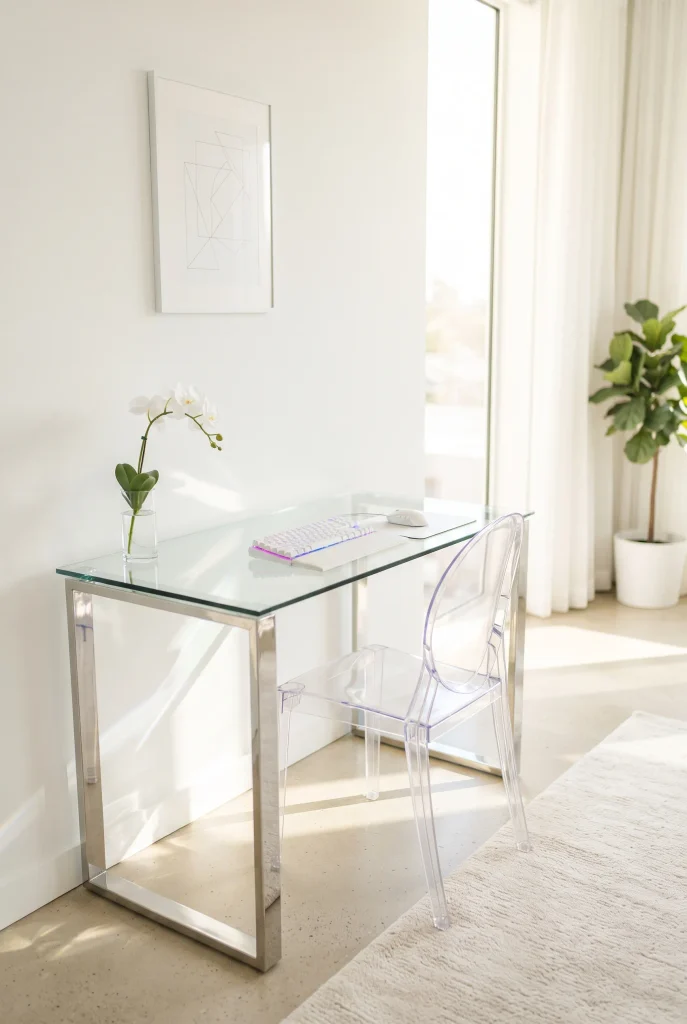
- Transparent glass surfaces reflect incoming light, making tight rooms feel significantly larger.
- Delivers a sleek, modern aesthetic that blends effortlessly into contemporary interior styles.
- Ultra-smooth surfaces are remarkably easy to clean and sanitize throughout the workweek.
- Lightweight visual footprint prevents the workstation from visually overcrowding small spaces.
Selecting a tempered glass workstation is a brilliant strategy for keeping a room feeling open, light, and visually uncluttered. Because transparent surfaces allow sightlines to pass right through the furniture, glass tables eliminate the visual weight associated with bulky solid wood desks. That’s why many designers recommend glass furnishings for smaller rooms or multi-purpose spaces that need to stay bright and airy. Pairing a clear top with polished chrome or brushed brass legs adds a touch of subtle glamour while keeping the overall aesthetic remarkably clean and crisp.
Positioning a glass table near large windows maximizes natural daylight reflection, creating a bright and energizing surface that enhances daily focus. Matching the desk with an acrylic or thin-framed metal chair maintains this weightless visual profile, keeping the surrounding floor space feeling open and unobstructed. I’ve noticed that using wireless technology accessories is essential here, as clear desk surfaces put cable management on full display. The resulting setup offers a futuristic, ultra-modern feel that feels refreshing, impeccably organized, and visually spacious every single day.
Vibrant Color Block
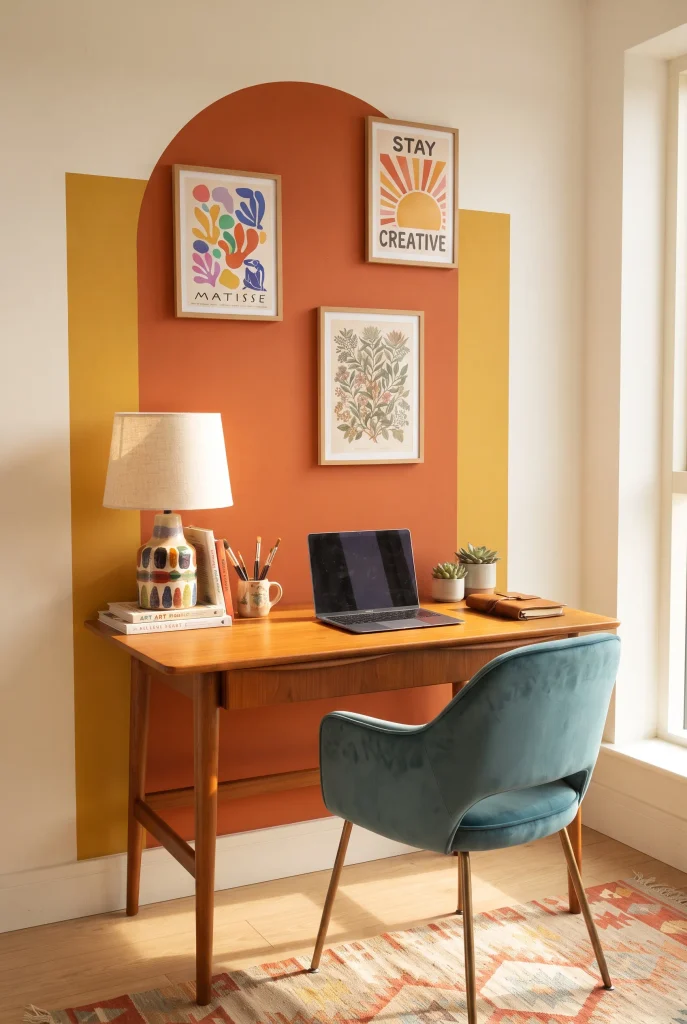
- Bold painted geometry visually defines the desk area without requiring physical room dividers.
- Bright, energetic color pairings stimulate creative thinking and elevate morning moods.
- Affordable DIY design approach that instantly updates modern spaces using standard paint.
- Displays unique personal style and visual flair, making the room uniquely memorable.
Using painted geometric shapes to frame your workstation is an inventive, budget-friendly technique that creates a distinct functional zone in any room. Painting a striking arch, rectangle, or diagonal stripe directly behind your computer setup visually anchors the desk without consuming physical floor space. In my experience, pairing warm colors like terracotta and ochre creates a cheerful, stimulating backdrop that energizes early morning work sessions. This creative color-blocking strategy works exceptionally well in open-plan apartments where defining a distinct work zone is essential for maintain work-life balance.
Selecting desktop accessories and artwork that echo the painted wall colors creates a cohesive, intentionally designed studio environment. Choosing a chair in a contrasting accent hue adds a layer of playful design complexity, turning a simple working nook into a vibrant focal point. I’ve noticed that keeping the desk surface simple and modern prevents bold wall graphics from feeling overwhelming or overly cluttered. This artistic design strategy transforms plain drywall into an inspiring, high-energy environment that reliably sparks daily creativity and joy.
Double Shared Workstation
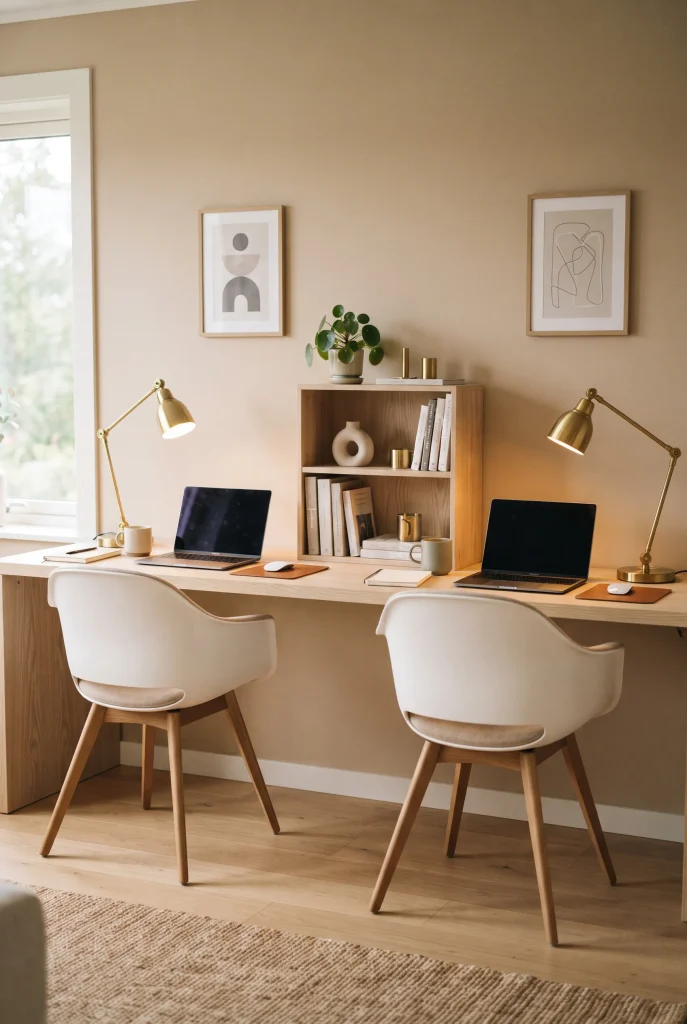
- Spans a single wall to comfortably accommodate two distinct working setups side-by-side.
- Central shared shelving keeps communal office supplies organized and easily accessible to both people.
- Matching chair and lamp hardware creates a balanced, visually symmetrical interior aesthetic.
- Efficiently maximizes shared home space while defining individual personal productivity zones for remote work.
Designing a long, linear dual workspace along a single wall offers an exceptionally smart solution for co-working partners sharing home office ideas within a single household. Utilizing one continuous wooden surface creates clean architectural symmetry while providing ample elbow room for two distinct working setups to operate simultaneously without interference. That’s why many designers recommend placing a shared set of drawers or open shelving right in the middle, effectively dividing the long desk into dedicated personal territories while offering convenient storage for communal printers and stationery.
Maintaining consistent decor accents across both individual zones ensures the long workstation looks visually unified rather than haphazard or mismatched. Utilizing matching ergonomic chairs, coordinated task lamps, and identical desk blotters unifies the overall aesthetic, while individual wall pinboards allow each person to personalize their immediate space. I’ve noticed that running hidden cord trays beneath the entire length of the desk is vital for keeping multiple monitor cords tidy. The resulting shared layout feels spacious, highly organized, and ideal for side-by-side daily focus.
Mid-Century Modern Setup
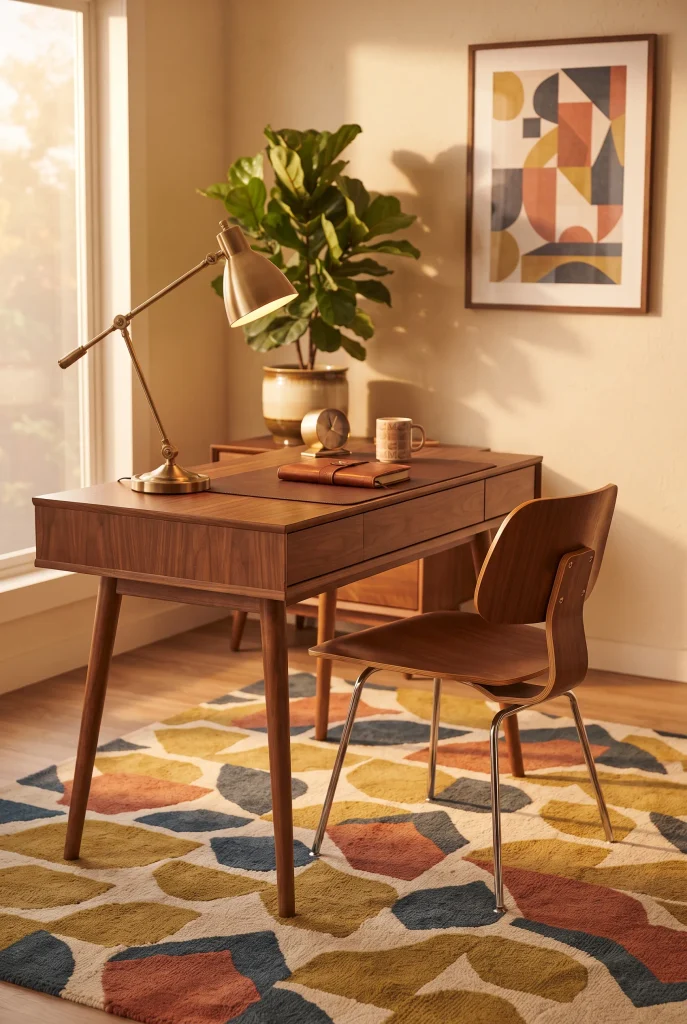
- Tapered wooden furniture legs elevate pieces off the floor, making small spaces feel larger.
- Rich walnut wood tones bring timeless mid-century warmth and sophisticated character into the home.
- Sculptural desk chairs and retro brass lighting serve as iconic visual focal points.
- Blends retro aesthetic charm with modern functional needs for an enduring, stylish aesthetic.
Embracing mid-century modern design elements brings timeless elegance, structural craftsmanship, and rich organic warmth into your daily working environment. Desks crafted from rich walnut featuring slim, tapered legs elevate the furniture visually, allowing light to flow underneath and keeping the surrounding floor area feeling open. In my experience, pairing rich dark woods with iconic molded chairs and vintage-inspired brass task lamps instantly elevates a basic room into a sophisticated design studio. The clean, organic curves of mid-century furniture effortlessly soften the boxy, mechanical appearance of monitors and keyboards.
Incorporating a subtle geometric patterned rug beneath the walnut desk anchors the mid-century look while adding essential tactile comfort underfoot. Adding simple mid-century accessories, such as matte ceramic pencil cups or stylized wooden desk clocks, keeps the nostalgia focused and intentional without feeling retro-cluttered. I’ve seen this work well in many homes because mid-century proportions are inherently streamlined, fitting comfortably into both modern builds and historic properties alike. The final result is a handsome, enduring workspace that inspires focused daily productivity.
Bright Window Seat Workspace
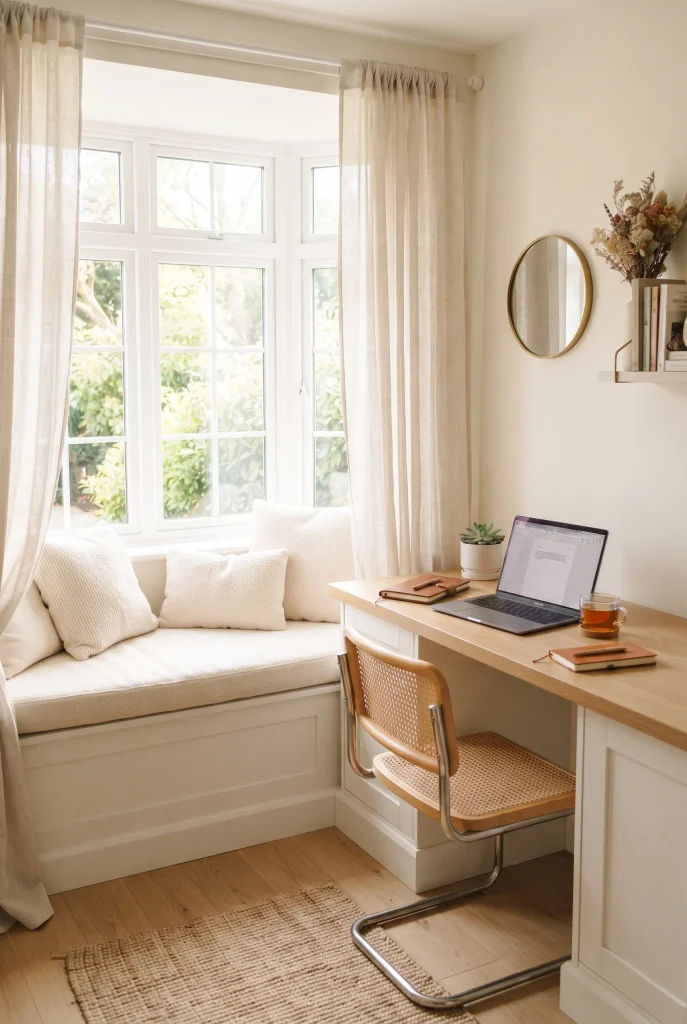
- Positions the main desk directly beside natural window light to reduce daily eye strain.
- Integrated window seating offers a comfortable alternate spot for reading, relaxing, or thinking.
- Maximizes perimeter wall space, keeping the central floor area completely open and clear.
- Creates a cozy, sun-drenched sanctuary that boosts mood and connection to the outdoors.
Placing your desk directly adjacent to a bright window maximizing natural daylight exposure is one of the most effective ways to boost energy levels and maintain focus throughout long workdays. Integrating a custom desk surface that flows into a plush window bench creates a multi-functional nook where you can transition effortlessly from intense computer work to casual reading. That’s why many designers recommend positioning workspaces to take advantage of outside views, as looking into the distance periodically helps relax eye muscles and reduces daily visual fatigue significantly.
Choosing soft cream upholstery, light-toned cushions, and sheer linen window treatments amplifies the bright, airy feel while softening direct sunlight glares on computer screens. I’ve noticed that having an comfortable secondary seating option right beside your primary desk encourages brief, healthy posture breaks without leaving the relaxing, productive atmosphere of the workspace altogether. The combination of abundant natural light, functional desk surfaces, and soft cozy textiles produces an uplifting sanctuary that makes spending long, productive hours at home a absolute pleasure.
Dark Academia Study
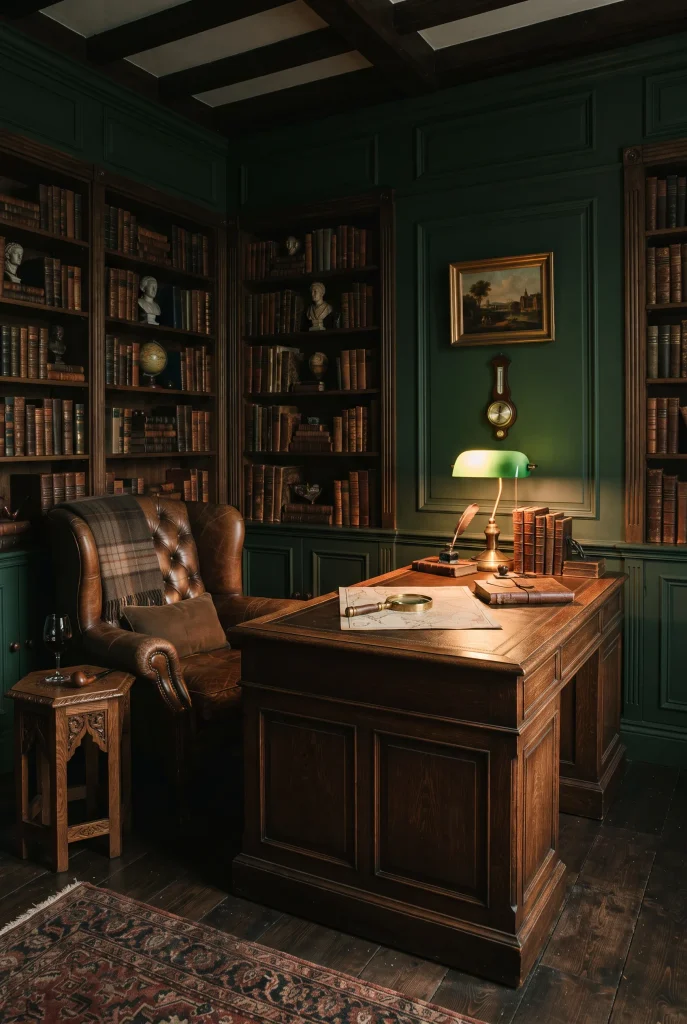
- Deep color palettes and rich wood finishes create a focused, immersive library atmosphere.
- Surrounding floor-to-ceiling shelving maximizes book storage while serving as a stunning backdrop.
- Classic brass accents and warm task lighting bring timeless sophistication to digital spaces.
- Soft leather textures and dark paneling absorb harsh room reflections for cozy working comfort.
Cultivating a dark academia aesthetic transforms your home office ideas into a deeply contemplative, historic sanctuary that feels completely removed from modern digital noise. Rich, moody wall paint like hunter green, deep navy, or dark charcoal paired with dark oak furniture anchors the room in timeless elegance. In my experience, surrounding your desk with filled bookshelves creates an cozy, intellectually stimulating environment that naturally encourages deep focus and quiet concentration. The heavy wood tones and classic textures soften technology, making modern monitors feel like a natural extension of an old-world personal library.
Strategic accent lighting is essential in a dark study to maintain warmth and prevent the space from feeling gloomy. Brass task lighting, green glass banker’s lamps, and warm LED accent lights tucked into shelf alcoves produce soft, inviting pools of illumination. I’ve noticed that layering tactile materials like rich brown leather, tweed desk mats, and velvet drapery elevates the cozy factor dramatically while dampening room echoes. This thoughtful combination of dark structural elements and nostalgic decorative details yields a handsome, high-focus retreat ideal for long hours of writing and research.
Modern Farmhouse Nook
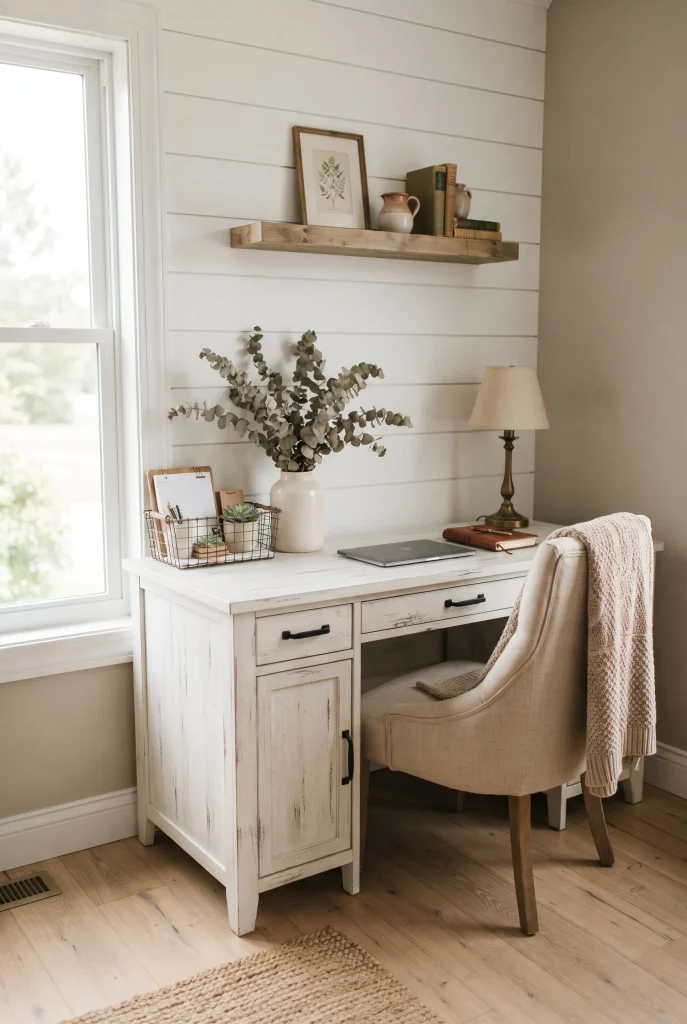
- Shiplap wall treatments add subtle architectural texture without cluttering the room visually.
- Blends rustic, reclaimed wood elements with clean modern lines for a warm, lived-in feel.
- Neutral color palettes featuring soft whites, grays, and blacks keep the setup feeling airy.
- Matte black metal accents bring sharp contemporary contrast to vintage-inspired wooden furniture.
Blending rustic country charm with clean contemporary finishes creates a welcoming, comfortable workspace that feels both grounded and modern. Installing crisp white shiplap horizontally behind your desk instantly adds structural visual interest and texture to plain drywall without overpowering the space. That’s why many designers recommend pairing whitewashed or distressed wooden desks with modern matte black drawer pulls and slim light fixtures. This contrast between old-world character and sleek modern detailing ensures the room feels carefully curated over time rather than overly styled or overly vintage.
Incorporating natural materials like woven wire baskets, linen-upholstered seating, and galvanized metal containers provides effortless storage for everyday paperwork and office supplies. Placing simple organic accents like dried eucalyptus or lavender in glazed stoneware pots introduces subtle greenery and fresh fragrance to the room. I’ve seen this work well in many homes where a workspace needs to blend seamlessly into relaxed, family-centered living spaces. The result is a bright, cozy environment that balances everyday practical utility with a relaxed, rustic elegance you’ll love coming back to.
Biophilic Greenery Studio
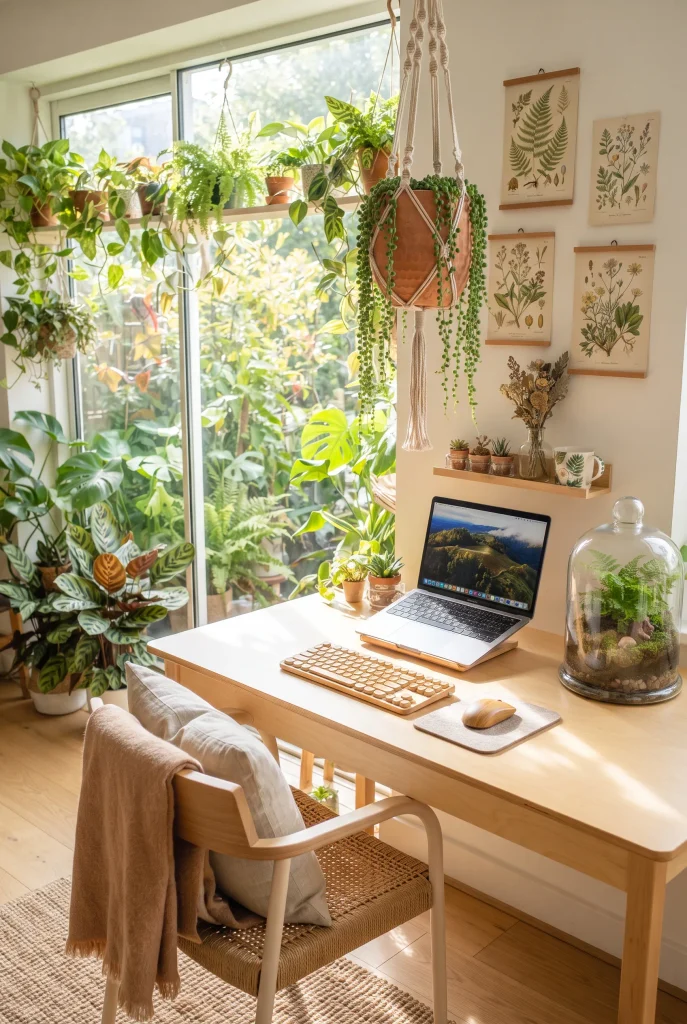
- Abundant living plants naturally purify indoor air and boost daily energy and mood levels.
- Natural wood furniture and bamboo accessories harmonize with lush green leafy textures.
- Maximizes direct natural sunlight to foster both thriving house plants and daily personal focus.
- Incorporates biophilic design principles to significantly reduce stress and screen fatigue.
Integrating biophilic design—the practice of connecting human spaces directly with the natural environment—is one of the most effective ways to build a restorative home workspace. Arranging your desk around an array of thriving indoor plants transforms a mundane room into a refreshing, living botanical conservatory. In my experience, combining various plant species like trailing pothos, towering fiddle-leaf figs, and broad-leaf monstera creates rich visual layering that breathes continuous life into the workspace. Natural light filtering through green leaves softens room glare, creating a serene environment that noticeably boosts daily creativity.
Complementing your indoor garden with raw natural materials like light birch wood, real bamboo desk accessories, and unglazed terracotta pottery unifies the biophilic theme. Utilizing hanging macramé planters and tiered plant stands keeps greenery elevated, preserving essential desktop real estate for your computer hardware and paperwork. I’ve noticed that working in plant-rich spaces reduces mental fatigue and helps maintain consistent focus during long, demanding afternoons. This vibrant, nature-centered approach transforms long computer sessions into a calming, deeply grounding daily experience.
Space-Saving Murphy Desk
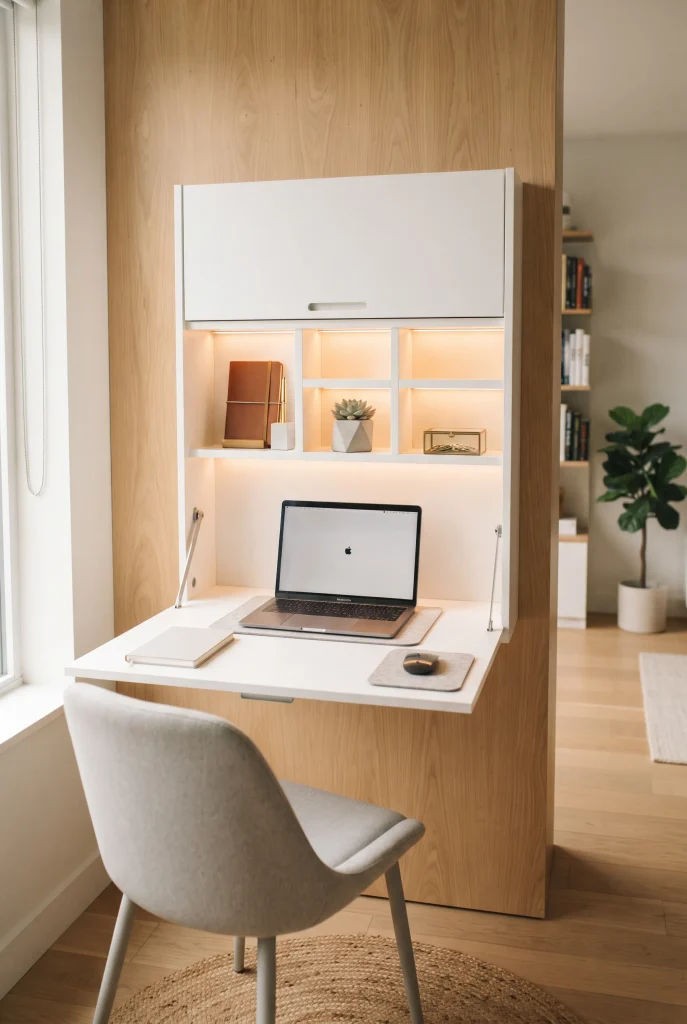
- Folds completely flat against the wall when not in use to reclaim valuable floor space.
- Integrated interior cubbies offer hidden storage for daily essentials without desktop clutter.
- Ideal for multi-purpose rooms like guest bedrooms, dining areas, or small studio apartments.
- Delivers a clean, uncluttered visual aesthetic that instantly transforms back into living space.
When floor space is at a premium, a fold-away wall-mounted desk offers a clever way to integrate a full working area without sacrificing living space. These space-saving designs remain flush against the wall throughout the day, opening only when you need to focus on work tasks. That’s why many designers recommend installable drop-leaf options for multi-functional spaces, allowing a guest bedroom or living nook to pivot effortlessly between working and relaxing zones. Choosing a finish that matches your surrounding cabinetry helps the unit blend smoothly into the wall when folded closed.
Inside the fold-down cabinet, clever shallow shelving keeps pens, sticky notes, and small digital accessories neatly organized and immediately accessible upon opening. Pairing this hidden setup with a lightweight folding chair or slim stool that easily slides into an adjacent closet keeps the room completely open after hours. I’ve noticed that this clean visual boundary makes it far easier to mentally disconnect from work at the end of the evening. The clever design delivers maximum productivity on demand while keeping your compact home open, flexible, and completely clutter-free.aspect ratio 2:3
High-Gloss Glam Office
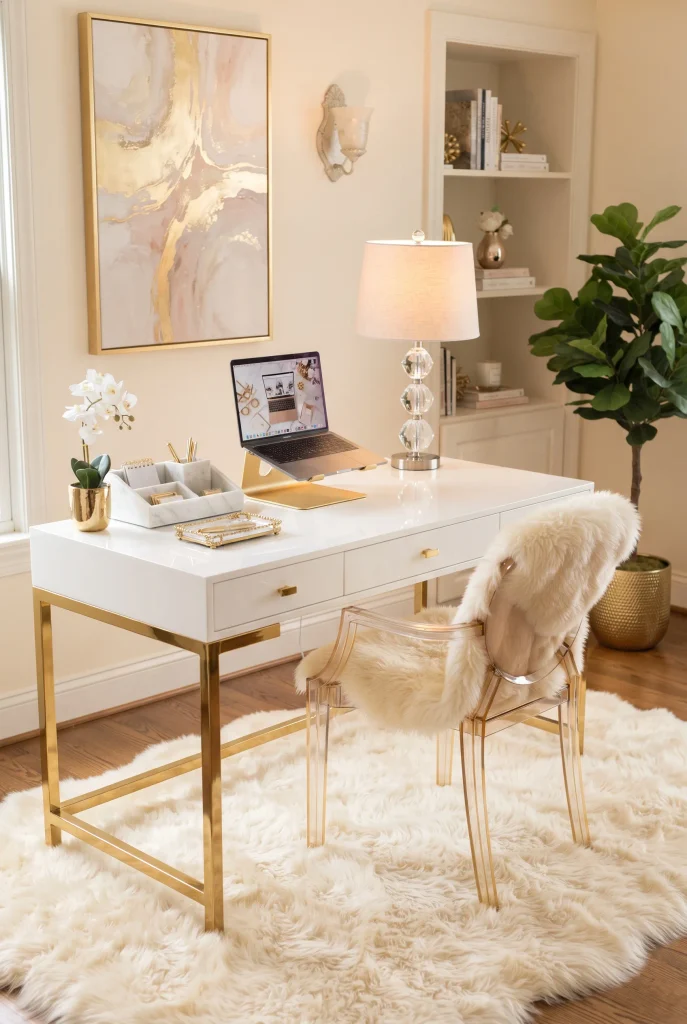
- High-gloss finishes and reflective accents maximize room brightness and ambient light.
- Polished brass and crystal hardware add a sophisticated, upscale touch of elegance.
- Plush textures like faux fur and velvet bring soft tactile luxury to everyday work tasks.
- Creates a bright, visually stunning workspace that feels curated, polished, and inspiring.
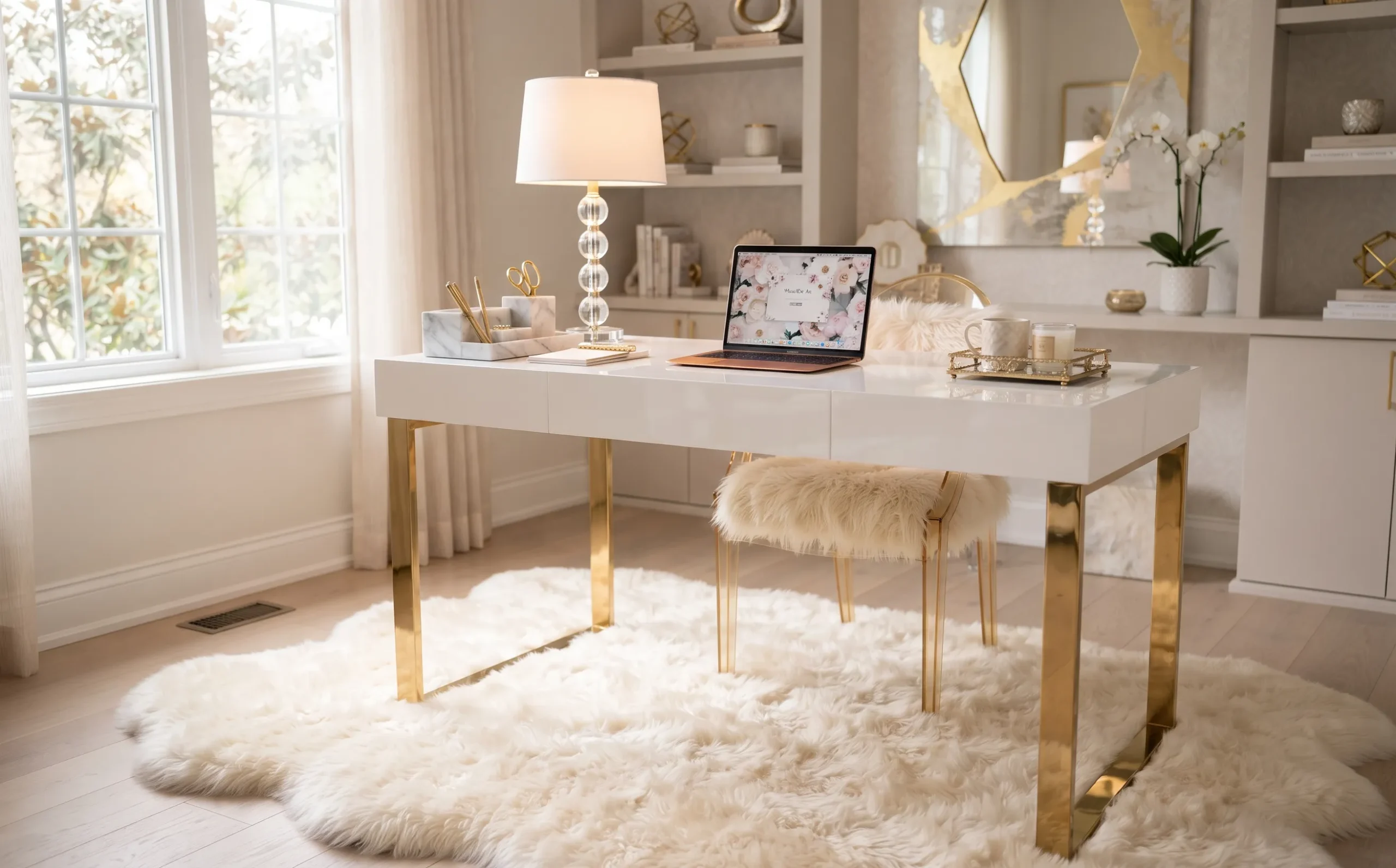
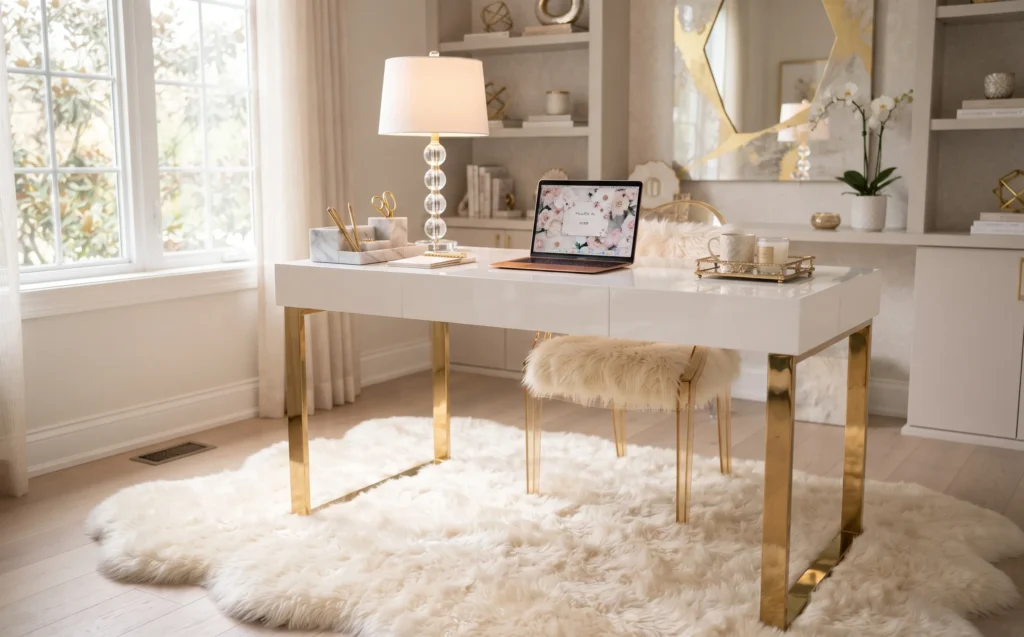
Incorporating high-gloss surfaces and luminous metal accents creates an elegant, ultra-polished setting that elevates daily tasks into a luxurious experience. White lacquer desks reflect overhead and natural light across the room, instantly making compact spaces feel broader and much brighter. In my experience, pairing sleek glossy surfaces with warm metallic touches like polished gold or champagne brass creates a refined contrast that feels effortlessly chic. Adding small marble accessories and crystal desk decor enhances this radiant aesthetic, turning everyday office tools into gorgeous visual features.
Balancing sleek, reflective surfaces with soft, inviting textiles keeps the room feeling plush, comfortable, and welcoming throughout long working hours. Plush velvet desk chairs, faux-fur accent rugs, and soft silk drapery introduce crucial tactile depth that softens the hard edges of furniture and monitors. I’ve seen this work well in many homes where a dedicated desk area needs to double as a stylish dressing vanity or personal creative nook. The result is a luminous, high-energy environment that feels beautifully tailored, polished, and exciting to work in every day.
Glass Door Cloffice
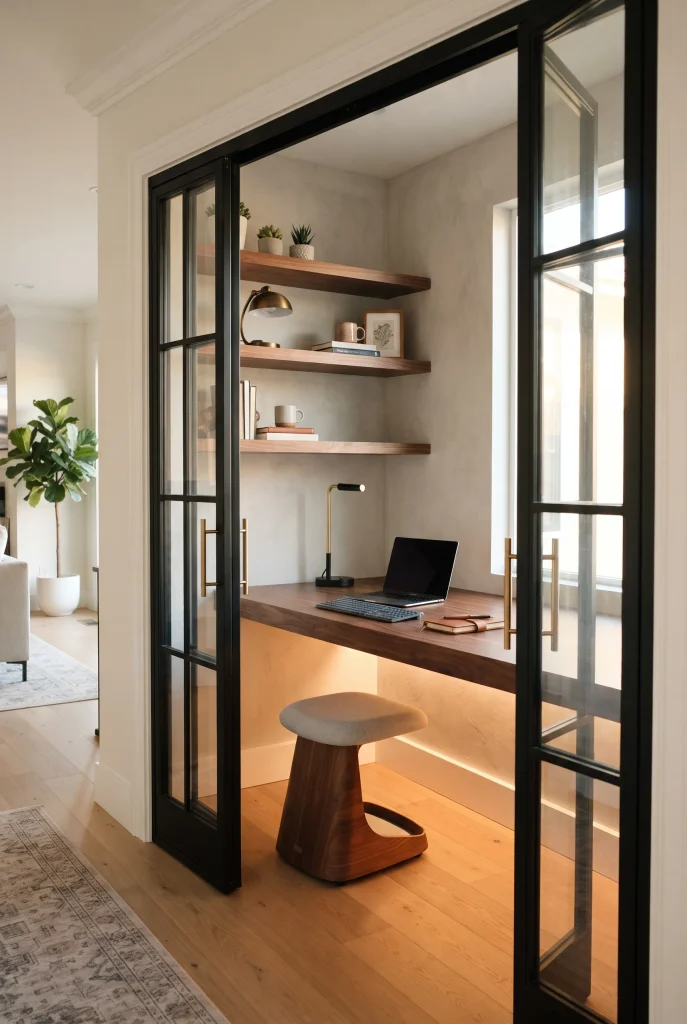
- Transforms underutilized closet niches into fully equipped, private work spaces.
- Glass doors visually extend room depth while providing acoustic control when closed.
- Vertical built-in shelving maximizes compact storage capacity without taking floor space.
- Integrated LED backlighting creates a high-end architectural feel in a small footprint.
Converting an underused closet into a dedicated working nook—often called a cloffice—is an ingenious architectural solution for modern space management. Replacing traditional solid bi-fold doors with black-framed glass panel doors retains an open, spacious feel while establishing a physical boundary between your workstation and living areas. That’s why many designers recommend using clear or frosted glass doors to allow light to flow through while dampening household noise. Installing a floating wooden desk surface across the width of the niche ensures every inch of available space is utilized efficiently.
Adding custom vertical shelving above the desk surface allows you to store files, reference books, and decorative accents directly within the enclosed footprint. Soft strip lighting tucked under each shelf illuminates the workspace evenly, eliminating shadows in deep closet niches. I’ve noticed that painting the interior back wall a rich accent color creates a captivating sense of depth when viewed through the glass doors. This creative spatial conversion delivers a quiet, fully dedicated work zone that looks intentionally designed and beautifully integrated.
Monochromatic Black Workspace
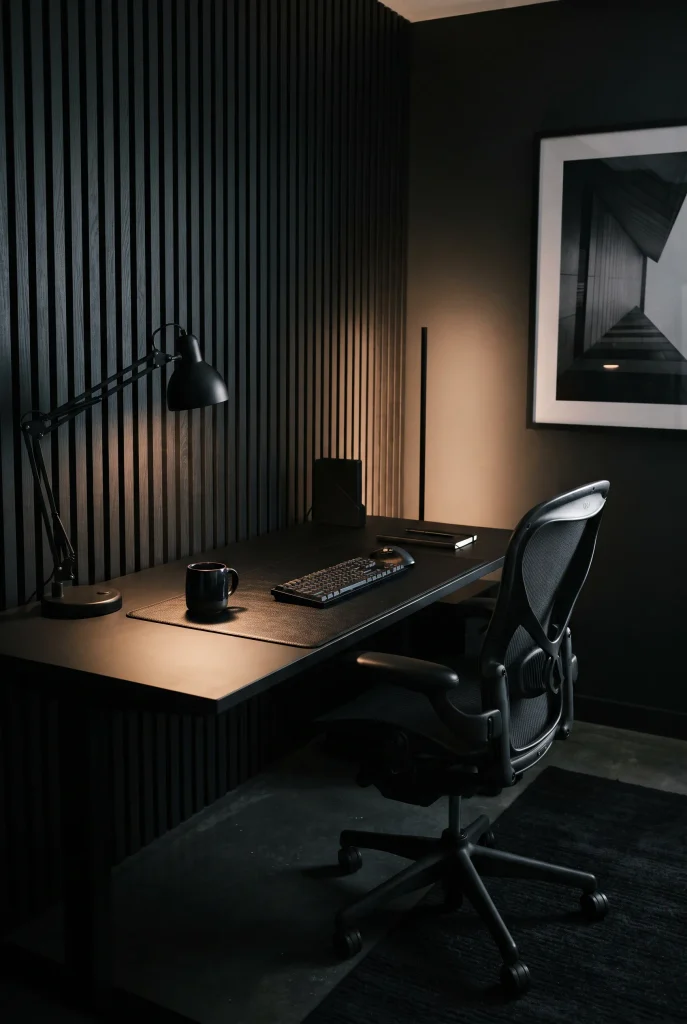
- Creates a unified, distraction-free environment that promotes intense concentration and mental flow.
- Textured black wall paneling adds depth and sophisticated shadow play without needing color.
- Matte finishes eliminate annoying screen glares and unsightly fingerprints on heavy-use surfaces.
- Delivers an ultra-modern, high-end studio look that makes hardware blend seamlessly into background.
Designing a completely monochromatic black workspace offers a bold, sophisticated approach that instantly minimizes visual distraction and enhances deep concentration. Utilizing varied textures, such as matte paints, slatted wood paneling, and dark leather, prevents an all-black room from feeling flat or sterile. In my experience, mixing these dark tactile surfaces creates an inviting depth that absorbs ambient room light, significantly reducing glare on monitors during long hours of computer work. Electronics and cables naturally fade into the dark surroundings, giving the entire setup an impeccably clean, streamlined architectural profile.
Layering precise, warm task lighting becomes key to maintaining an comfortable, high-focus atmosphere within an all-dark color palette. Directional brass lamps or warm LED strip backlighting highlight the surrounding wall textures, creating soft visual separation between your furniture and walls. I’ve noticed that adding subtle organic elements, like a dark slate planter or charcoal ceramic mugs, softens the strict monochromatic lines without breaking the room’s color theme. The final outcome is a dramatic, immersive sanctuary that looks deeply intentional, modern, and exceptionally stylish.
Art Gallery Wall Setup
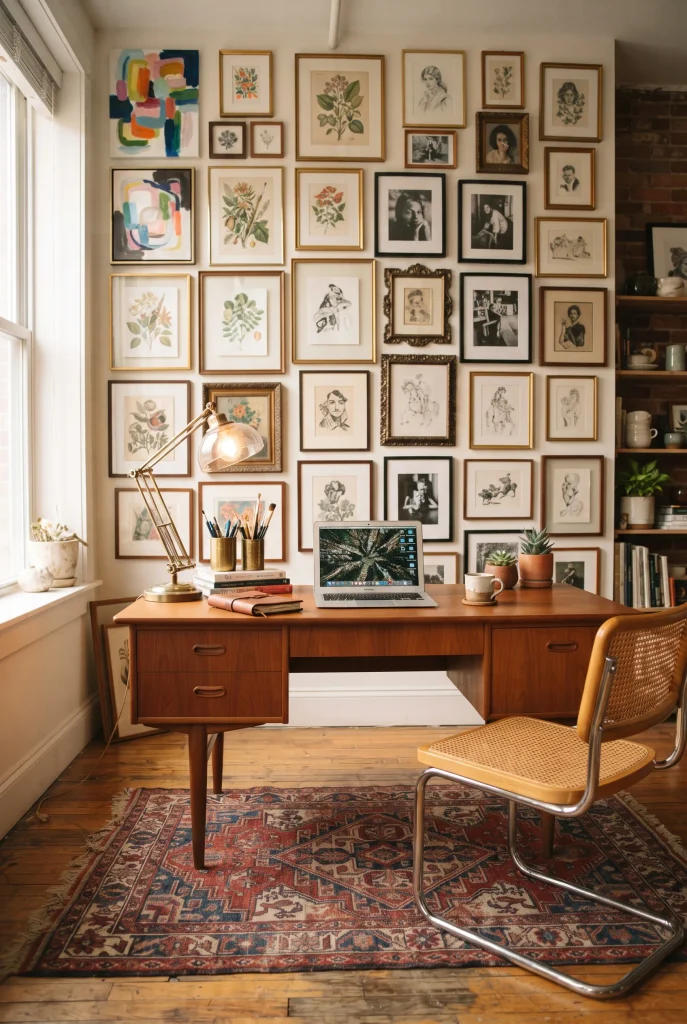
- Turns unused wall space into a personalized gallery that sparks daily creative inspiration.
- Mixes different frame finishes and sizes to create a rich, custom visual texture.
- Anchors your workstation in open layouts by establishing a clear aesthetic focal point.
- Allows easy updates over time, letting your workspace evolve with your changing tastes.
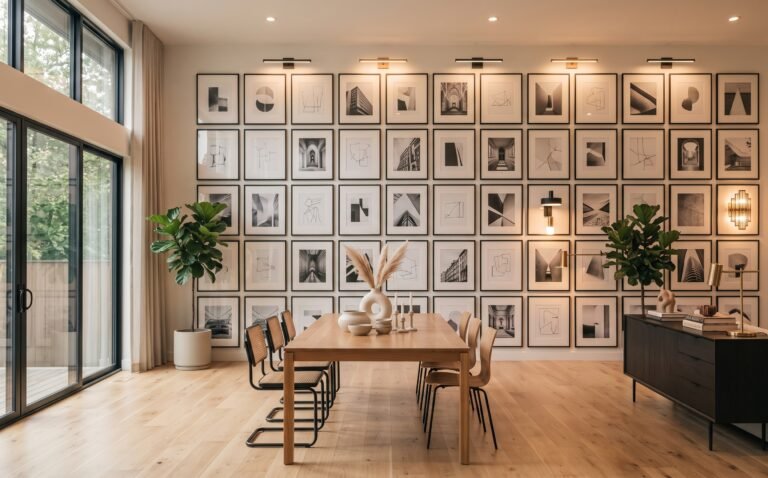
Surrounding your daily workstation with a curated collection of art transforms a plain home office ideas setup into a deeply inspiring personal studio. Mixing various frame styles—such as thin black metal, warm natural oak, and ornate gilded frames—adds rich visual history that makes the space feel thoughtfully collected over time. That’s why many designers recommend laying out your frame arrangement on the floor first to balance scale, color, and spacing before hanging anything. This artistic backdrop provides a constant source of inspiration while serving as an eye-catching background for video calls.
Balancing vibrant artwork with a simple wooden desk and minimalist desktop accessories prevents the overall workspace from feeling overly crowded or chaotic. Choosing a cohesive mat border color, like warm cream or crisp white, unifies diverse art styles and gives each piece room to breathe visually. I’ve seen this work well in many homes where a small desk needs to feel like a continuous, intentional part of a broader living room’s decor. The result is an engaging, personality-filled nook that brings joy and artistic energy to every single workday.
Minimalist Japandi Studio
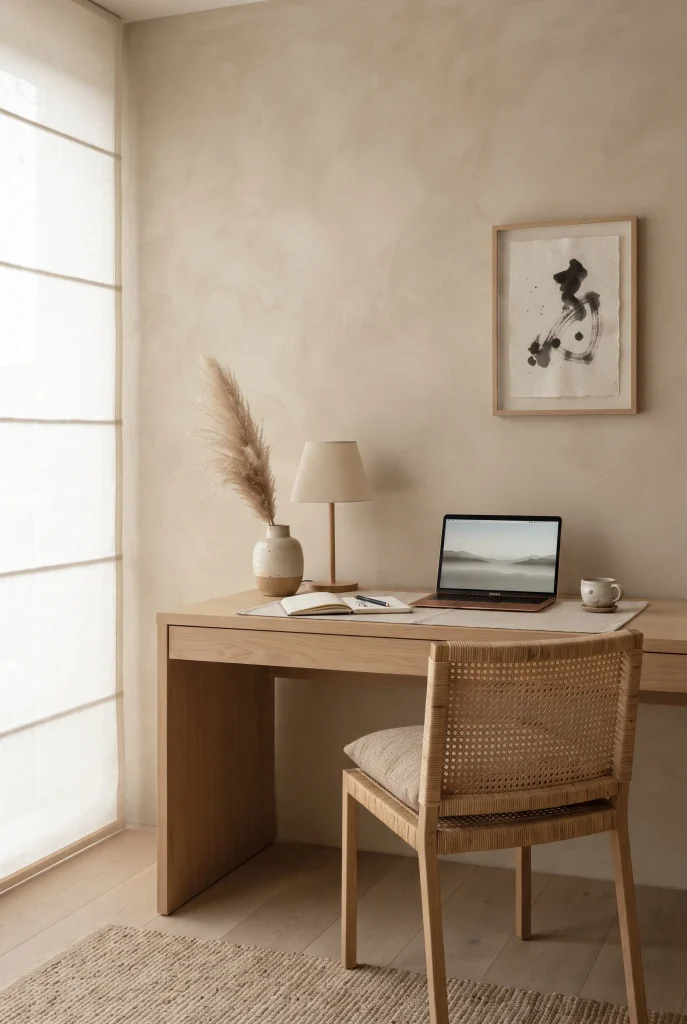
- Combines Japanese functional minimalism with Scandinavian tactile warmth for optimal tranquility.
- Uses muted neutral tones and natural materials to foster a calm, clear mindset.
- Integrates handcrafted ceramics and organic textures to create a grounded atmosphere.
- Keeps desk surfaces uncluttered to maintain an effortless sense of order and balance.
Fusing Japanese minimalism with Scandinavian functionality, the Japandi aesthetic creates an extraordinarily tranquil environment designed for calm, uninterrupted focus. Clean-lined pale oak desks paired with textured plaster walls bring quiet warmth into the space without relying on bright colors or busy patterns. In my experience, incorporating natural elements like woven cane chairs, organic linen blotters, and simple stoneware accessories brings a sense of grounded craftsmanship into daily work routines. The emphasis remains firmly on quality over quantity, keeping visual clutter completely off your working surface.
Filtering incoming natural sunlight through thin paper blinds or light linen shades creates a soft, diffused glow across wood grains and muted walls. Displaying a single branch in a rustic, handmade ceramic vase adds organic artfulness without overwhelming the minimalist harmony of the setup. I’ve noticed that working within a Japandi-inspired room noticeably reduces daily visual fatigue and creates a deeply restful, centered atmosphere. This thoughtful design balance yields a timeless, serene sanctuary where productivity and mindfulness coexist with complete ease.
Floating Corner Ledge
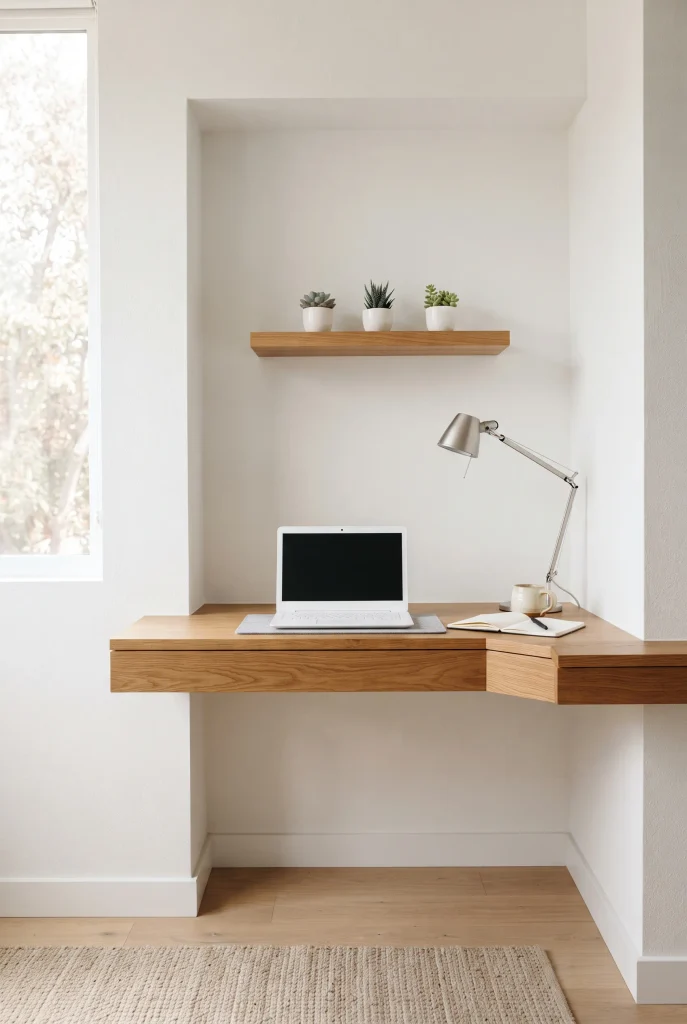
- Utilizes dead alcove space to create a built-in workstation without taking floor area.
- Sleek floating design keeps floor space open, making compact rooms feel lighter.
- Clean corner installation offers an intimate, highly focused nook away from distractions.
- L-shaped orientation provides extra desk depth for easy switching between computer work and writing.
Tucking a floating desk ledge directly into an underutilized room alcove turns awkward structural architectural corners into high-efficiency productivity zones. Removing table legs entirely creates completely unobstructed floor space underneath, allowing office chairs to slide in completely when work hours finish. That’s why many designers recommend using custom-cut solid hardwood ledges that stretch edge-to-edge across the corner for a sleek, built-in feel. Painting surrounding walls in soft light neutrals ensures the small nook feels like an expansive, bright sanctuary rather than a cramped secondary space.
Mounting a matching floating shelf directly above the main corner surface gives you dedicated storage for essential notebooks without sacrificing valuable physical workspace. Positioning a slim, adjustable task light in the corner angle provides clean, focused illumination across the desk surface while eliminating harsh shadows on your keyboard. I’ve noticed that adding a tiny potted plant or organic clay object softens the crisp architectural lines of the corner. This approach delivers an organized, highly functional workstation that feels effortlessly integrated into your living environment.
Coastal Airy Workstation

- Soft ocean-inspired color palettes bring a calming, stress-reducing atmosphere to workdays.
- Whitewashed woods and light fabrics reflect abundant natural daylight across the room.
- Natural woven textures like bamboo and rattan add casual, breezy visual warmth.
- Creates a relaxed coastal sanctuary that promotes ease, fresh thinking, and sustained focus.
Embracing coastal-inspired design principles transforms your home work environment into a bright, refreshing retreat that feels as relaxing as a seaside home. Pairing whitewashed timber furniture with pale blue or soft seafoam wall tones reflects natural light beautifully throughout the day. In my experience, incorporating relaxed slipcovered seating and natural bamboo window shades softens bright sunlight, creating a gentle glow across your entire workstation. The breezy, light-toned aesthetic visually expands the room, making daily work hours feel unhurried, peaceful, and delightfully fresh.
Layering subtle coastal elements like sea-glass decor accents, clear glass vases, and light linen desk mats prevents the room from feeling overly themed or artificially styled. Keeping the desktop organized and sparse ensures the focus remains on light, open space and soft blue hues that naturally lower daily stress levels. I’ve seen this work well in many homes where creating a quiet, soothing mental sanctuary is essential for managing demanding remote schedules. The result is an uplifting, light-drenched setup that brings gentle beachside calm straight to your home office ideas.
Retro Pastel Aesthetic

- Soft pastel color combinations instantly brighten mood and spark everyday creative energy.
- Retro curved furniture and colorful accessories add charming vintage personality to spaces.
- Establishes a playful, welcoming aesthetic that makes entering the workspace delightful.
- Combines fun nostalgic design elements with smooth modern computer productivity needs.
Introducing soft pastel shades like mint green, blush pink, and muted butter yellow brings a joyful, creative energy to your daily working routine. Mixing pastel-painted desks with warm contrasting wall shades creates a playful visual dynamic that instantly brightens dreary workdays. That’s why many designers recommend balancing pastel color palettes with simple retro furniture shapes, curved desk lamps, and soft rounded accessories. This approach introduces delightful vintage personality while maintaining a clean, highly functional surface for modern laptops and peripheral equipment.
Selecting desk accessories in coordinating candy colors unifies the playful aesthetic across the workspace without creating overwhelming visual clutter. Adding colorful, abstract art prints featuring soft organic lines ties the room’s pastel colors together seamlessly while dressing up plain drywall. I’ve noticed that working within a cheerful, color-filled nook naturally boosts morning motivation and sparks creative brainstorming sessions. This charming design strategy delivers an uplifting, personality-driven studio environment that makes daily task management feel fun, lighthearted, and deeply satisfying.
Ergonomic Standing Desk Setup
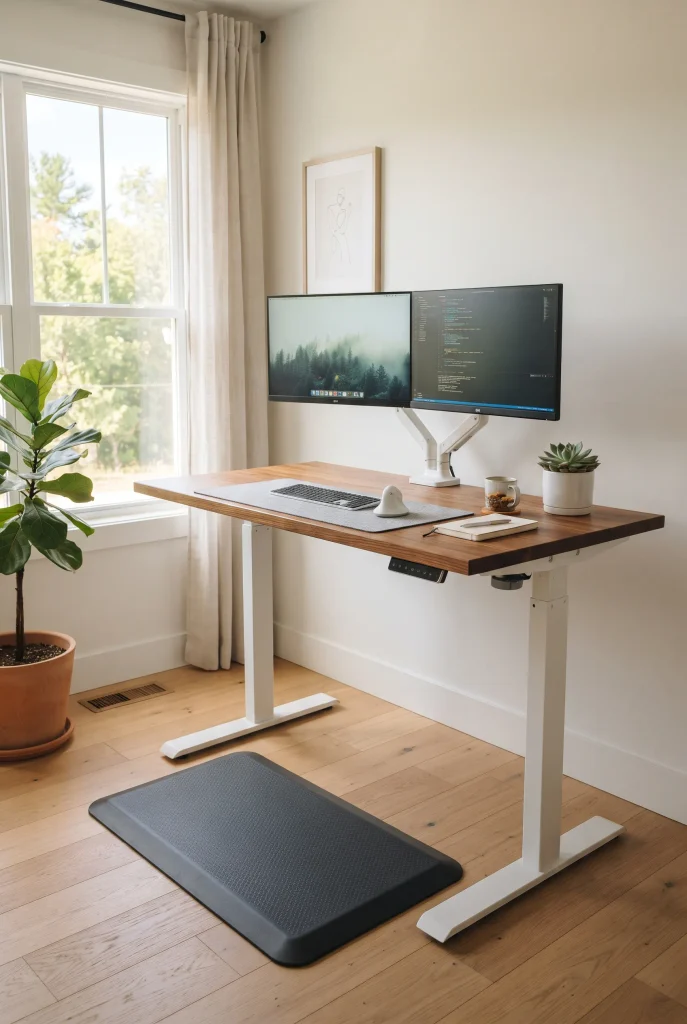
- Encourages continuous movement throughout the day to reduce physical fatigue and strain.
- Seamless height adjustment transitions easily between sitting and standing working positions.
- Dual-monitor mounting improves posture while keeping valuable desktop space completely clear.
- Combines health-focused ergonomic functionality with a modern, stylish home office look.
Integrating an adjustable standing desk into your daily workflow is one of the most effective upgrades for supporting long-term health and maintaining consistent daily energy. Motorized frames allow you to transition smoothly from sitting to standing with a simple touch, keeping your posture active throughout long computer sessions. In my experience, pairing a warm wooden desktop with a clean white frame ensures the furniture feels like an attractive design piece rather than rigid medical equipment. Using dual-monitor arm mounts keeps screens directly at eye level, preventing neck strain while freeing up surface area below.
Placing a high-density anti-fatigue mat on the floor directly beneath your feet absorbs joint impact, allowing you to stand comfortably for extended periods throughout the day. Positioning the setup adjacent to a window offers easy access to daylight and outside views, further boosting daytime alertness and eye comfort. I’ve noticed that alternating between sitting and standing every hour significantly reduces afternoon sluggishness and keeps focus remarkably sharp. This health-conscious setup balances modern ergonomic utility with clean interior design, creating a dynamic, high-performance workspace you’ll love using daily.
Conclusion
Designing a space that nurtures your focus and sparks daily creativity is one of the best gifts you can give your mind. By trying a few of these practical home office ideas, you can easily turn an ordinary desk corner into an uplifting, beautiful sanctuary tailored to your exact workflow. I’ve seen how small changes like these can completely transform a space, making every workday feel noticeably lighter and far more inspired. Pick your favorite design idea, save this post on Pinterest for future reference, and share it with anyone needing workspace inspiration. Your dream setup is closer than you think!