15 Small Theatre Room Makeovers That Feel Luxurious
Introduction
A small room can still deliver a big-screen experience.
With the right details, even a compact space can feel like a luxury cinema.
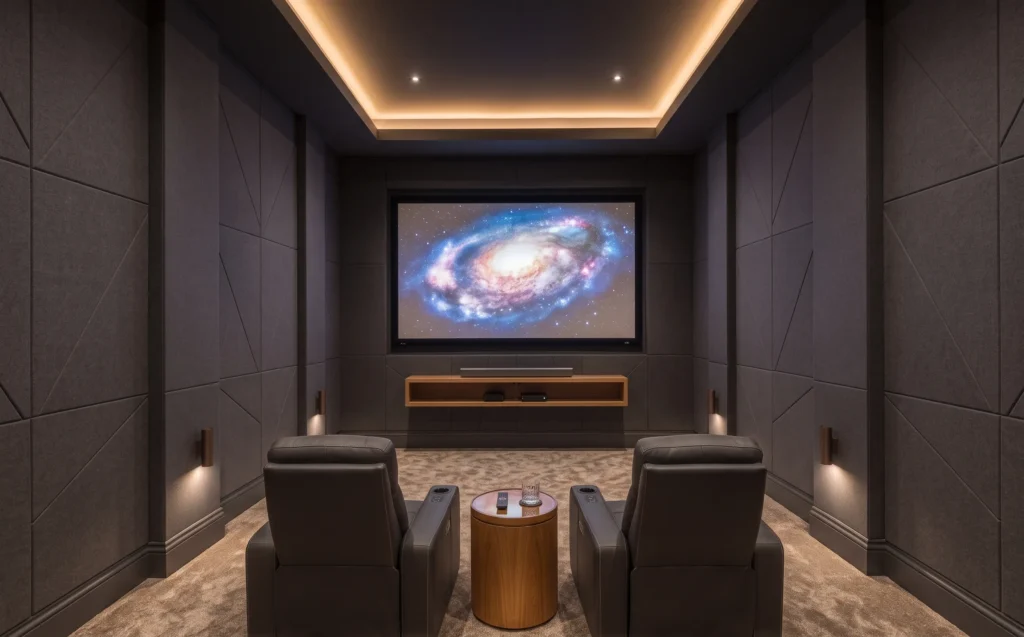
These small theatre room makeovers are designed to help you turn limited square footage into a stylish, comfortable place for movie nights, gaming, and relaxing. From plush seating and acoustic panels to warm lighting, hidden storage, and dramatic wall colors, these ideas show how thoughtful choices can make a noticeable difference. You’ll discover practical ways to improve both the look and function of your room without overcrowding it. In my experience, the most inviting theaters are not always the biggest ones; they simply use every inch with purpose while keeping the atmosphere comfortable and uncluttered.
Starry Fiber Ceiling
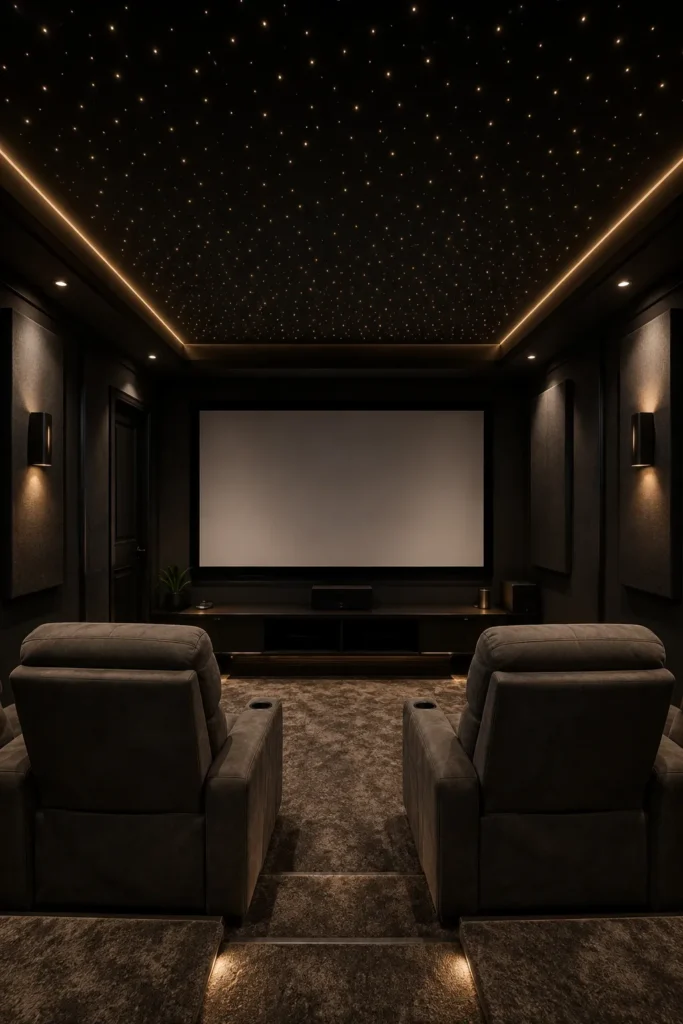
- A starry ceiling adds drama without taking up floor space.
- Tiny lights create a cinematic atmosphere above the seating.
- Dimmable controls keep the effect practical during movie time.
- Dark ceiling colors make the light points appear more refined.
Small rooms can feel surprisingly grand when the ceiling becomes part of the design. A starry fiber-optic ceiling adds a subtle layer of theater magic without taking valuable floor space. Use a dark ceiling panel with dozens of tiny points of light, then keep the walls and furnishings restrained so the effect feels sophisticated rather than playful. In my experience, this works best when the stars are softly scattered instead of arranged in obvious patterns. Add dimmable controls so you can lower the effect during movies and brighten it slightly before the film begins.
A ceiling treatment can also help separate the cinema from the rest of the home. Choose warm white or slightly golden pinpoints against charcoal, navy, or black for a refined hotel-inspired look. Keep the projector area free from unnecessary fixtures that could create glare or shadows. Pair the ceiling with plush seating, acoustic wall panels, and a simple screen frame for a cohesive finish. Even in small theatre room makeovers, this detail can create a memorable focal point because guests notice it as soon as they enter, while the room still feels uncluttered and comfortable.
Wall-Mounted Snack Ledge
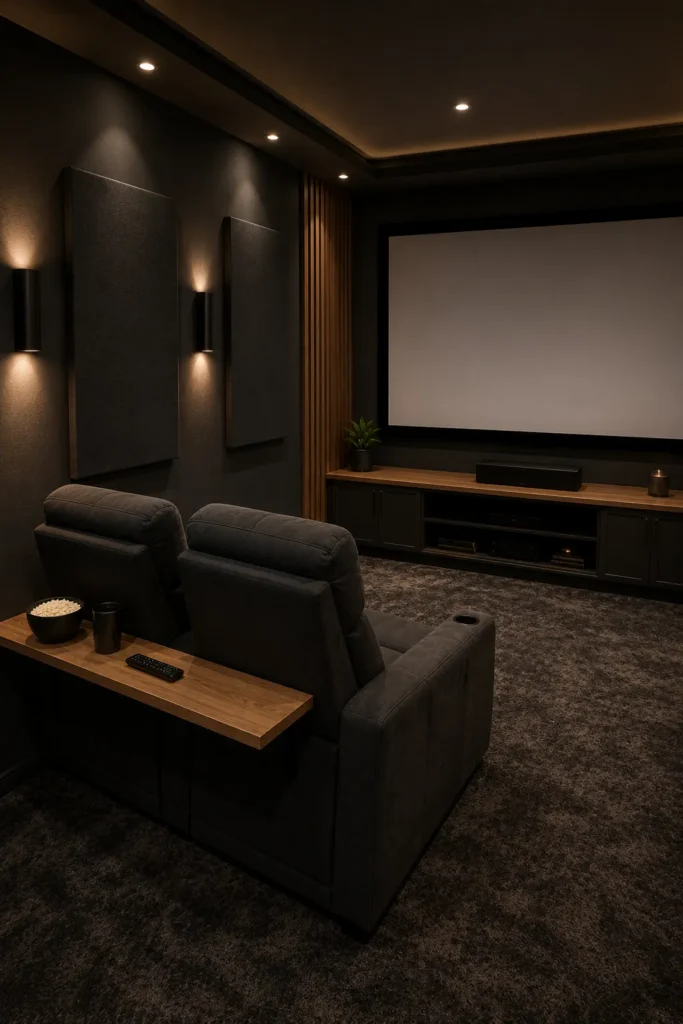
- A slim ledge keeps drinks and remotes within easy reach.
- Wall mounting saves valuable floor space around compact seating.
- Oak or dark wood adds a polished decorative touch.
- Keeping the surface narrow helps preserve comfortable walking clearance.
Comfort becomes much easier to maintain when every seat has a useful place for drinks, remotes, and snacks. A slim wall-mounted ledge behind or beside the seating can provide that convenience without adding bulky end tables. Choose a dark wood, matte black, or stained oak finish that coordinates with the room. Keep the ledge narrow enough to preserve walking clearance, especially near recliners. I’ve noticed that small storage details like this make movie nights feel more organized because everything has a dedicated spot, reducing clutter around the floor and keeping the visual focus on the screen.
The ledge can also become a subtle design feature when styled carefully. Use one or two compact trays, a small decorative bowl, or matching drink holders instead of filling the surface with accessories. Position it at a comfortable height so guests can reach items without leaning awkwardly. For compact cinema rooms, this simple addition improves everyday function while maintaining a clean appearance. It is particularly helpful when traditional side tables would block a doorway, interfere with reclining seats, or make the room feel crowded.
Hidden Media Cabinets
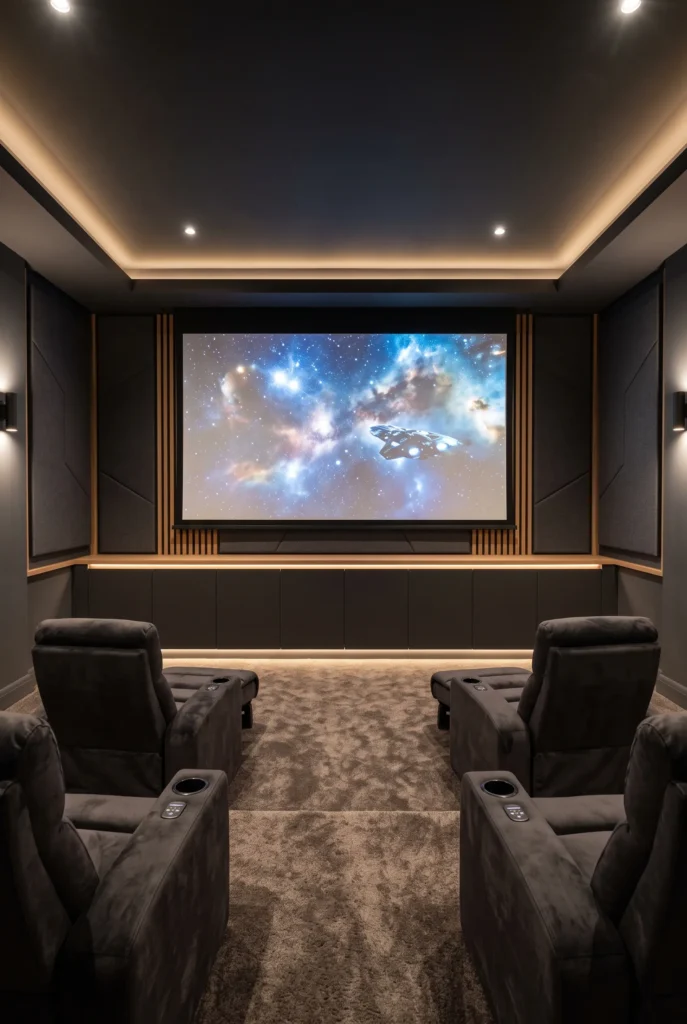
- Concealed cabinets keep electronics and cables out of sight.
- Handleless doors create a smooth, built-in appearance.
- Ventilated compartments protect equipment while maintaining clean lines.
- Closed storage prevents small rooms from looking visually crowded.
The best compact theater storage often disappears into the architecture. Build shallow cabinets beneath the screen or along an unused side wall to hide streaming devices, game consoles, controllers, blankets, and extra cables. Use handleless doors or push-latch fronts for a streamlined appearance, then leave enough ventilation around electronics. A combination of closed storage and one small open shelf can keep frequently used items accessible without turning the room into a media display. This approach is especially useful in small spaces, where visible piles quickly make the room feel tighter and less relaxing.
Think of the cabinetry as part of the room rather than an extra piece of furniture. Match its finish to the wall for a nearly seamless effect, or introduce warm oak for subtle contrast. Before installation, plan cable routes, power outlets, ventilation, and equipment access so the finished setup remains easy to maintain. That practical planning can make a noticeable difference over time. The result is a calmer viewing environment where the screen and seating remain the stars, while everyday technology stays neatly organized and visually quiet.
Built-In Upholstered Bench
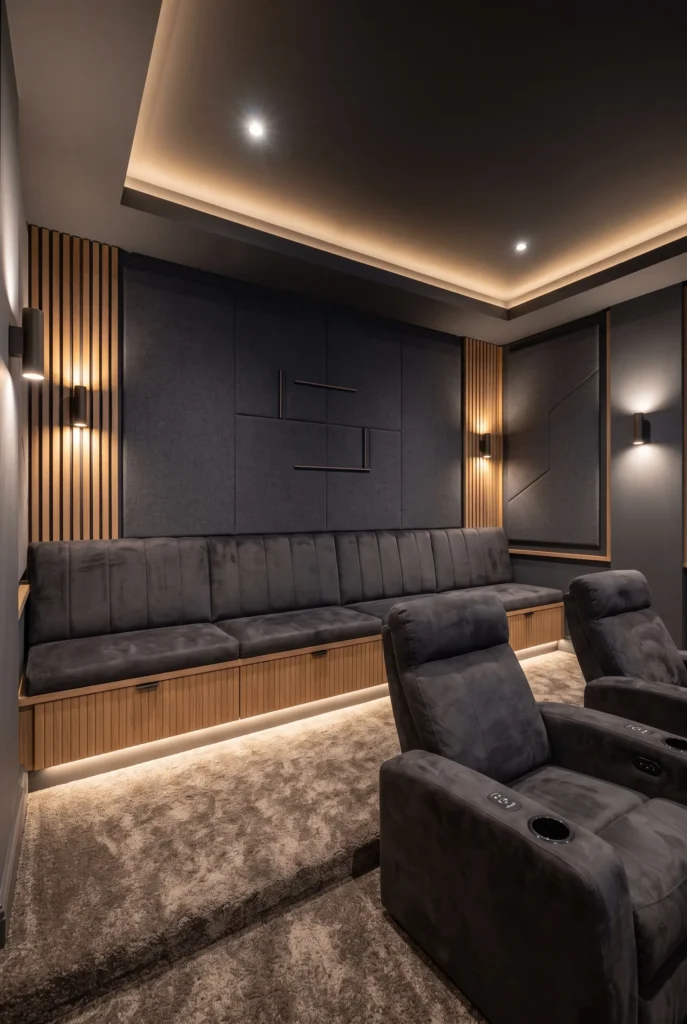
- A built-in bench maximizes seating without bulky chair arms.
- Hidden storage underneath keeps blankets and accessories organized.
- Tailored upholstery gives the room a custom-designed appearance.
- A narrow footprint preserves valuable walking space.
A compact theater can feel far more comfortable when seating is designed around the room instead of squeezed into it. A built-in upholstered bench along the back wall can provide generous seating while keeping the floor plan open. Choose a deep charcoal, warm taupe, or textured navy fabric, then add a few removable cushions for support. In my experience, benches work especially well in narrow rooms because their clean footprint avoids bulky chair arms. Add a lift-up seat for blankets or hidden storage, and the room gains both useful function and a polished custom look.
The bench does not need to look like ordinary family-room furniture. Give it a tailored base, simple piping, or a continuous upholstered back that follows the wall. Pair it with a small side shelf for drinks and a soft runner beneath the seating zone. This arrangement is practical for movie nights, casual gaming, or watching shows with children because several people can sit together comfortably. For small theatre room makeovers, a custom bench can also make an awkward rear wall useful while leaving more space between the seating and screen, helping the room feel balanced rather than overfilled.
Fabric Acoustic Panels
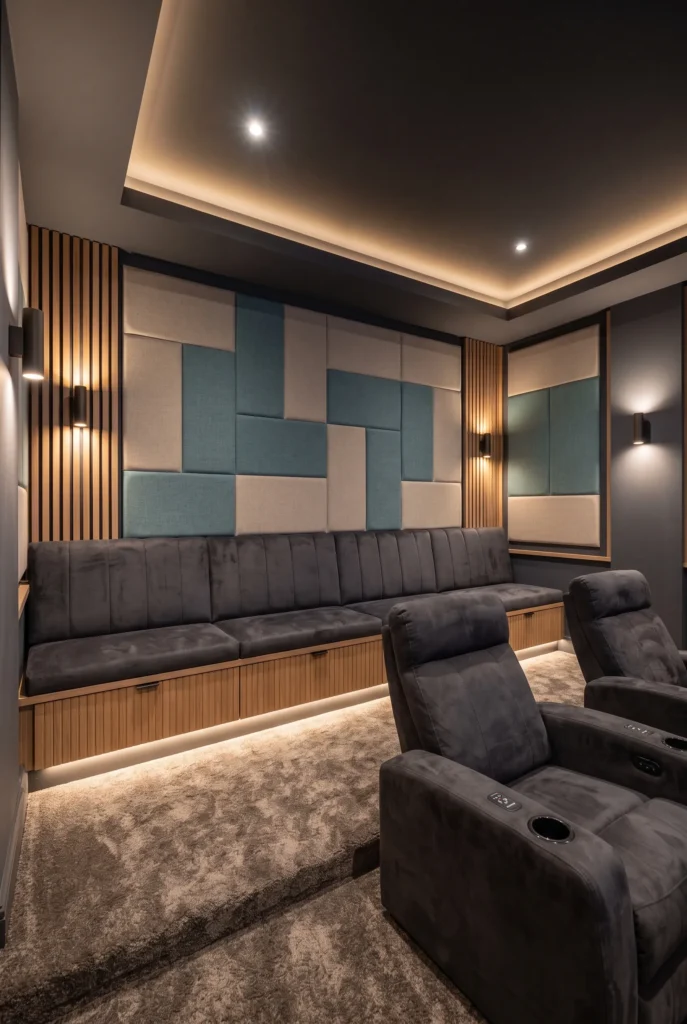
- Acoustic panels help soften distracting sound reflections.
- Fabric surfaces introduce warmth and texture to dark walls.
- Symmetrical placement makes technical treatment look decorative.
- Muted colors keep the room cohesive and sophisticated.
Sound quality matters just as much as the picture, especially when a small room has hard walls that bounce audio around. Fabric-wrapped acoustic panels can absorb some of those reflections while doubling as a decorative feature. Arrange them symmetrically behind the seating or on the side walls, using charcoal, beige, muted blue, or another shade that complements the room. Avoid covering every surface unnecessarily; targeted placement is usually more practical. A simple geometric pattern can add visual interest without competing with the screen, giving the theater a finished, intentional appearance.
In a compact cinema, acoustic treatment can make the room feel more refined without requiring major construction. Place panels at key reflection points near the seating area, and consider thicker treatment behind the speakers when appropriate. Fabric finishes are useful because they introduce softness against darker painted walls, while slim frames keep the installation visually tidy. I’ve noticed that coordinated panels often look more like intentional interior design than technical equipment. Combine them with carpet, upholstered seating, and curtains to create a balanced mix of texture that supports a comfortable viewing environment.
Low-Level Aisle Lights
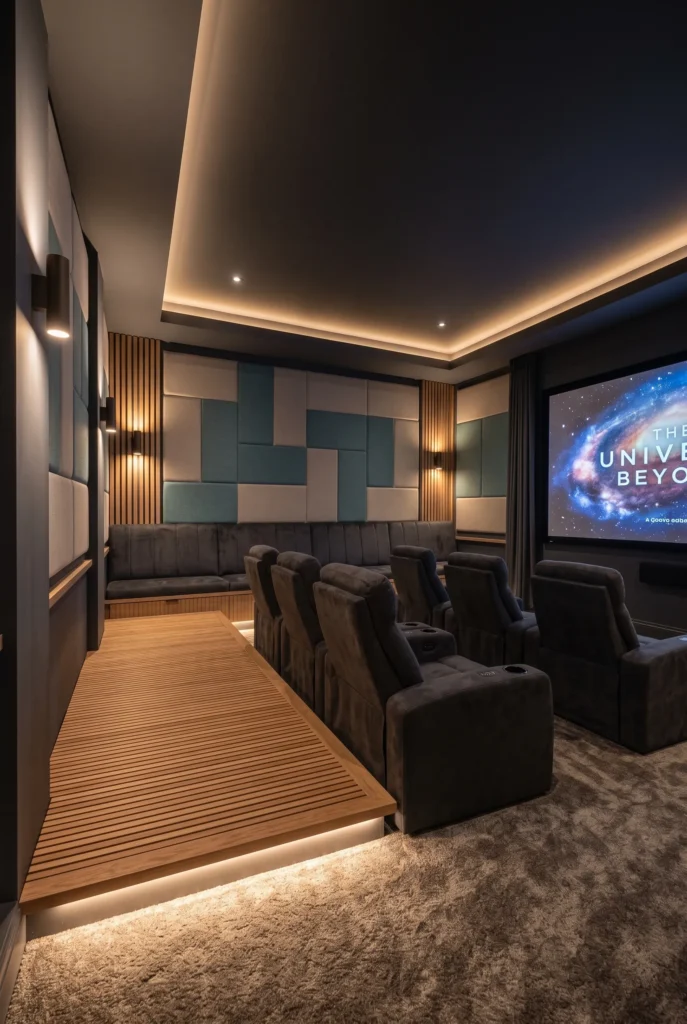
- Low lighting improves visibility without brightening the whole room.
- Recessed LEDs create a polished cinema-inspired detail.
- Dimmable fixtures let you control brightness during movies.
- Floor-level illumination works well in narrow walkways.
A small theater becomes easier to navigate when the floor itself helps guide movement. Low-profile aisle lighting can create a subtle pathway from the doorway to the seating without flooding the room with brightness. Choose recessed floor lights, LED strips beneath a platform edge, or discreet step lights with a warm, dimmable glow. Keep fixtures shielded from direct sightlines so they do not distract during a movie. This simple feature adds a polished cinema feel while improving visibility when someone needs to enter, leave, or find a seat after the lights are lowered.
For the best result, place aisle lights where they provide guidance rather than decoration alone. A short line along one side of the walkway can be enough in a narrow room, while platform steps benefit from small lights at each level. Connect them to a dimmer or smart control so brightness can change easily before, during, and after viewing. Pair the lighting with dark carpet and simple wall finishes for a cohesive effect. In my experience, thoughtful low-level illumination makes a home theater feel more intentional because it solves a real nighttime problem without adding visual clutter.
Curtain-Framed Screen
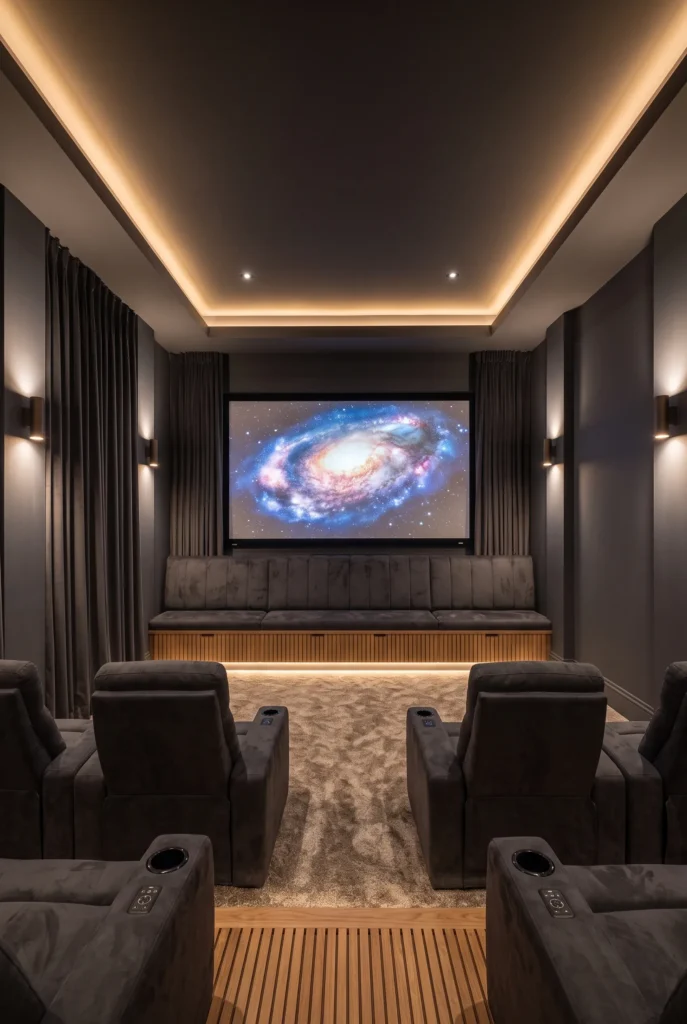
- Velvet curtains create a classic theater-inspired focal point.
- They can soften the visual transition around a large screen.
- Heavy fabric adds texture and helps the room feel cozy.
- Side curtains can remain open during viewing for easy screen access.
A framed screen can instantly give a compact theater a more finished appearance. Full-height curtains placed on either side of the screen create a dramatic border while adding soft texture to otherwise dark walls. Choose charcoal, deep navy, or warm taupe velvet for a luxurious look that coordinates with the seating. Keep the curtains wide enough to stack completely outside the screen when open. In my experience, this detail works particularly well in smaller rooms because the vertical fabric draws the eye upward and makes the entertainment wall feel more substantial.
Beyond appearance, curtains can provide useful flexibility around the screen area. Heavy fabric can help soften some sound reflections and conceal the screen when the room is being used for another purpose. Mount the track close to the ceiling to emphasize the room’s height and avoid a visually broken wall line. Pair the curtains with simple sconces and low-profile furniture so the screen remains the primary focal point. This approach adds theatrical character without requiring elaborate architectural changes, making it a practical option for compact home cinema designs.
Compact Recliner Pair
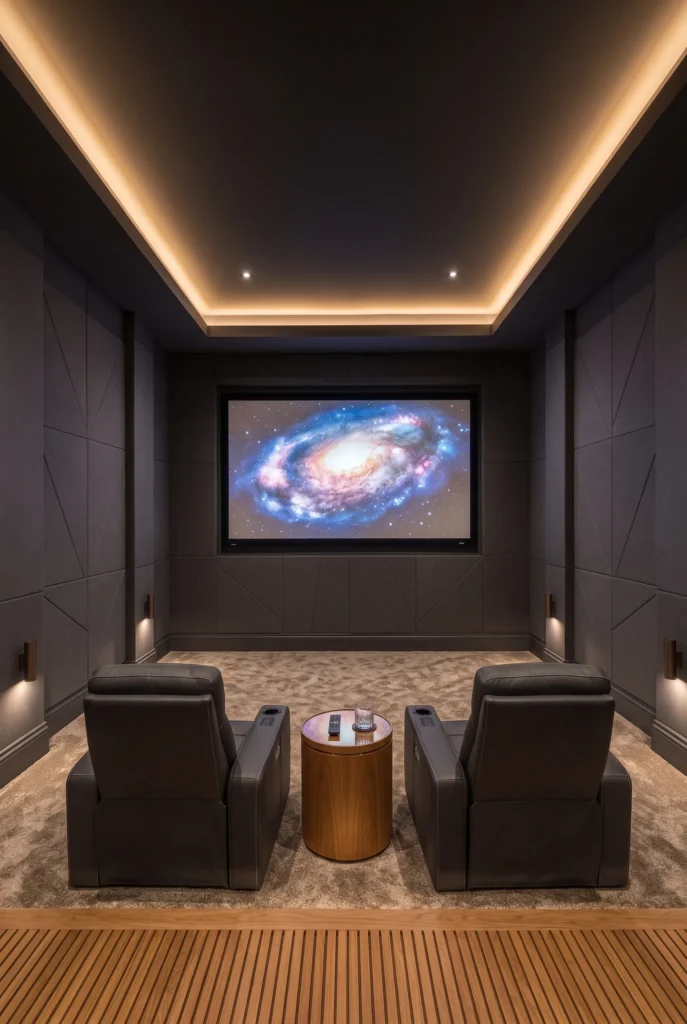
- Two compact recliners provide dedicated individual seating.
- Narrow chair profiles preserve valuable floor clearance.
- Matching upholstery creates a cohesive, upscale appearance.
- A slim center table can hold drinks and remotes.
When space is limited, two well-chosen recliners can provide more comfort than a large sectional. Look for compact models with narrow arms, streamlined backs, and reclining mechanisms that do not require excessive clearance behind the chairs. Place them with enough space between each seat for comfortable movement, then position a slim table or shared drink holder in the center. For small theatre room makeovers, individual seating also makes it easier to create a dedicated viewing position without overwhelming the room with oversized furniture.
Choose upholstery that complements the room rather than competing with the screen. Charcoal fabric, dark leather, or warm taupe upholstery can blend naturally with deeper wall colors and textured carpeting. Before buying, measure the fully reclined footprint as well as the upright width; this prevents a common mistake where chairs fit initially but become difficult to use once extended. I’ve noticed that compact recliners feel especially luxurious when the surrounding layout has breathing room. Keeping accessories minimal lets the comfortable seating remain the main feature while preserving an uncluttered cinema atmosphere.
Floating Equipment Shelf
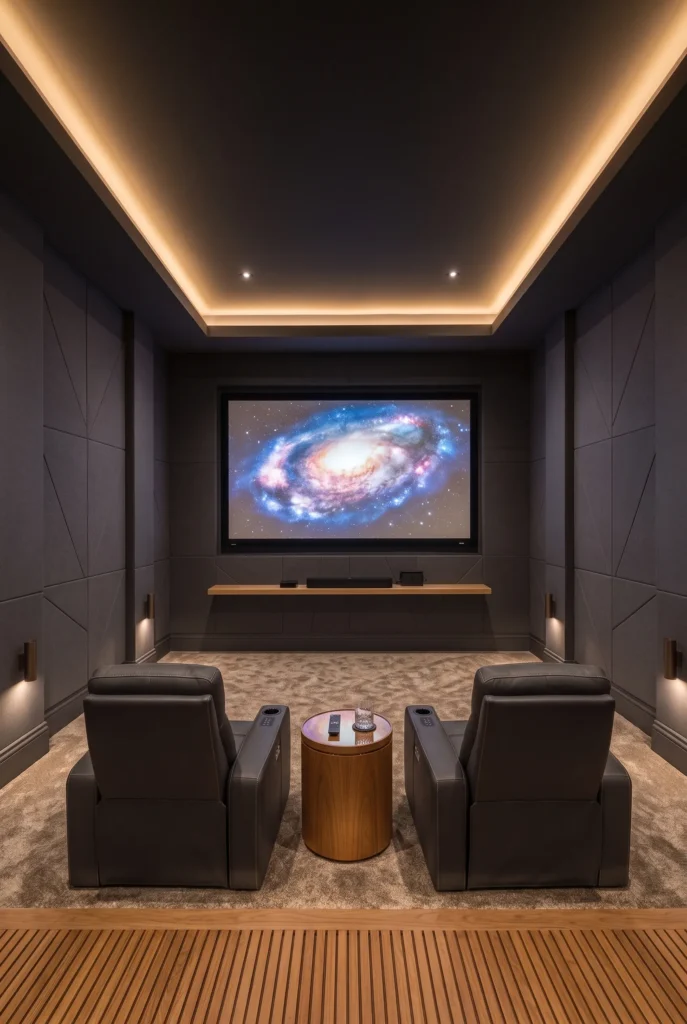
- A floating shelf keeps equipment off the floor.
- Open clearance makes cables easier to access.
- Light oak adds warmth against darker theater walls.
- A slim profile preserves valuable walking space.
A floating equipment shelf can solve a common small-room problem: where to place media devices without adding another bulky cabinet. Mount a narrow shelf below or beside the screen for a streaming box, game console, remote controls, or small speakers. Choose sturdy materials such as oak, walnut, or matte black metal, and leave enough clearance around electronics for ventilation. Conceal cables through the wall when possible or use a simple cable channel for a tidy finish. This keeps the floor open and helps the viewing area feel noticeably less crowded.
The shelf should be treated as functional architecture rather than a display surface. Keep only the equipment you regularly use and avoid filling unused space with unnecessary décor. If you have multiple devices, consider a slightly deeper shelf with discreet cable management underneath. A floating design is particularly useful in compact theaters because it preserves floor area for seating and walking paths. Pair it with a wall-mounted screen and streamlined furniture for a cohesive setup. The result is an organized entertainment zone that looks intentional while keeping everyday technology easy to reach.
Velvet Accent Seating
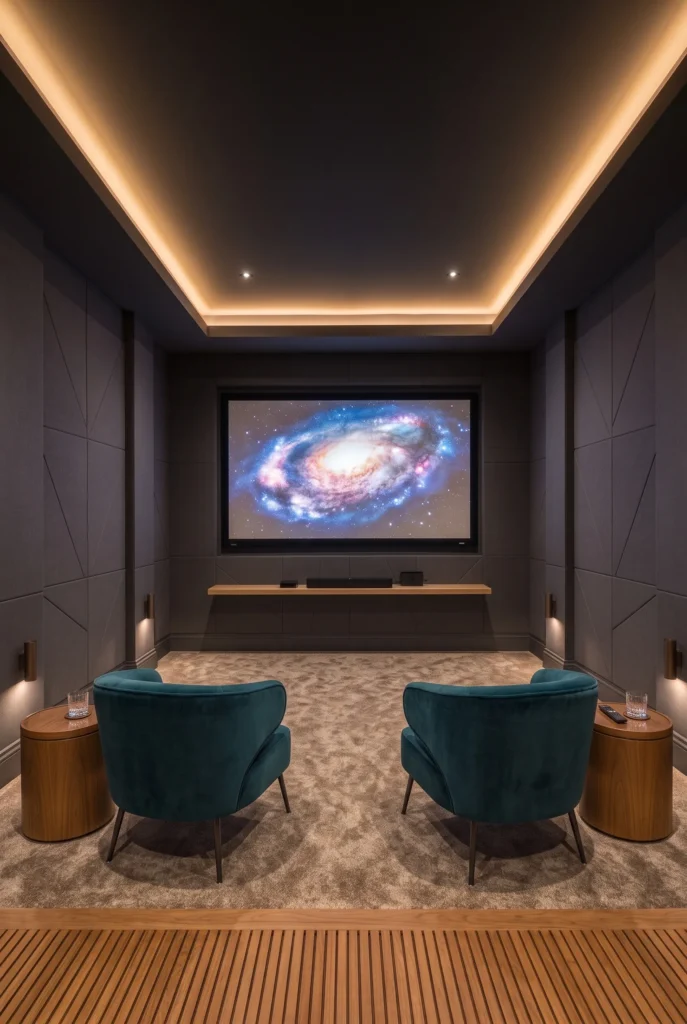
- Velvet seating instantly adds texture and a luxurious finish.
- Deep teal creates a stylish accent against dark walls.
- Compact chairs preserve more floor space than oversized recliners.
- A small side table keeps drinks and remotes accessible.
A touch of velvet can make a compact theater feel considerably more luxurious without adding unnecessary furniture. Choose two streamlined velvet chairs in deep teal, charcoal, or warm taupe, depending on the existing palette. Their soft texture creates visual depth against painted walls and acoustic panels, while a compact silhouette keeps the room open. Position the chairs toward the screen with enough clearance for comfortable movement. In my experience, using one rich upholstery texture is often enough to elevate a small space without making the design feel overly decorated or formal.
Balance the statement seating with quieter finishes throughout the rest of the room. A simple oak side table, neutral carpet, and dark wall color can support the velvet without competing with it. If the chairs recline, check their required clearance before final placement so the room remains functional. Deep teal is especially effective when repeated through one small cushion or accessory elsewhere. This restrained approach creates a polished viewing environment while keeping the seating visually interesting. The finished space feels intentional, comfortable, and refined rather than crowded with too many decorative elements.
Acoustic Wood Slats
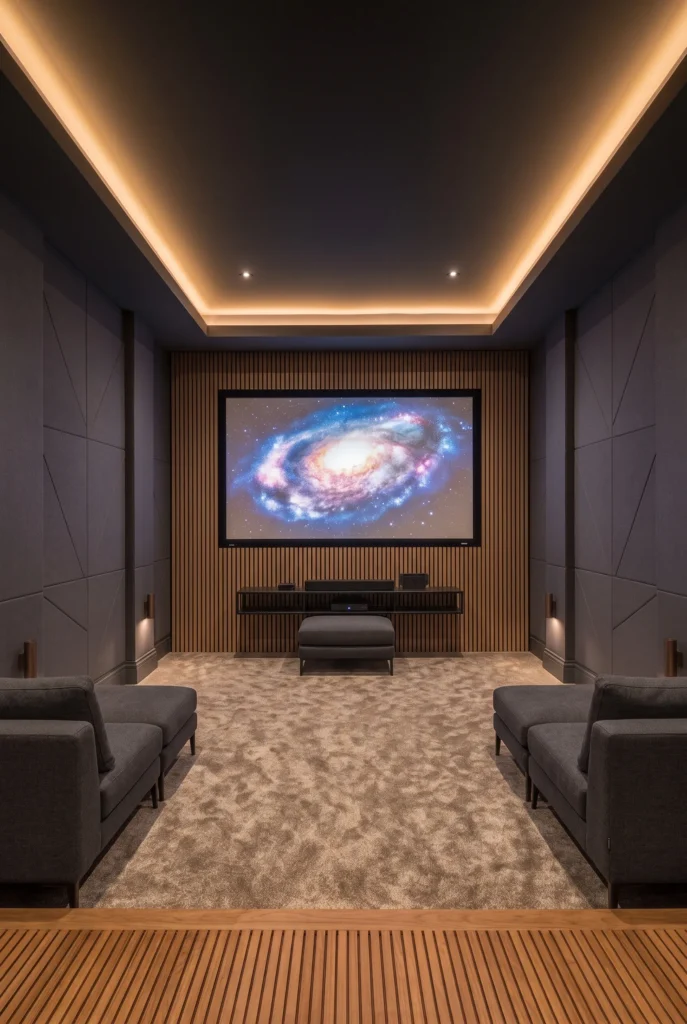
- Vertical wood slats add warmth to darker theater interiors.
- Acoustic backing can support a more controlled sound environment.
- The vertical lines make walls appear visually taller.
- Natural oak creates contrast without overwhelming the screen.
Wood slat panels bring together two useful qualities in a compact theater: visual warmth and acoustic treatment. Install vertical oak slats over an acoustic backing on the rear or side wall to create a textured feature that contrasts beautifully with charcoal or deep gray surfaces. The repeating lines can also draw the eye upward, helping a low room feel taller. Keep the surrounding décor simple so the slatted wall remains the architectural feature. That balance gives the space a custom appearance without requiring extensive decorative elements.
Choose a natural oak tone if the room needs warmth, or a darker stained wood for a more dramatic cinema atmosphere. Before installation, consider speaker placement and leave access points where equipment or wiring may need maintenance. Combining wood with fabric seating and a thick rug creates a layered material palette that feels comfortable rather than overly technical. I’ve seen this work well in compact spaces where a single feature wall provides enough personality for the entire room. The result is a sophisticated backdrop that supports both the visual design and the theater experience.
Hidden Projector Mount
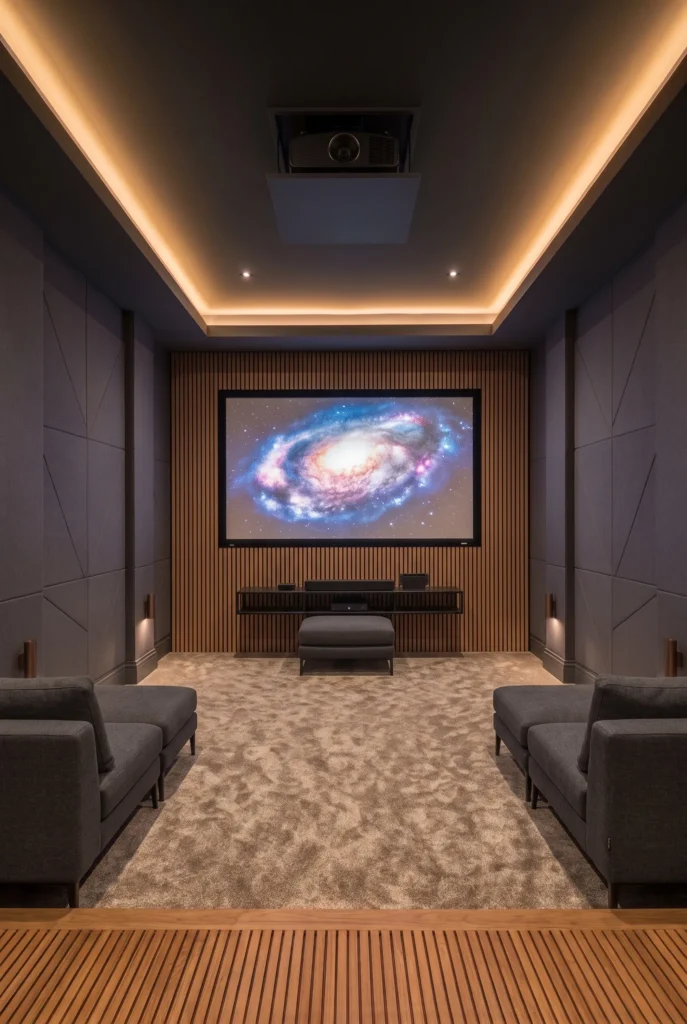
- Concealing the projector keeps the ceiling visually clean.
- A flush mount reduces distracting equipment in the room.
- Hidden cable routes create a more polished installation.
- Easy access should remain available for maintenance and upgrades.
A projector can provide a cinematic experience without becoming the most noticeable object in a small room. A concealed ceiling mount or slim overhead enclosure keeps the equipment visually quiet while preserving a clear line toward the screen. Plan the projector position carefully before installation, considering throw distance, ventilation, power access, and future maintenance. A simple enclosure painted to match the ceiling can make the equipment almost disappear. This is especially helpful when the theater also needs to function as a multipurpose room during the day.
The installation should prioritize accessibility as much as appearance. Avoid sealing equipment inside a space that traps heat or makes maintenance difficult. Route cables neatly through the ceiling or a dedicated channel, and leave sufficient clearance around the projector for ventilation. A dark ceiling helps disguise the equipment further when the lights are dimmed. In my experience, reducing visible technology makes a small theater feel more like an intentional interior rather than a room filled with electronics. The screen, seating, lighting, and architectural details can then become the visual focus.
Statement Ceiling Projector
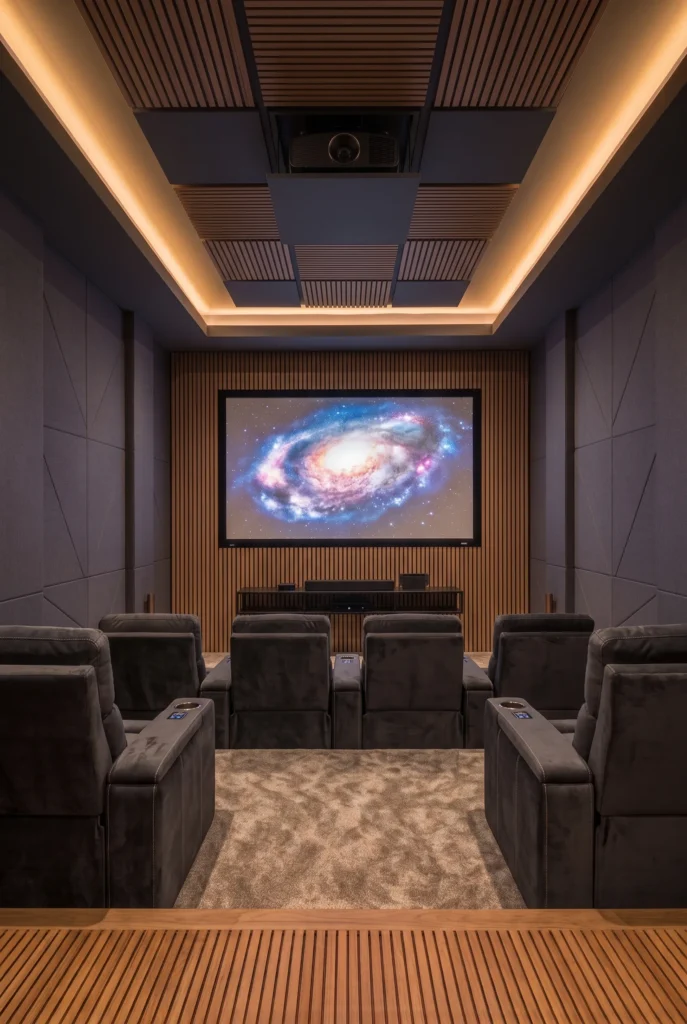
- A defined ceiling feature gives the projector a polished home.
- Dark materials help equipment blend into the theater.
- Wood detailing adds warmth to an otherwise dramatic palette.
- Concealed cable management keeps the installation visually clean.
A projector can become part of the room’s architecture instead of looking like an afterthought. Create a compact ceiling feature using warm oak and charcoal finishes, then integrate the projector neatly within it. The darker section helps the equipment blend into the room, while the wood adds enough warmth to prevent the ceiling from feeling too heavy. Keep the projector aligned precisely with the screen and allow adequate ventilation around the unit. This approach is especially effective when you want a premium appearance without filling valuable wall or floor space.
Keep the surrounding ceiling relatively simple so the feature remains intentional rather than decorative for decoration’s sake. Conceal cables wherever practical, but maintain easy access for servicing or equipment upgrades. Pair the ceiling detail with recessed lighting that can be dimmed completely during movies. For small theatre room makeovers, this kind of built-in treatment creates a strong architectural identity while solving a practical equipment-placement challenge. The finished room feels carefully designed from top to bottom, with technology integrated into the space rather than competing with the seating, screen, or other visual elements.
Luxury Theater Nook
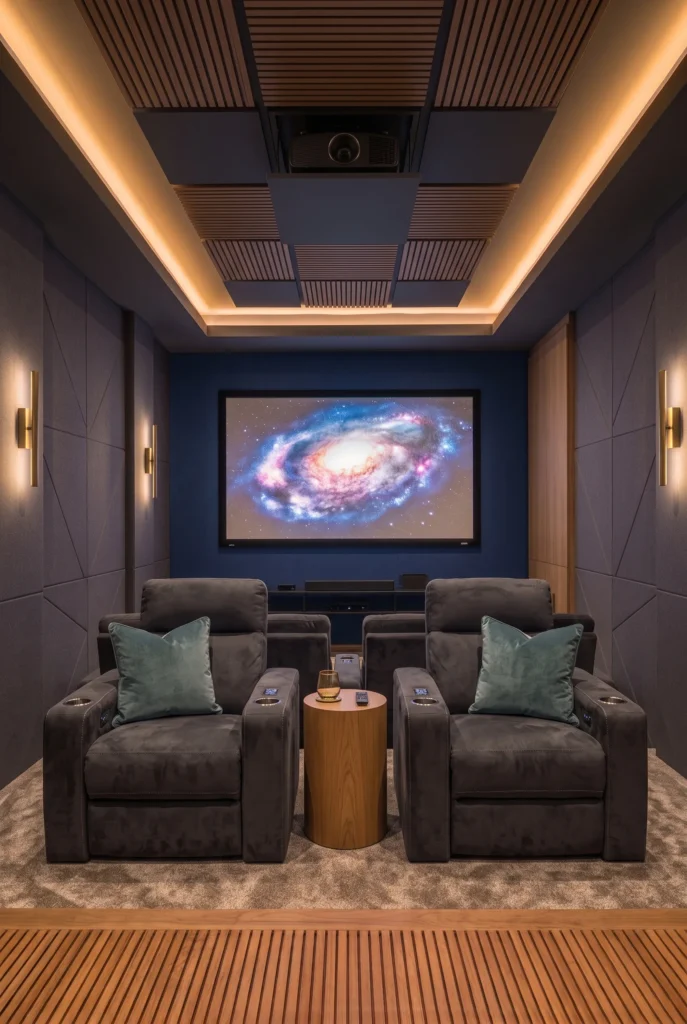
- A dedicated nook can turn an unused room corner into a cinema.
- Compact seating keeps the footprint practical.
- Layered textures make the small area feel intentionally designed.
- Concealed storage keeps accessories and equipment organized.
Sometimes the best home cinema does not require an entire room. An unused corner can become a dedicated viewing nook with a wall-mounted screen, two comfortable chairs, and carefully planned storage. Use a darker accent wall to visually define the area, then layer in soft carpet, upholstered seating, and warm wood for contrast. Keep the furniture proportional to the available footprint so pathways remain clear. I’ve noticed that a small, well-planned cinema zone often feels more inviting than a larger room filled with oversized furniture and unnecessary accessories.
Make the nook feel complete by giving every element a clear purpose. A slim media shelf can hold essential equipment, while a small side table provides space for drinks and remotes. Add acoustic panels or thick curtains where sound reflections become noticeable, and use dimmable sconces to establish a comfortable viewing atmosphere. These small theatre room makeovers prove that luxury comes from thoughtful details rather than room size alone. With the right proportions, materials, lighting, and seating, even an overlooked corner can become a stylish place to relax, watch movies, and enjoy time together.
Brass Sconce Lighting
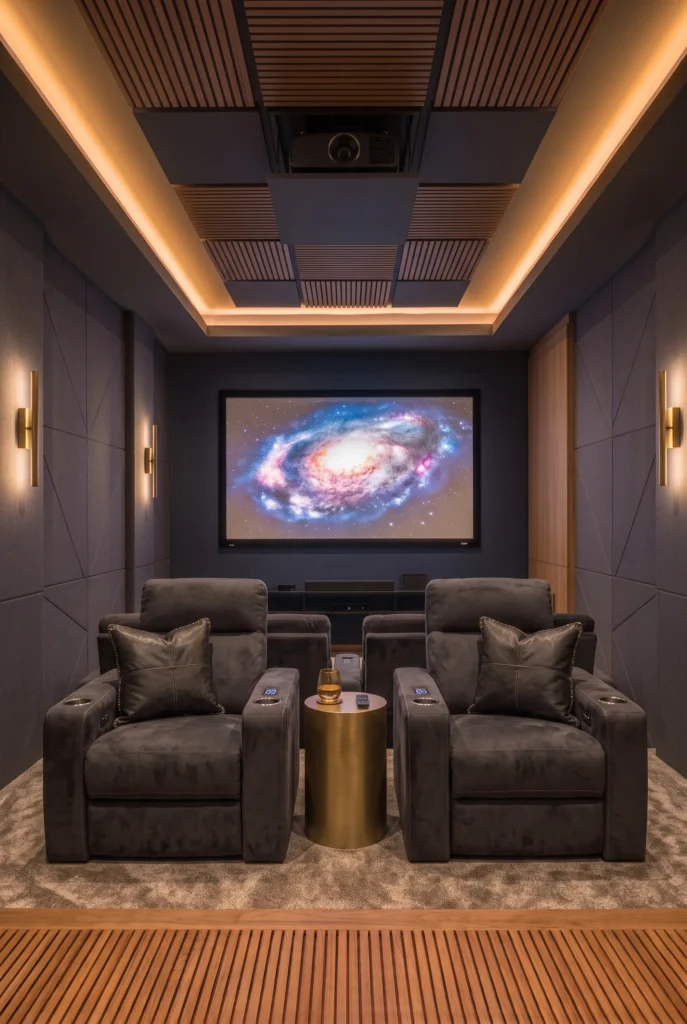
- Brass sconces add a refined decorative detail to dark walls.
- Warm light creates a comfortable atmosphere before and after movies.
- Slim fixtures preserve valuable wall space in compact rooms.
- Dimmable lighting lets the screen remain the visual focus.
The right wall lighting can make a small theater feel instantly more polished. Slim brass sconces placed along the side walls add a warm decorative layer while keeping the floor completely clear. Choose fixtures with simple silhouettes and frosted or shaded bulbs so the light feels comfortable rather than harsh. Position them away from the screen to reduce glare, and connect them to a dimmer for flexible control. In my experience, warm sconces work especially well with charcoal walls because the soft glow creates contrast without overwhelming the darker cinematic palette.
Keep the fixture design consistent with the rest of the room for a cohesive finish. Brushed brass pairs beautifully with warm oak, cream carpet, and neutral upholstery, while matte black hardware can create a more understated look. Avoid placing too many lights around the screen; a few strategically positioned sconces are usually enough. This approach adds character while preserving the room’s clean lines and comfortable atmosphere. The result is a compact theater that feels thoughtfully designed, inviting, and luxurious without relying on excessive decoration or taking away from the movie-viewing experience.
Conclusion
Creating a luxurious home theater is more about smart planning than having a huge room. The ideas in this collection show how thoughtful seating, lighting, sound treatment, storage, textures, and color can transform limited space into a memorable viewing experience. Whether you choose one small upgrade or combine several, focus on what improves comfort and fits your room naturally. I’ve seen how simple changes can completely reshape the atmosphere of a space. Save these small theatre room makeovers to Pinterest for your next project, try your favorite idea, and share this inspiration with someone planning their own cozy cinema. Your dream theater may be closer than you think.